

If the area under your chin looks bulky every time you check the mirror, injection treatments that act directly on fat come into view. This article explains how V-OLET, an injectable approved in Korea for the reduction of submental fat, works, and what stages the treatment actually goes through.
What kind of injection is V-OLET
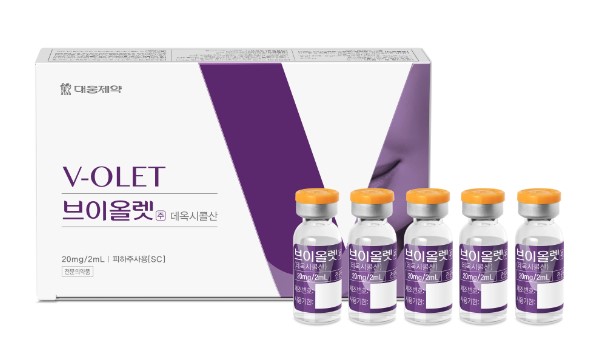
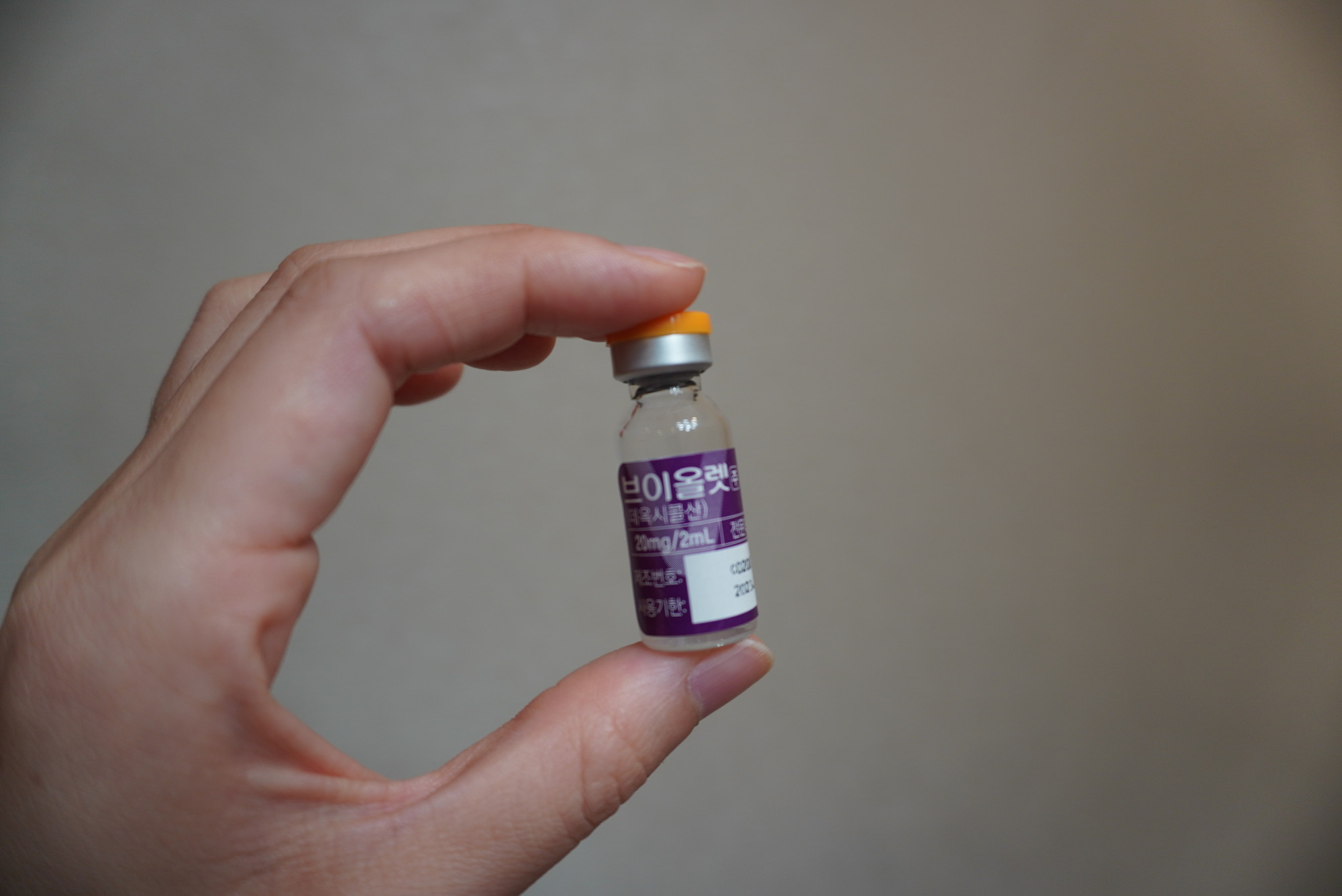
V-OLET is a submental fat reduction injectable from Daewoong Pharmaceutical whose main ingredient is deoxycholic acid (DCA), a substance also involved in digestion within the body. When this ingredient is injected into the subcutaneous fat layer under the chin, the membranes of the fat cells break down. Unlike some of the fat-dissolving injections of the past, which were compounded differently at each clinic with unclear ingredients, this product went through a phase 3 clinical trial in Korean patients and holds Ministry of Food and Drug Safety approval, which is what sets it apart.
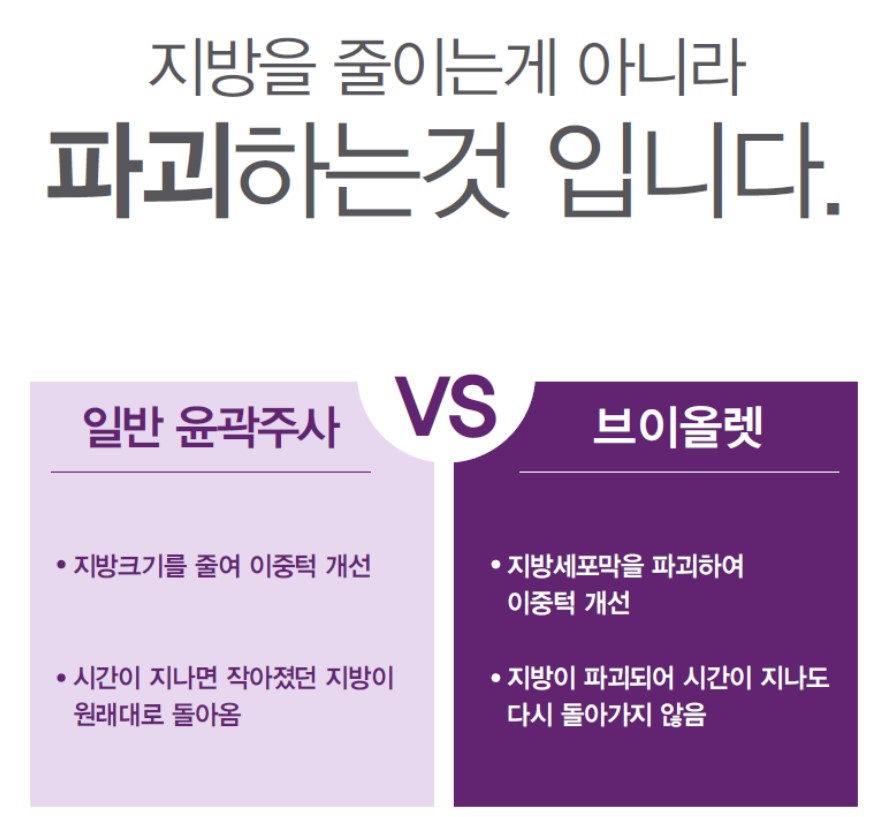
Breaking fat cells down rather than shrinking them
Where conventional fat-dissolving injections were closer to breaking fat down to reduce its volume, V-OLET works by reducing the number of fat cells themselves. Because the mechanism lowers the cell count, the improvement can be expected to hold for a relatively long time, and the injection is also reported to stimulate collagen synthesis at the treated site, which plays a supporting role against skin looking loose once the fat has decreased. The number of sessions needed and the degree of response naturally vary from person to person.
How progress is assessed before and after
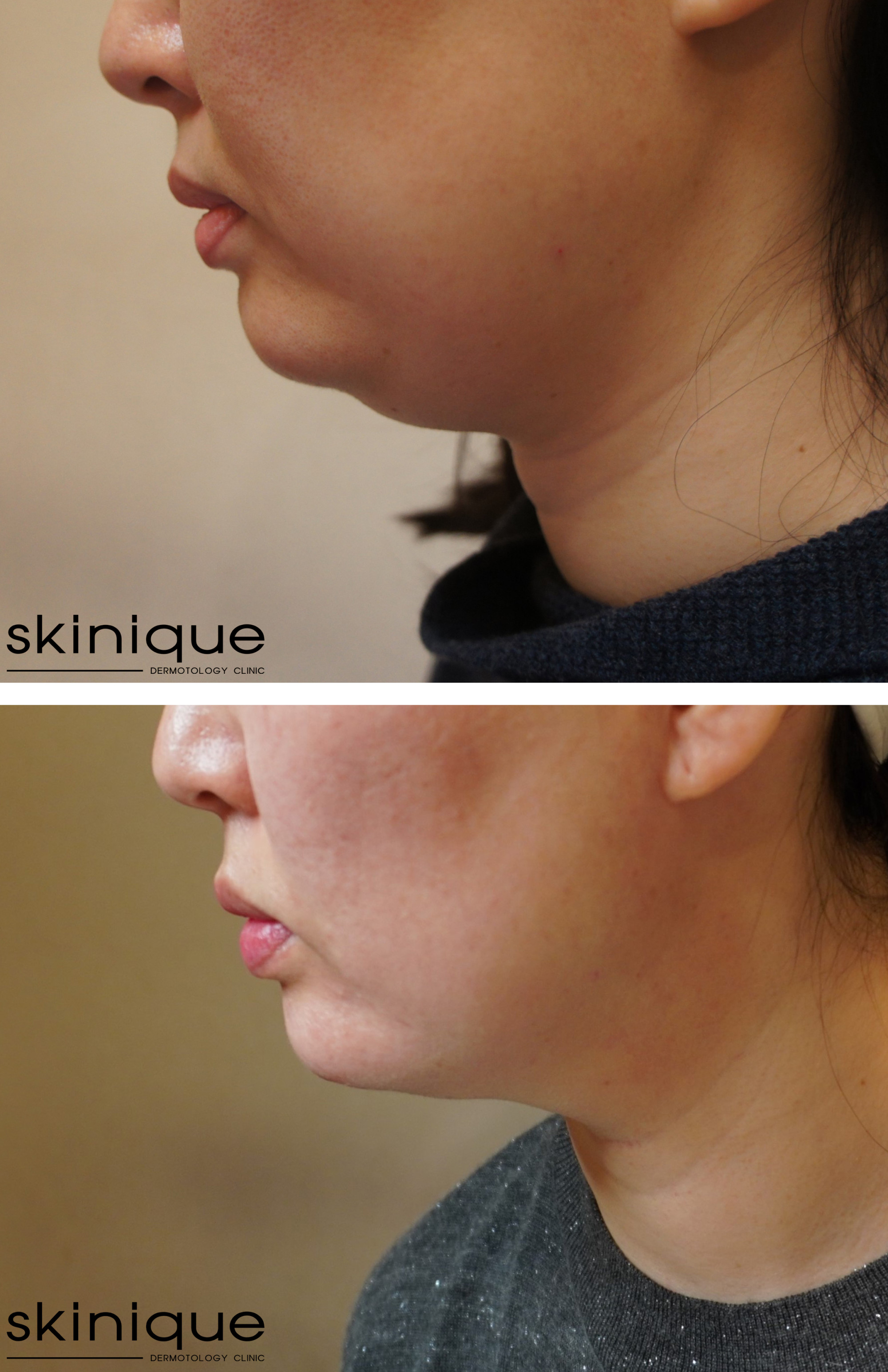
The photographs above show a patient concerned about volume under the chin, before treatment and after three sessions. This patient also wanted improvement to the overall jawline, so after consultation Ultherapy was carried out alongside. Progress differs from person to person depending on the amount of fat, skin elasticity and the number of sessions, so please treat the photographs as a reference only.
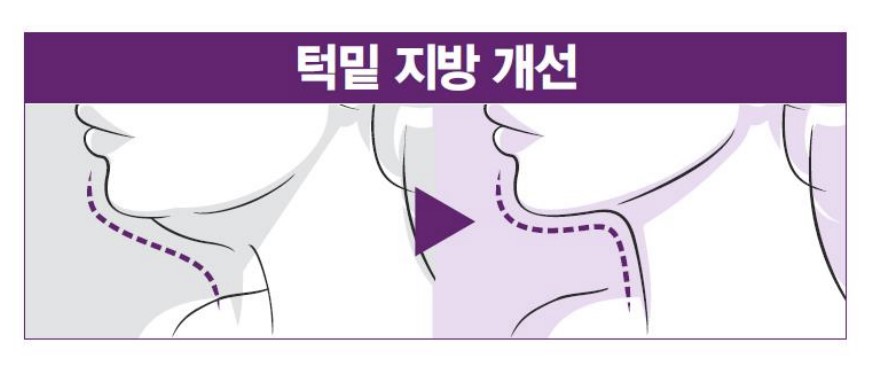
The treatment stages at Skinique Clinic
A V-OLET treatment runs through five stages: consultation, numbing, product verification, mapping and injection. Of these, what shapes the outcome is the consultation, the mapping and the accuracy of the injection.
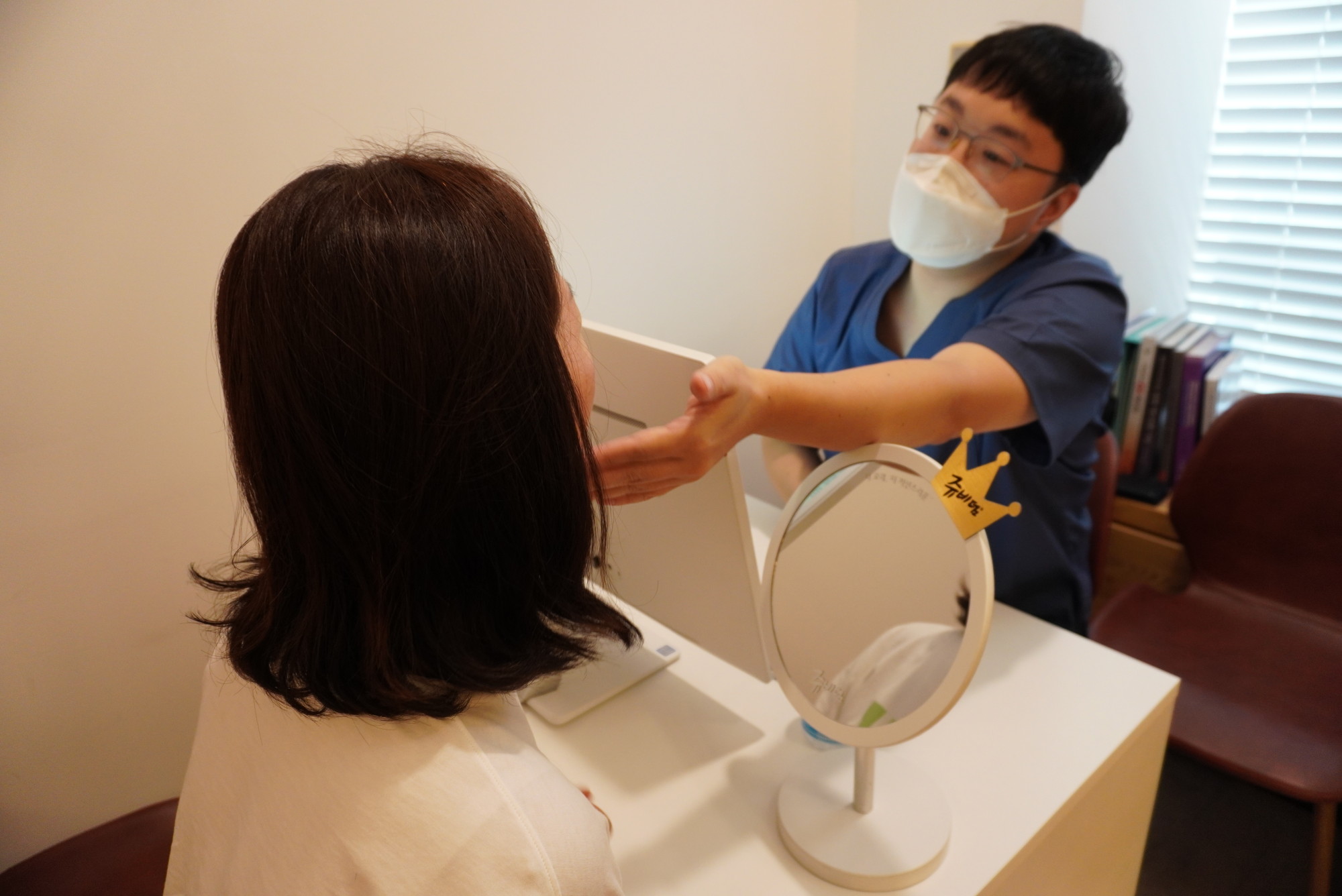
First, the doctor consults with you directly and gives a candid view on whether this treatment is genuinely needed in your situation and how much change can reasonably be expected.
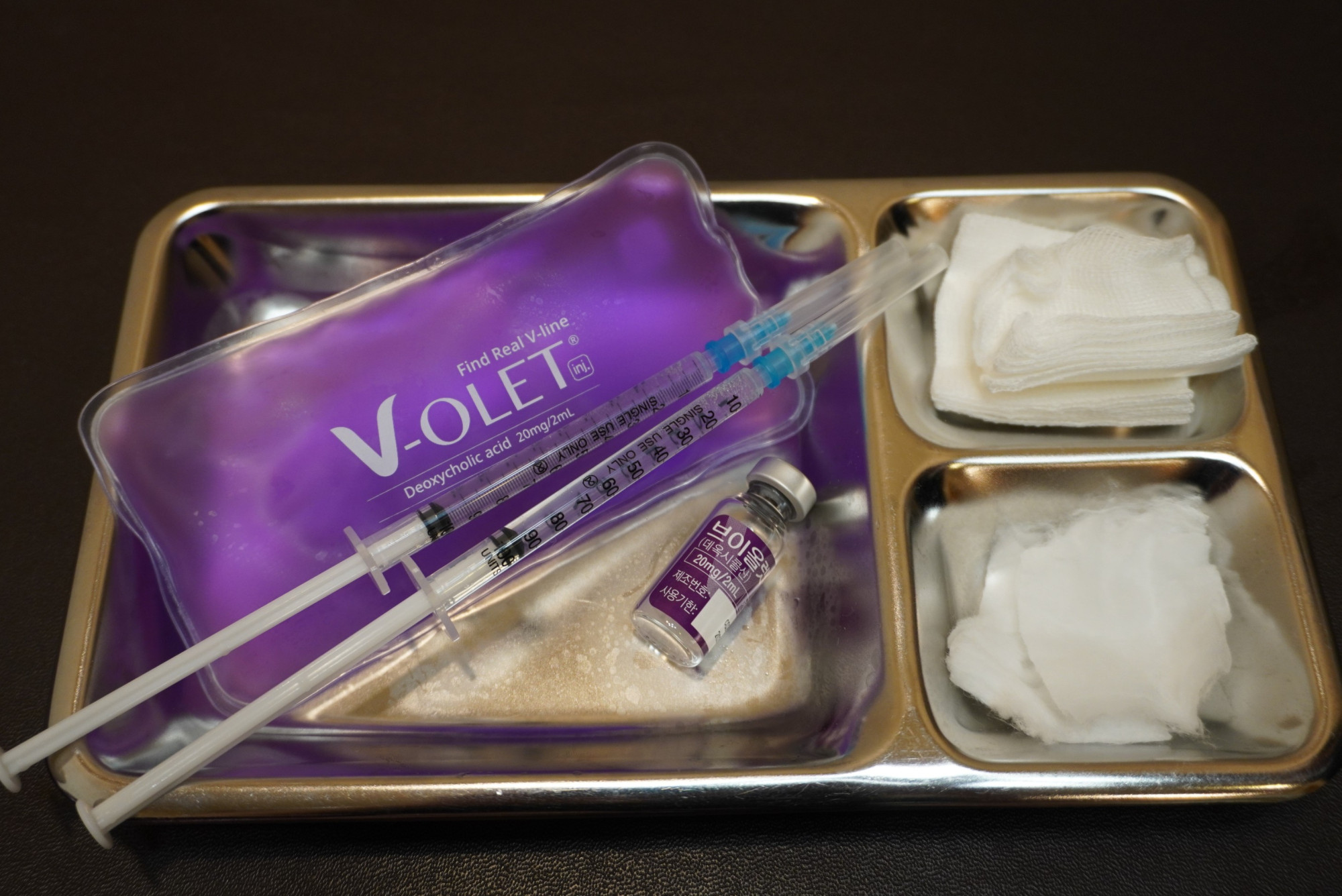
While the numbing takes effect, we open the new product and confirm the stated amount in front of you, dividing the 2cc in the vial between two syringes so that all of it is used, and then show you the empty vial.
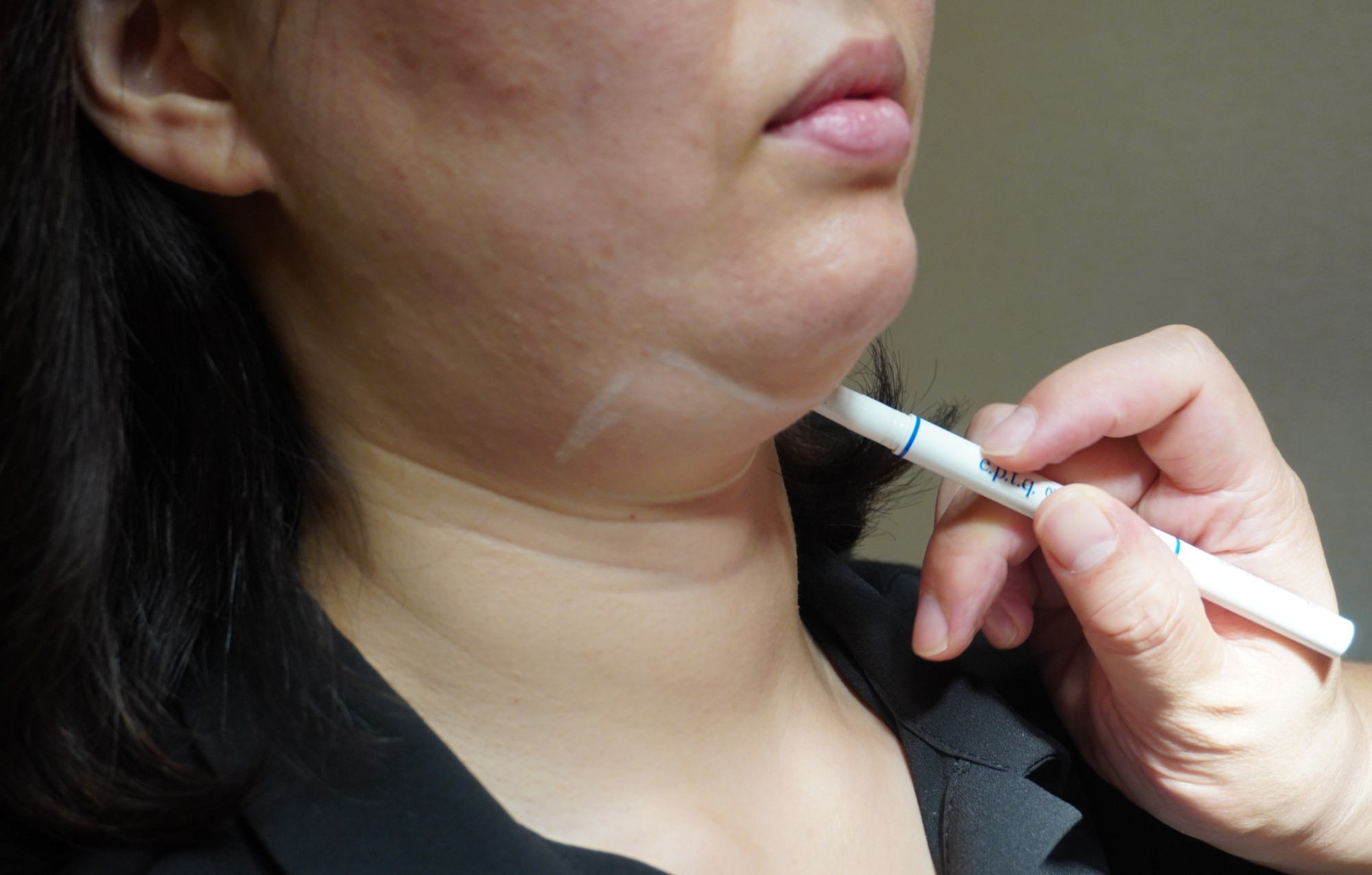
At the mapping stage, the target area is marked while avoiding the paths of the nerves that run around the jaw. Neglecting this step can lead to unnecessary side effects, so it is a stage we take particular care over.
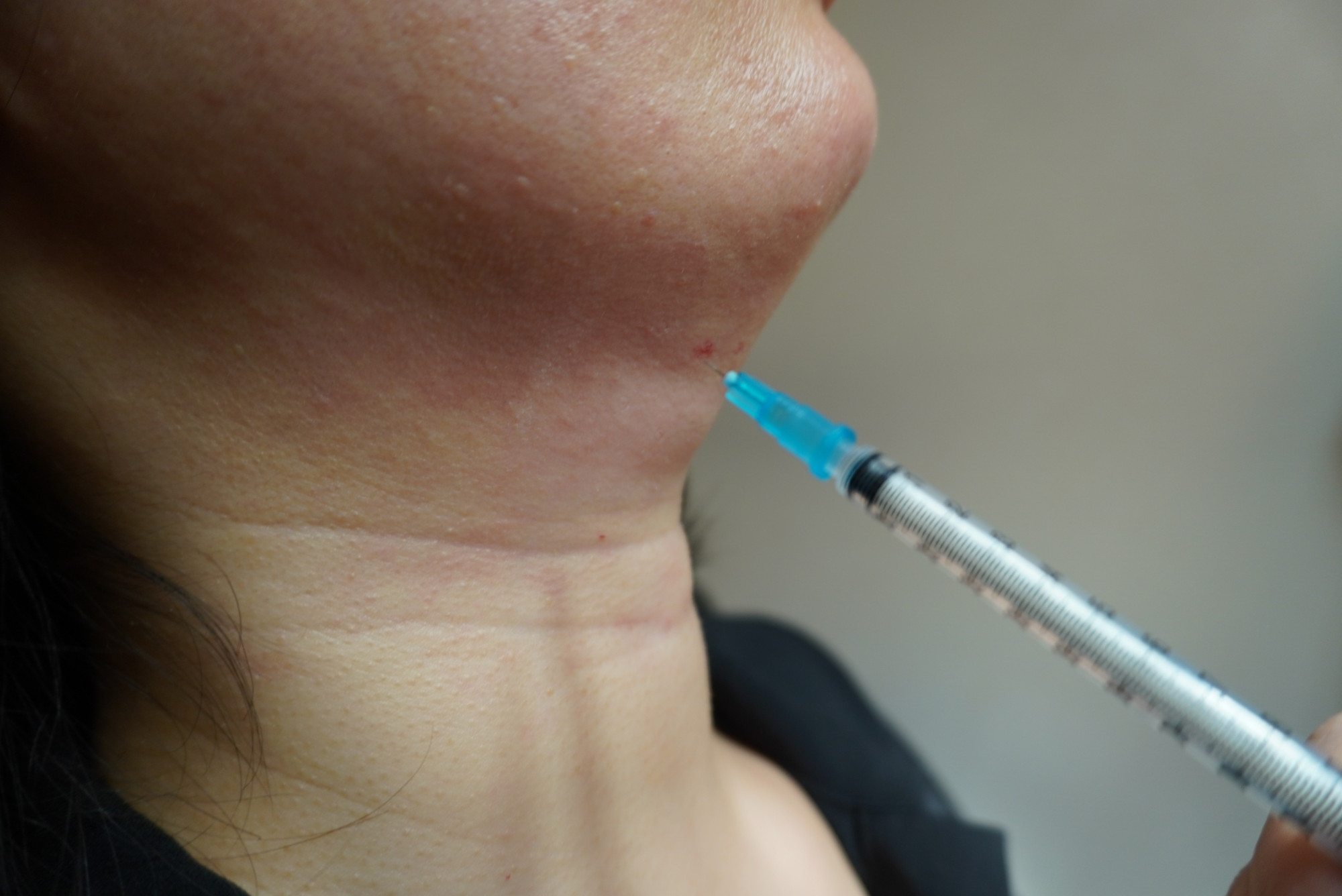
The injection has to reach the correct depth within the submental fat layer, neither too shallow nor too deep, to make the most of the effect while reducing side effects.
Reactions you may notice after treatment
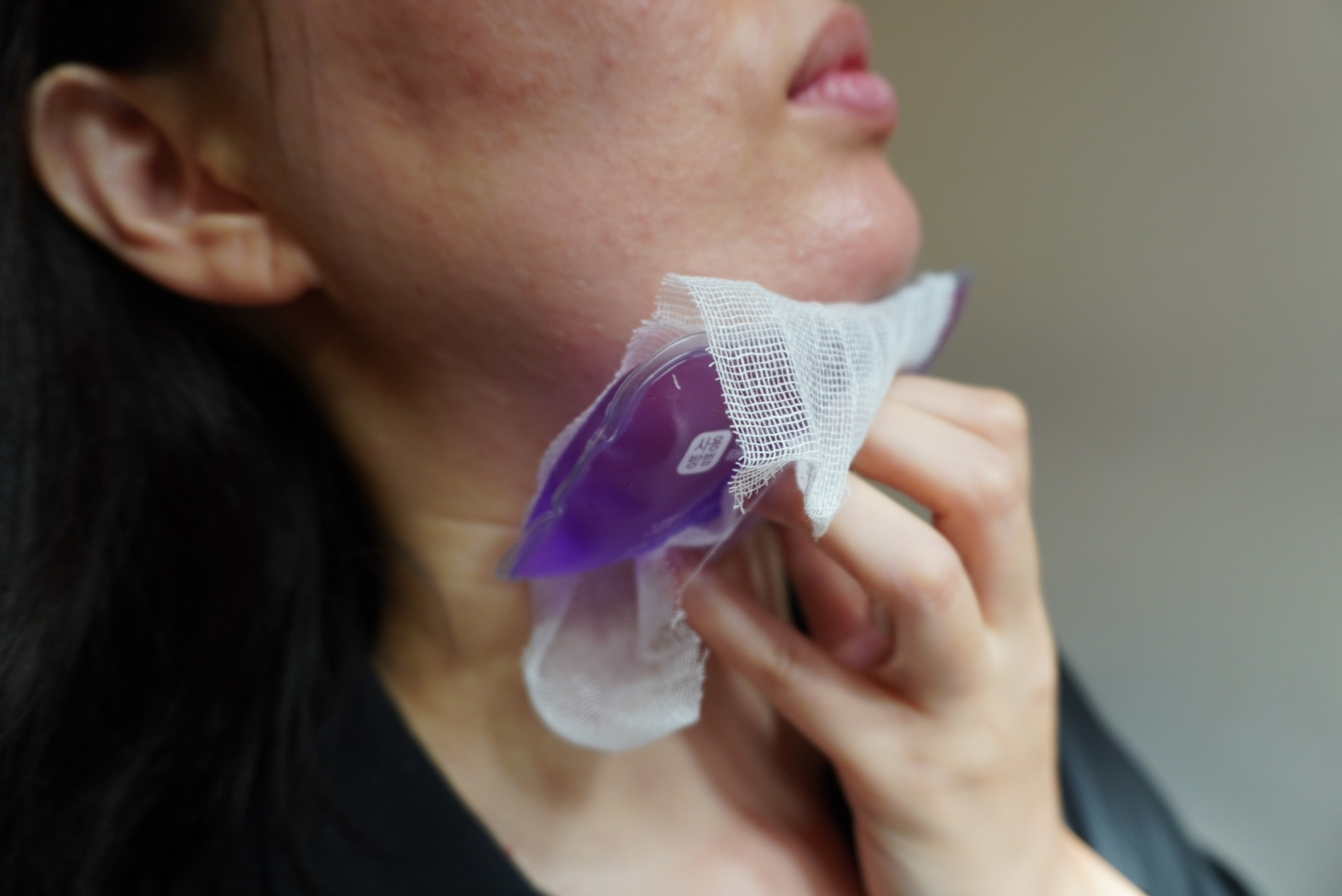
Immediately after the injection there is a burning sensation, and depending on the area, swelling or discomfort may continue for around one to two weeks. This is a natural part of the recovery process after DCA has acted on the fat cells and settles with time; a cold compress helps when it feels uncomfortable.
Wrapping Up
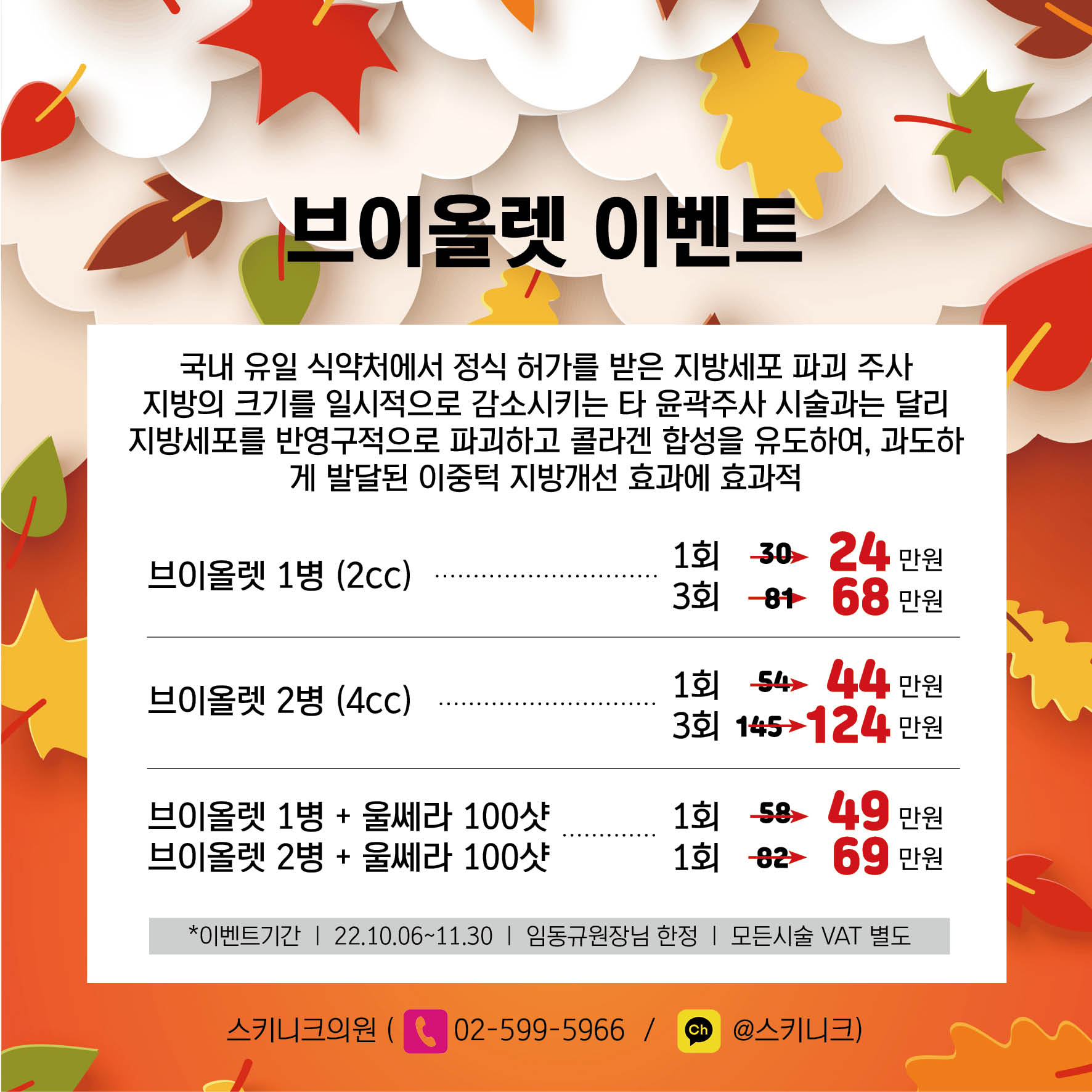
V-OLET is an injection that uses an approved ingredient to reduce the number of fat cells under the chin, and the outcome depends heavily on accurate assessment, careful mapping and injection depth. Detailed costs are available on the price guide, and if you would like to know whether this treatment suits your own concerns about the area under your chin, ask us through chat for advice on a double chin.
This article was written by Director Park Tae-hyung. He is the Chief Director of Skinique Clinic and serves as Senior Director of the Korean Association of Laser, Dermatology and Trichology. First published 27 October 2022 · Last reviewed 24 August 2026
This article is general medical information. Skin conditions and responses to treatment can vary between individuals. Whether and how to treat should be decided through an in-person consultation.