
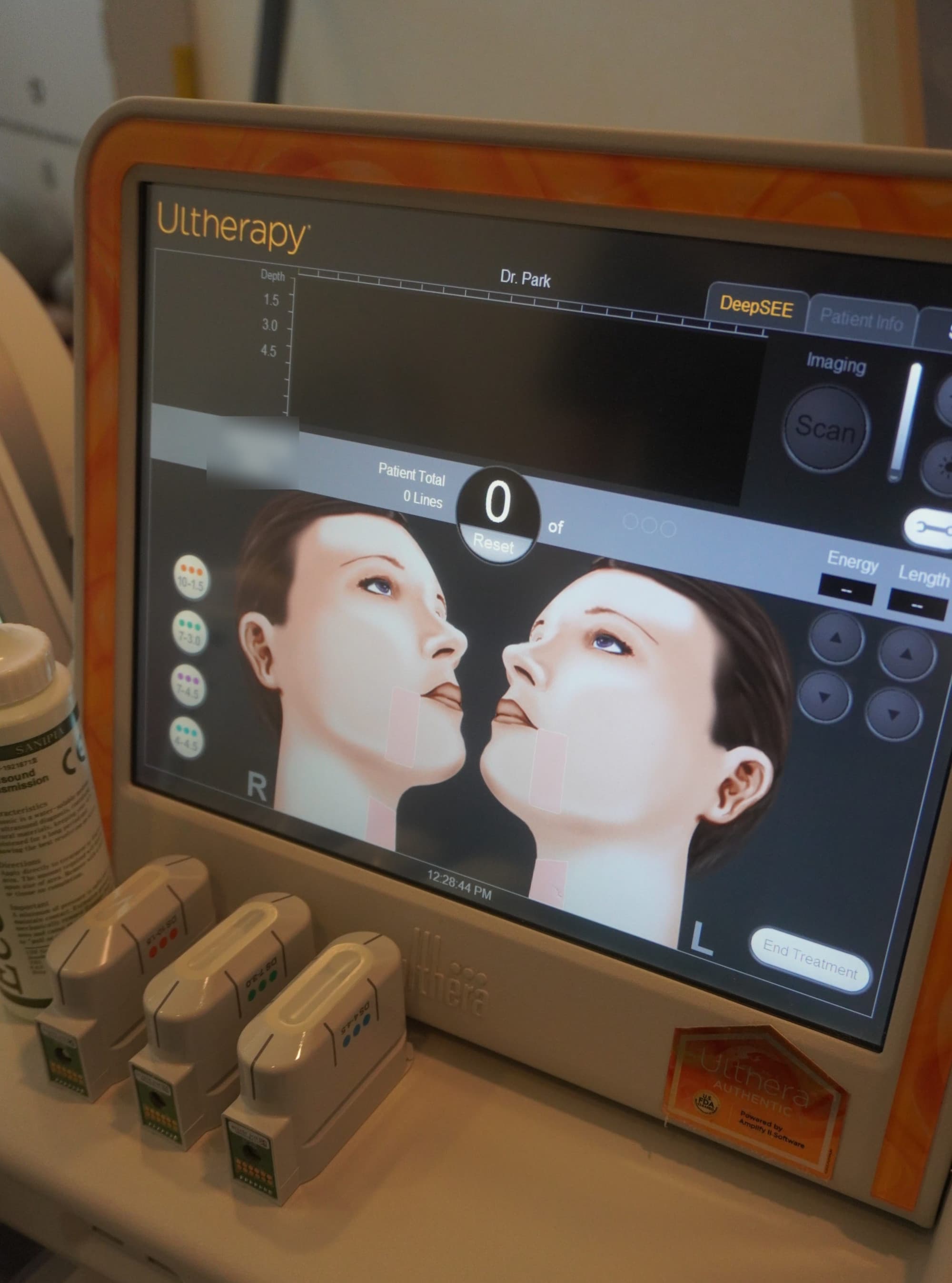
Anyone researching lifting treatments will run into the name Ultherapy sooner or later. With so many devices on the market, though, many people struggle even to judge whether Ultherapy is the right fit for their own concerns. This article walks through what the name means, how the device works, the common misconception surrounding shot counts, and the points worth checking when you look at cost.
What kind of device is Ultherapy
The name Ulthera comes from Ultrasound Therapy. It is a lifting device built to target skin that has loosened with age, and it works by delivering high-intensity focused ultrasound (HIFU) down to the fascia in the deep layers of the skin. Much as a lens gathers light to a single point, the ultrasound energy is focused to momentarily form a coagulation point above 60°C; the protein at that point denatures and the tissue contracts immediately. That contraction becomes the force that draws sagging skin upward.
When choosing a lifting device, it helps to set your priority first. If the goal is to lift skin that has dropped, HIFU-based devices such as Ultherapy fit; if the goal is to restore lost firmness, radiofrequency-based devices are generally the better match. If you need both, combining devices that work by different mechanisms is also an option.
Tissue changes observed in research
Ultherapy received US FDA clearance in 2009 and has since come into wide use in many countries. Several histological studies examining its effects have also been published.

A study comparing cheek skin biopsies taken before and after treatment observed an increase in dermal thickness.
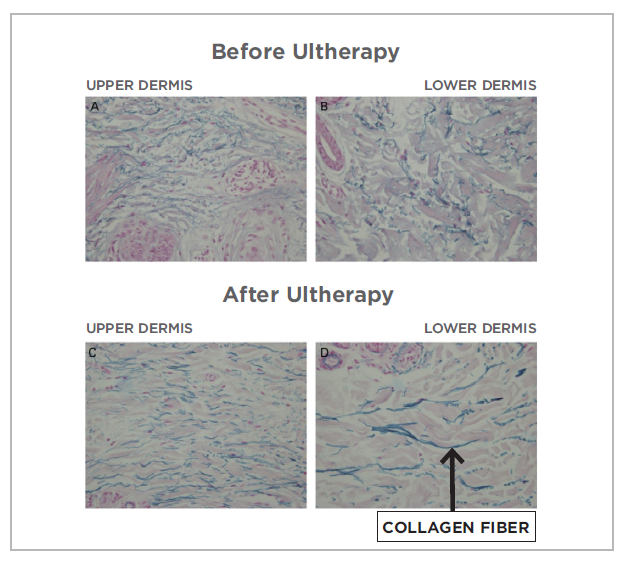
A more orderly arrangement of the elastic fibers above and below the dermis was reported as well, indicating that the structure of the skin itself becomes better organized.
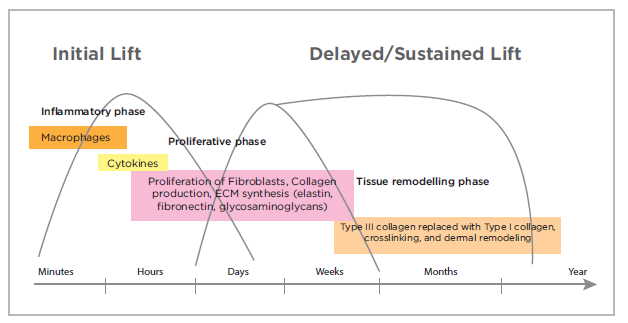
The change appears in two stages. First, the tissue where coagulation points have formed contracts, producing a tightening effect; then, as the skin recovers from the thermal stimulation, new collagen is produced and things gradually settle into place. The timing and degree of what you notice, however, vary with the condition of the skin.
What matters more than shot count
You often hear that "Ultherapy should always be done as strongly and as many shots as possible," but this is a piece of conventional wisdom that is hard to agree with. Facial area, skin thickness, the depth of the fascial layer, and the pattern of sagging all differ from person to person.
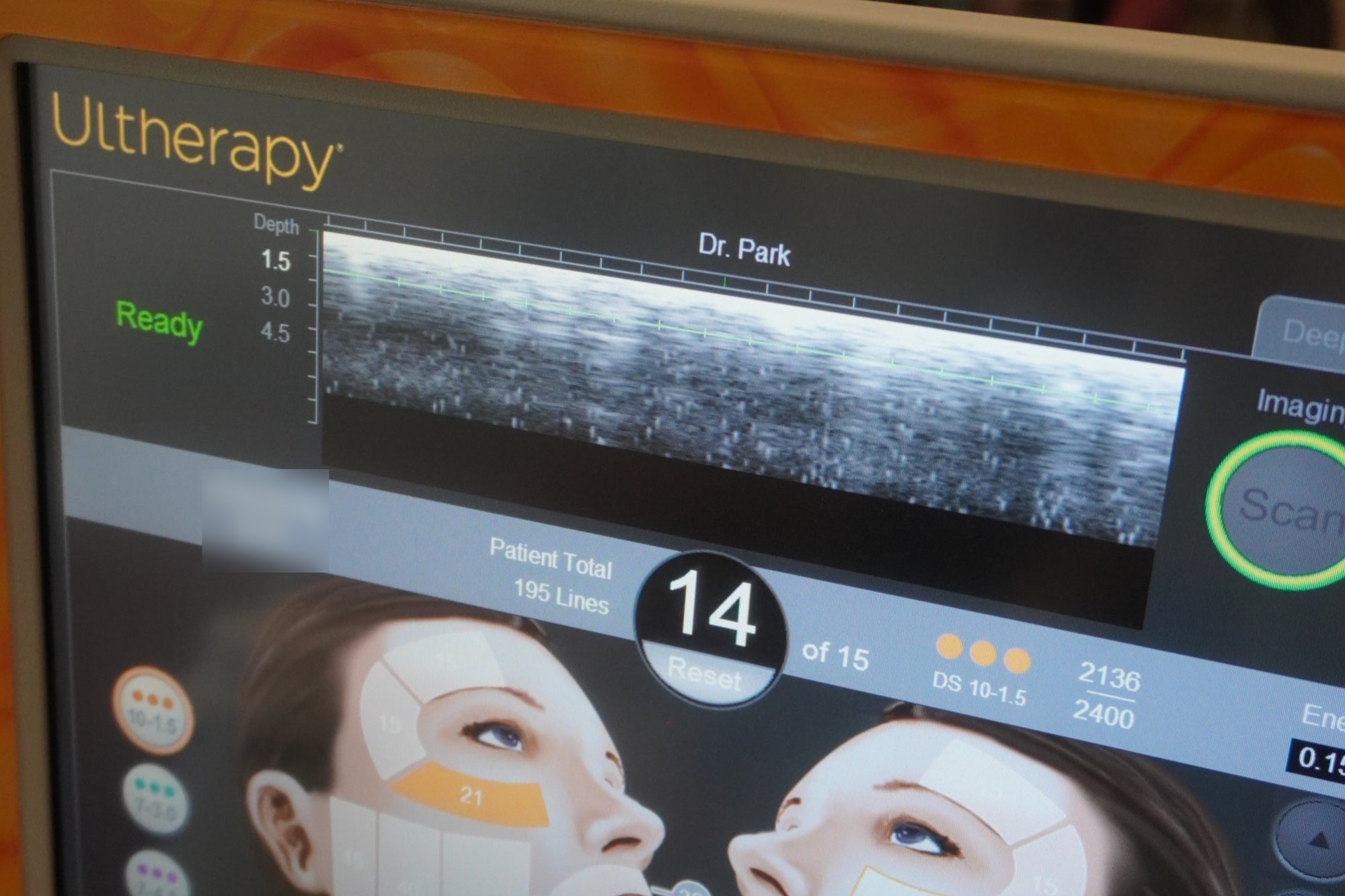
What sets Ultherapy apart from other HIFU devices is DeepSEE technology. With the transducer held against the skin, the practitioner can see on an ultrasound display exactly what depth the energy will reach, which makes it possible to aim precisely at each person's differing fascial depth without opening a cross-section.
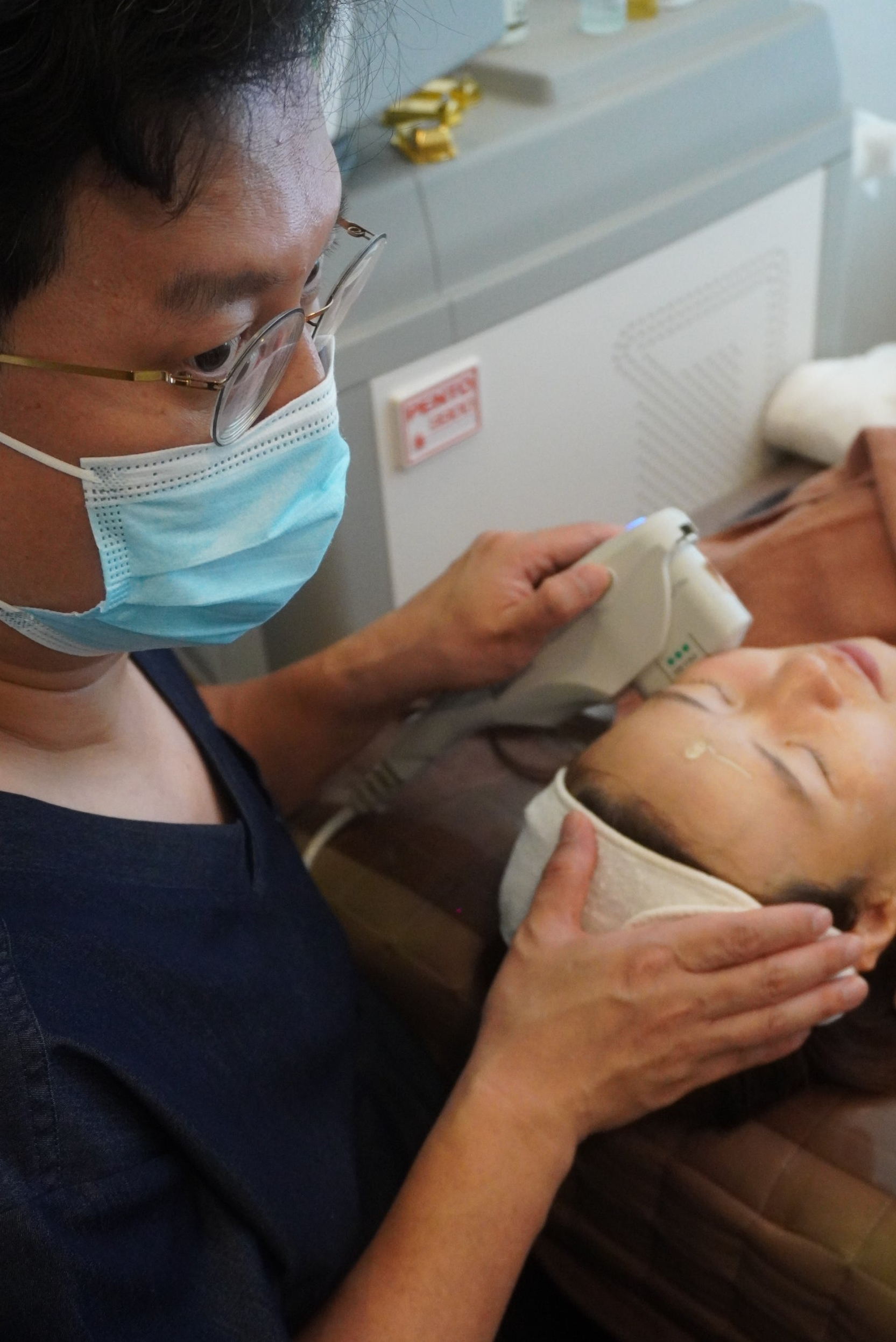
That is why examining the sagging of the face with the patient seated, discussing which areas are of concern, and mapping out the required transducers and shot distribution in advance influences the outcome more than the shot number itself. It is best to avoid treatments that simply fill a preset shot count without consultation.
Why it is paired with Core Lifting
At SKINIQUE Clinic we offer Ultherapy alongside Core Lifting, because the two treatments play different roles.
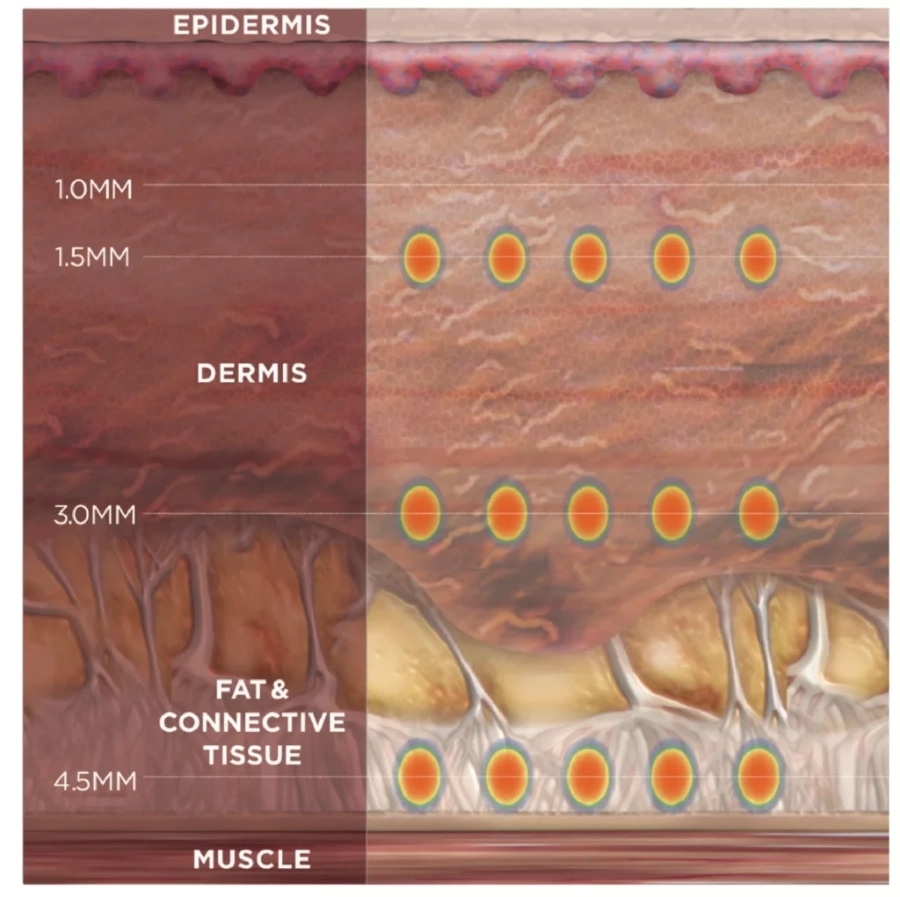
Ultherapy targets the deep layers to create coagulation points, prompting tissue contraction and new collagen formation.
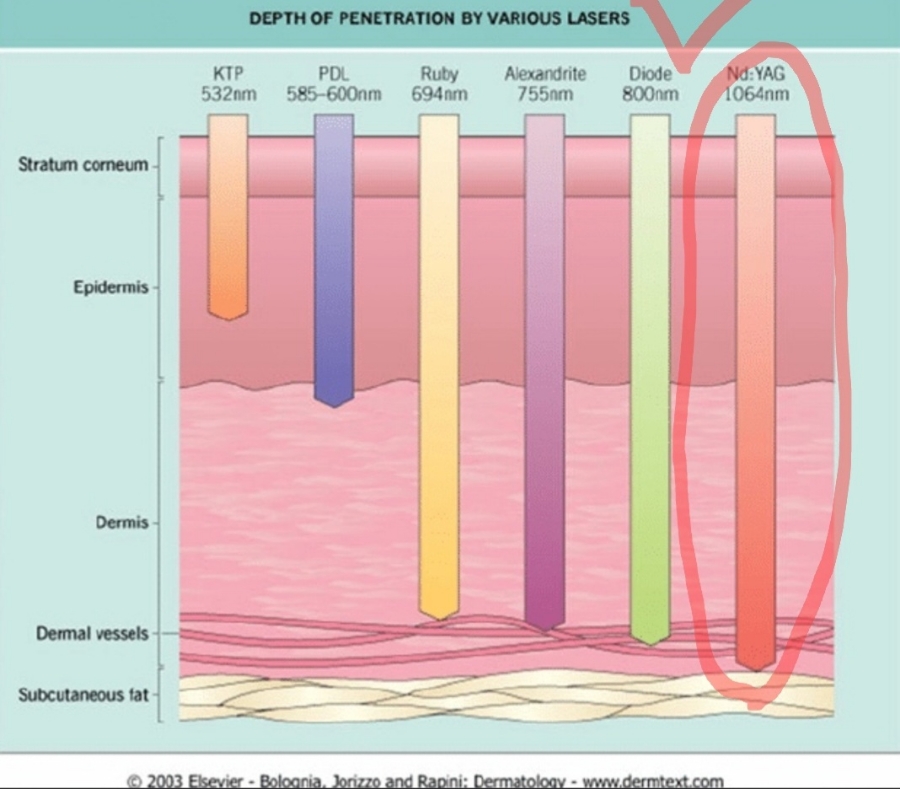
Core Lifting, meanwhile, delivers heat shallowly and broadly across the dermis to drive collagen remodeling, increasing epidermal thickness and dermal density so that texture, fine lines, and firmness are addressed together. In effect the deep and shallow layers are handled separately, so combining them can be mutually complementary. Core Lifting only means something when thermal energy is delivered over enough time — much as water needs time to come to a boil — so wherever you have it, it is worth checking how much time is allocated to the treatment.
What to check when looking at cost
Ultherapy is classified as a higher-cost treatment because the genuine transducers consumed in each session are expensive. This structure is why the use of refurbished transducers at some clinics has become an issue, and why the manufacturer emphasizes authenticity verification. If a clinic advertises a price far below the going rate, it is safer to double-check whether the transducer is genuine.
One more point: rather than settling on a shot count from a counselor's explanation alone and then lying down, it is essential to consult directly with the medical practitioner who will perform the treatment and decide together on the areas, depths, and shot distribution suited to your face. Costs are listed on our price guide.

Wrapping Up
Ultherapy is a lifting device that targets sagging skin through HIFU, and what determines the outcome is not the size of the shot count but a plan tailored to your own face. Understanding the cause of your sagging and setting your priorities comes before choosing a device name, and that requires an unhurried consultation with a medical practitioner. If you would like to know which lifting direction suits your skin, feel free to ask through our chat consultation.
This article was written by Dr. Park Tae-hyung, Chief Director. He is the Chief Director of SKINIQUE Clinic and serves as an academic director of the Korean Society for Laser Dermatology and Trichology. First published July 16, 2024 · Last reviewed August 23, 2026
This article is general medical information. Skin condition and response to treatment vary between individuals. Whether and how to be treated should be decided through an in-person consultation.