

We hear it more often than you might expect: someone has had toning done again and again, and the pigmentation looks the same. The reason usually lies not with the laser itself, but with which laser was used on which kind of pigment. This article explains the order and the criteria by which Skinique Clinic's Triple Toning (Triple Omakase) approaches pigmentation.

If ten toning sessions brought no change
When people start researching lasers for melasma and dark spots, the first treatments they usually encounter are the widely available ones: laser toning, pico toning, dual toning. Some people are satisfied with these, of course. But a fair number of patients come to us saying that after nearly ten toning sessions they still cannot see a difference, or that their skin now feels thinner than before.
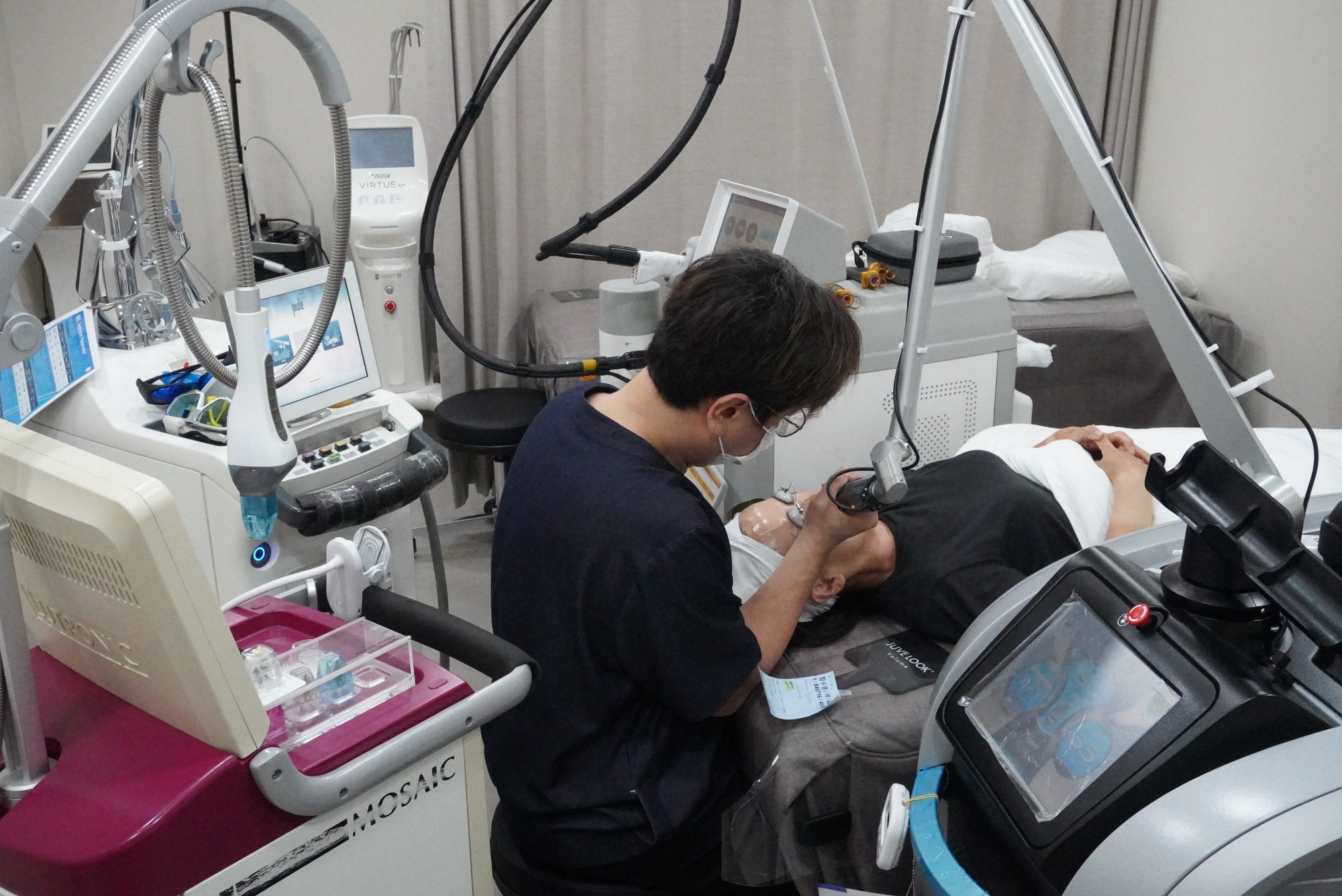
Since opening, Skinique Clinic has paid attention to the limits of pigment treatment that repeats a single laser, and has worked on combined pigment solutions that bring several lasers together. The result is the Omakase laser programme, and its pigment-focused version is the Triple Toning introduced here.
Diagnosis comes first: pigment is not all the same
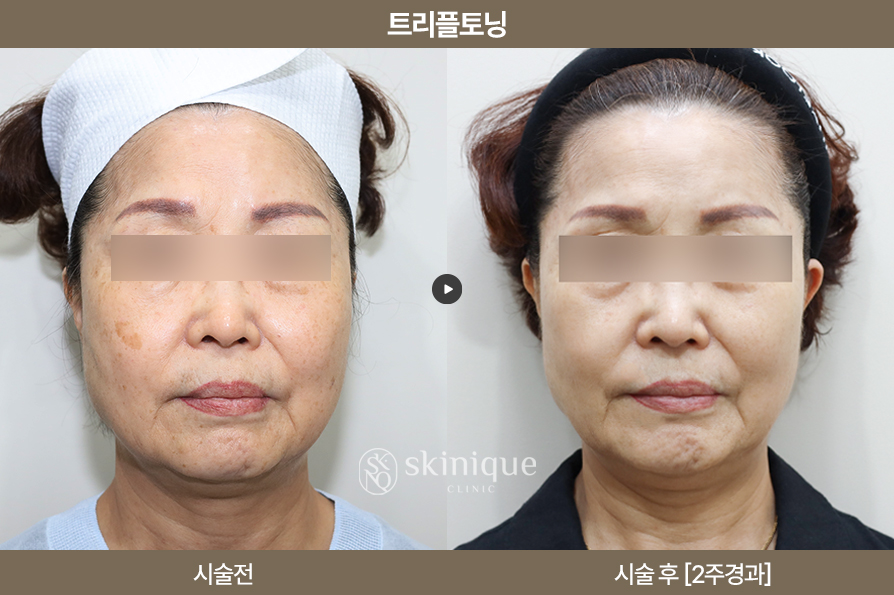
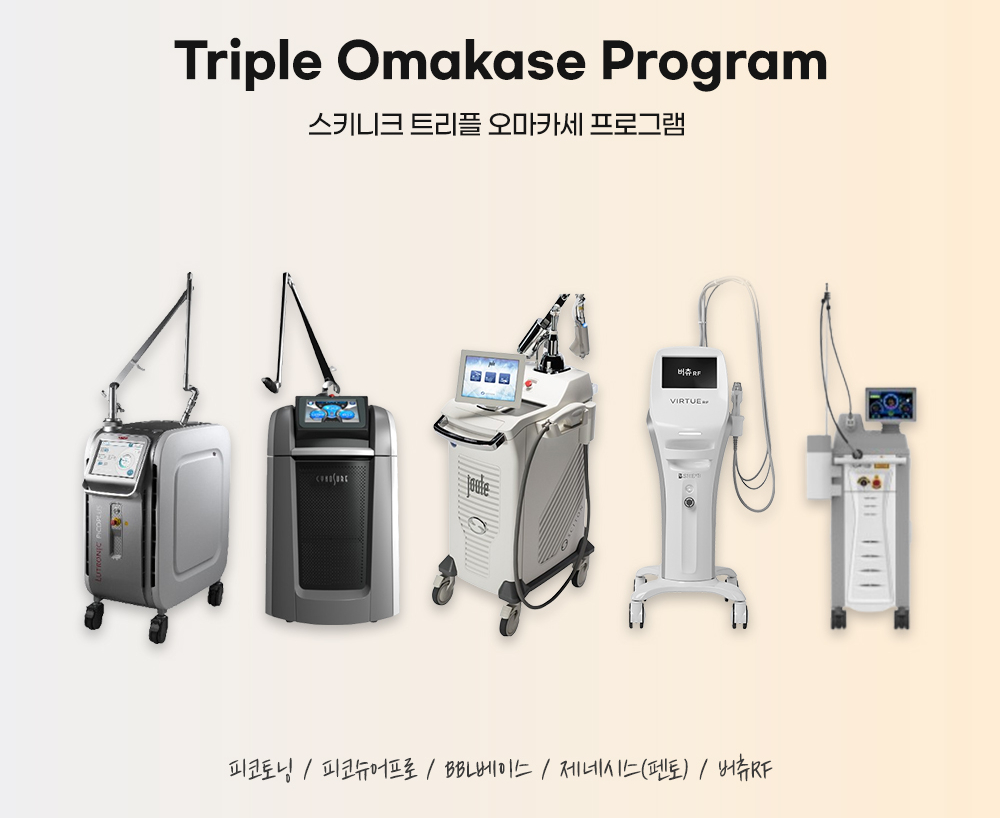
Melasma and dark spots may look similar on the surface, but they differ in cause, in depth, and in the layer where they have settled, so the treatment has to differ too. Triple Toning therefore starts from a diagnosis that distinguishes skin type and pigment depth, then designs the laser combination and the intensity separately for each type of pigment.
Three lasers combined in one session
More important than arguments over whether ruby or pico is better for melasma is the combination itself, because each device is good at something different. Triple Toning selects three devices from among PicoPlus, PicoSure Pro, Sciton BBL, Laser Genesis and Virtue RF, chosen to match the condition of the skin that day. Because it aims not only at clearing surface pigment but also at dermal remodelling, the same session can address redness, pores, skin texture and skin tone alongside melasma and dark spots.
Two further principles apply. First, no two sessions are the same treatment. Skin condition keeps changing, so the type of laser and the intensity are decided again at every session. The name "Omakase" comes from exactly this: rather than repeating a fixed course, the combination is rebuilt each time. Second, the lasers are followed by an ampoule suited to the skin's condition, sonophoresis or LDM, and LED regeneration care, which support recovery.
How the treatment actually proceeds
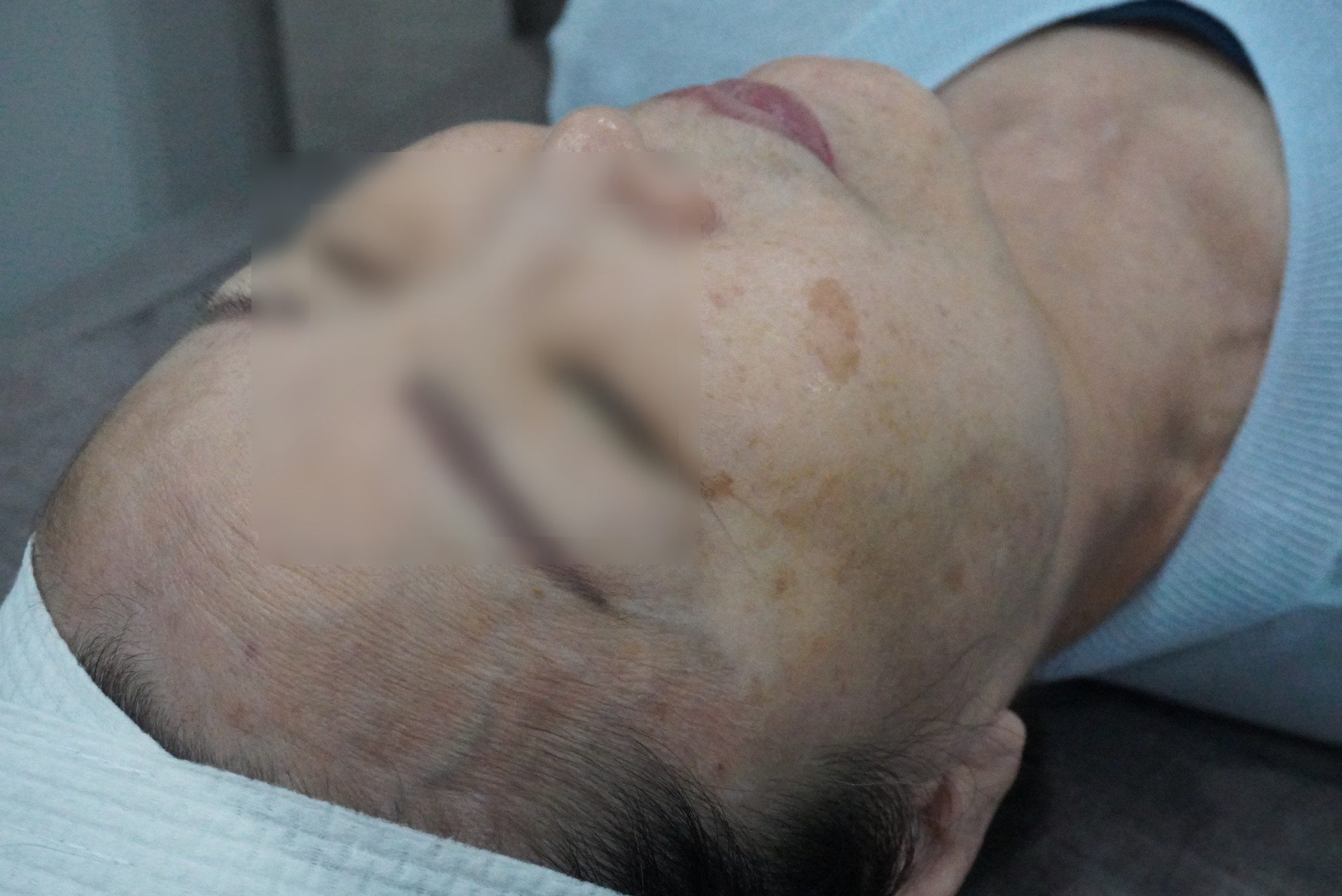
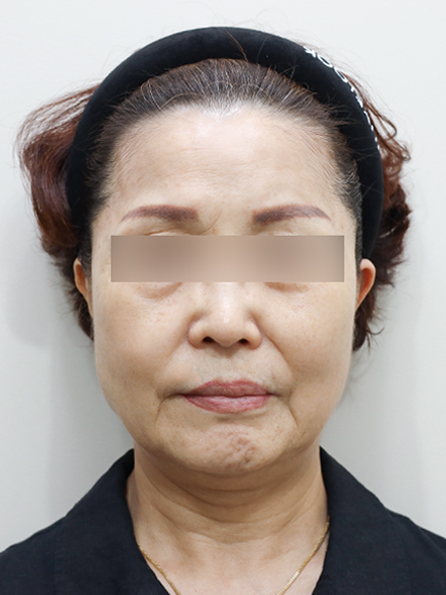
The photograph above is a pre-treatment record of a patient who came in because a mix of melasma and dark spots of various sizes, including solar lentigines, had become difficult to cover with make-up.
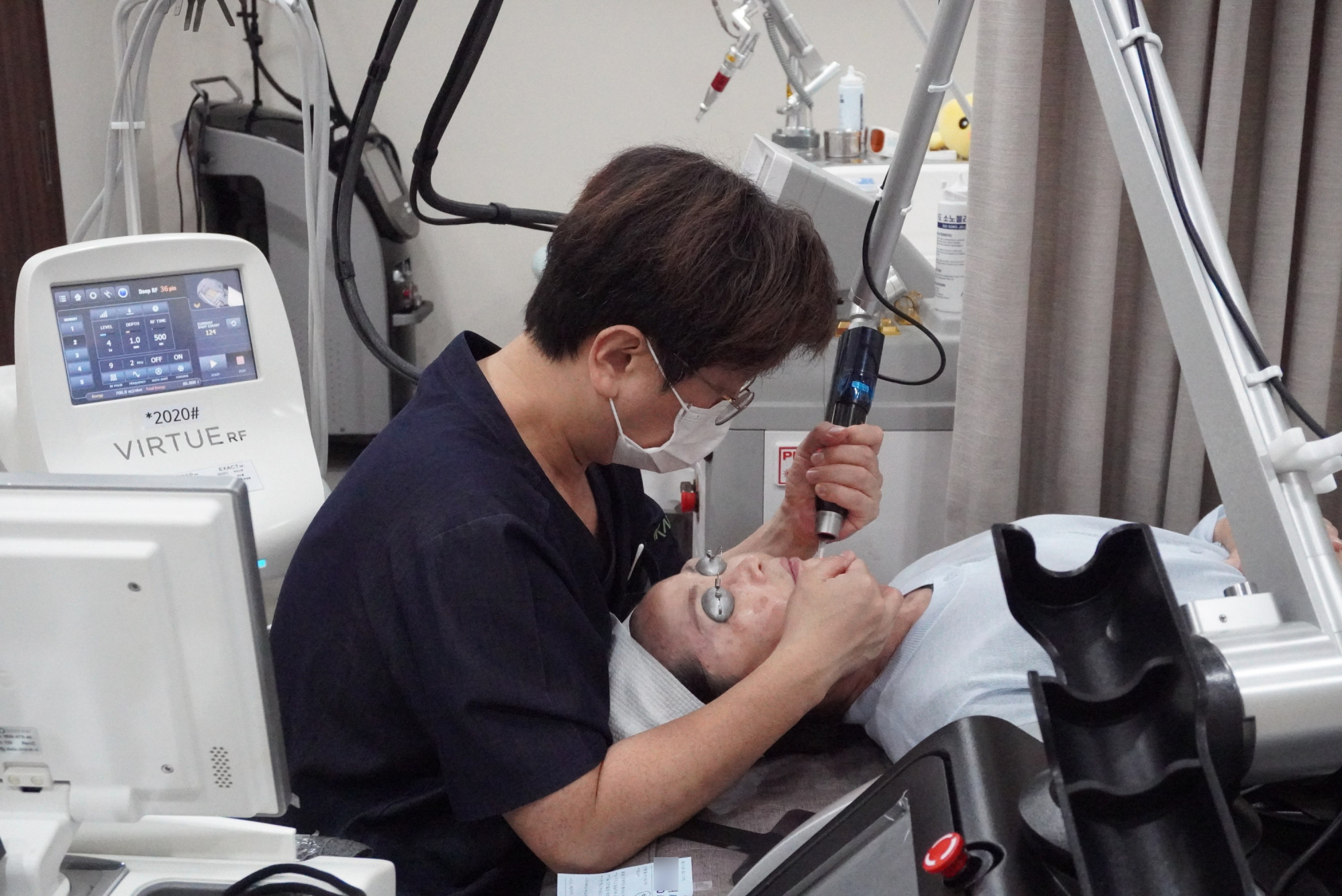
After the treatment, crusting may appear over the pigmented areas. This is a response to energy reaching the lesion, and the crusts fall away naturally as the skin regenerates. Pigment close to the surface tends to show change relatively early, while deep, long-standing pigment has to be worked on slowly over repeated sessions, and both the speed and the degree of response vary from person to person. Sun protection is essential throughout the treatment period.
You might consider this if
- You have had toning several times but found it hard to notice a change
- You want to manage melasma, dark spots and overall skin tone together
- You are concerned that lasers may thin your skin
- Your skin is sensitive while the pigment sits deep, making the problem a layered one
Wrapping Up
Triple Toning is a tailored pigment programme in which the three lasers are not fixed but recombined at each session according to the diagnosis. Detailed pricing is available on the price guide. If you would like to know which combination suits your pigmentation, feel free to ask through a chat consultation about the toning approach for your skin.
This article was written by Dr. Park Tae-hyung, Chief Director. He is the chief director of Skinique Clinic and serves as academic director of the Korean Society for Laser Dermatology and Trichology. First published 12 June 2025 · Last reviewed 23 August 2026
This article is general medical information. Skin condition and treatment response may vary from person to person. Whether to undergo treatment, and which method to use, should be decided through an in-person consultation.