
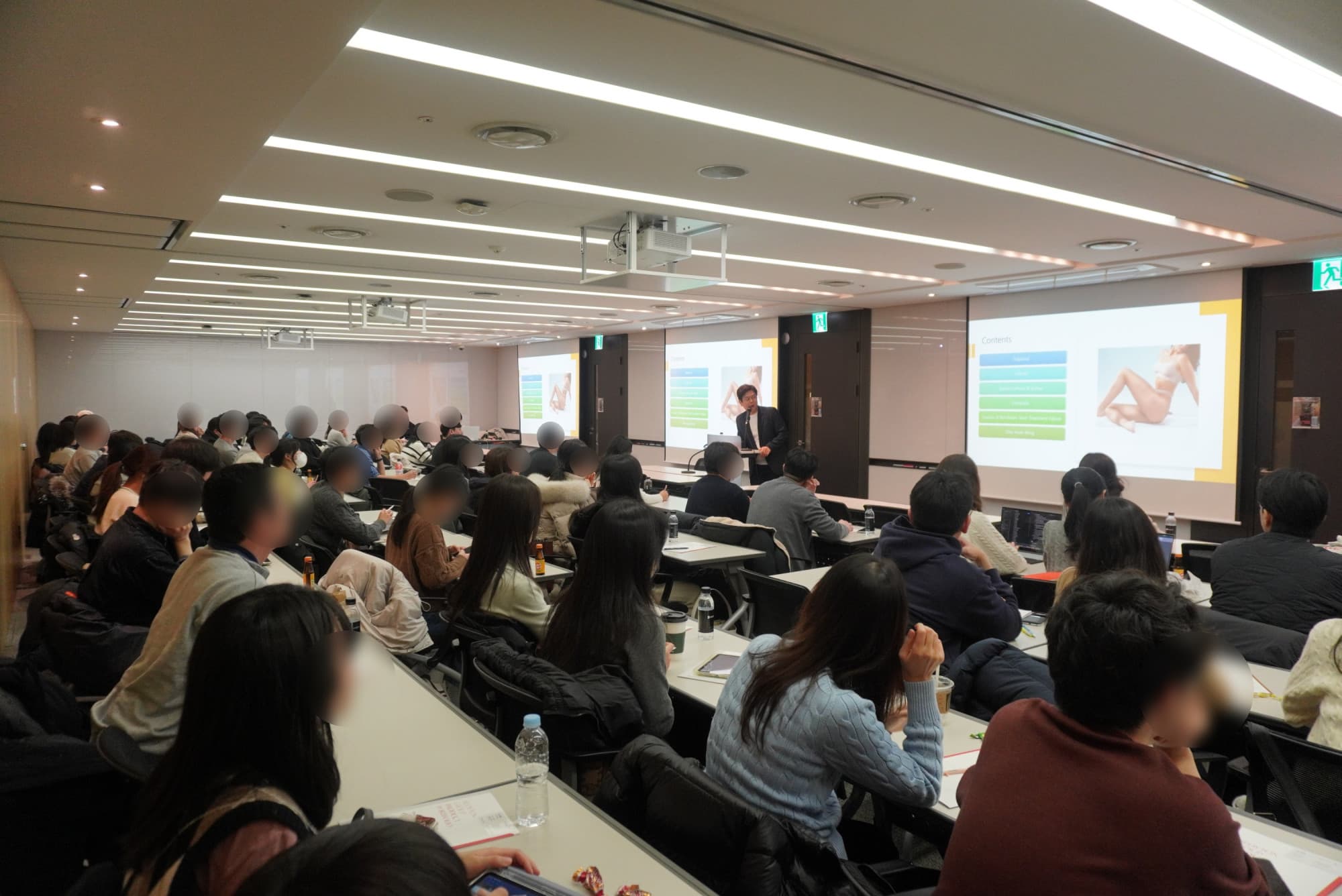
Calf slimming Botox and trapezius Botox have become familiar treatments, yet even under the same name the outcome varies considerably with the purpose behind the treatment and the way it is planned. This article summarises the key points on body botulinum toxin treatment that Dr. Park Tae-hyung, Chief Director of SKINIQUE Clinic, covered in a lecture for physicians, framed for readers who are considering the treatment themselves.
A clinician who teaches other clinicians
Dr. Park Tae-hyung is a director of the Korean Academy of Laser, Dermatology and Trichology, the largest aesthetic dermatology society in Korea with roughly 4,000 members, and has spent years lecturing to fellow physicians on the basis of 13 years of clinical experience. From time to time we plan to share, here on the blog, the parts of that physician-only material that may be useful to patients as well.
This lecture: the fundamentals of body botulinum toxin treatment
A lecture for physicians was recently held under the auspices of KALDAT. The topic was "The Fundamentals of Body Botulinum Toxin Treatment." Rather than treating calf and trapezius Botox as theory alone, the session shared perspectives on a wide range of cases accumulated over 13 years and included a live demonstration conducted on site.
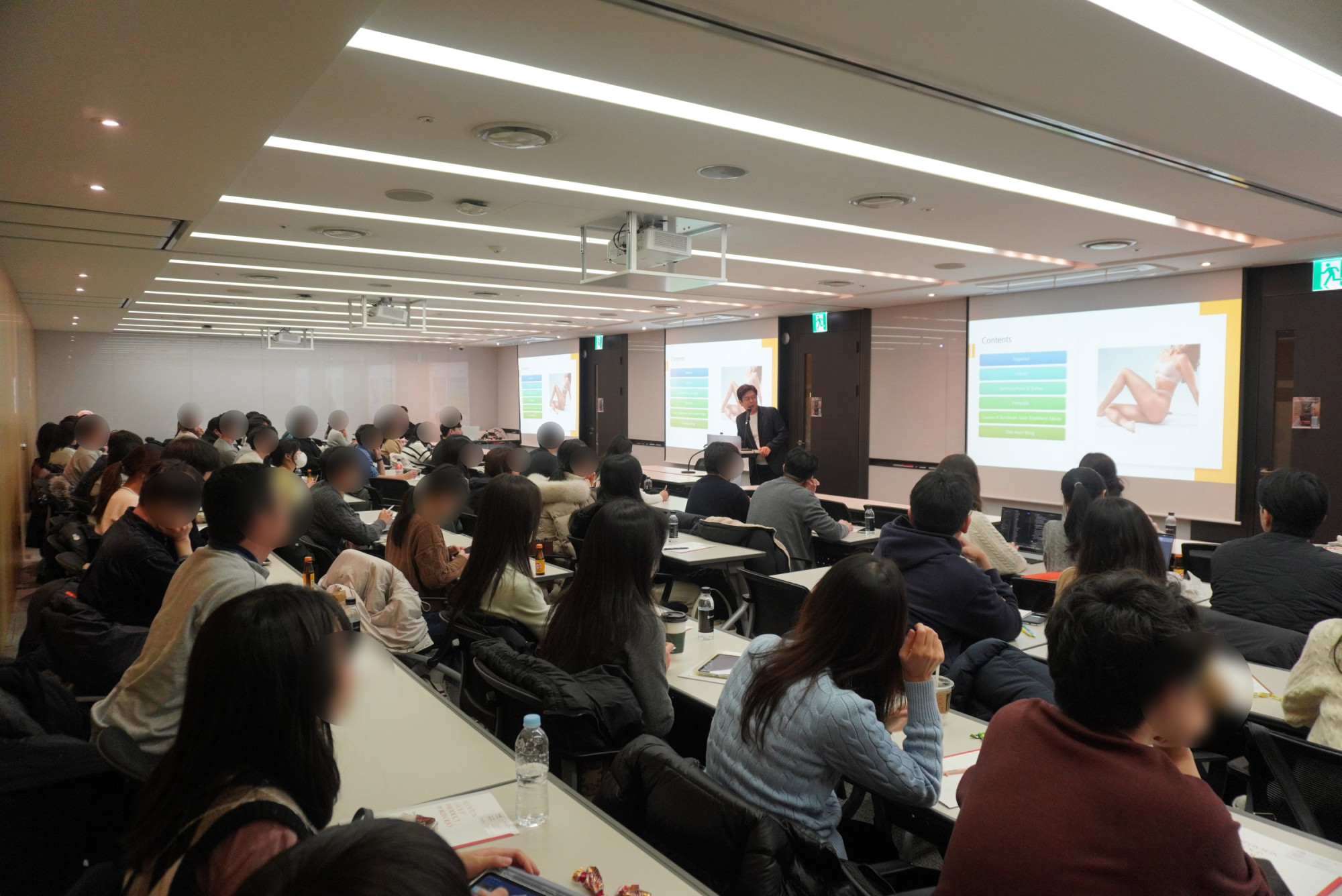
More than 100 physicians filled the lecture hall, and the session ran amid considerable interest.
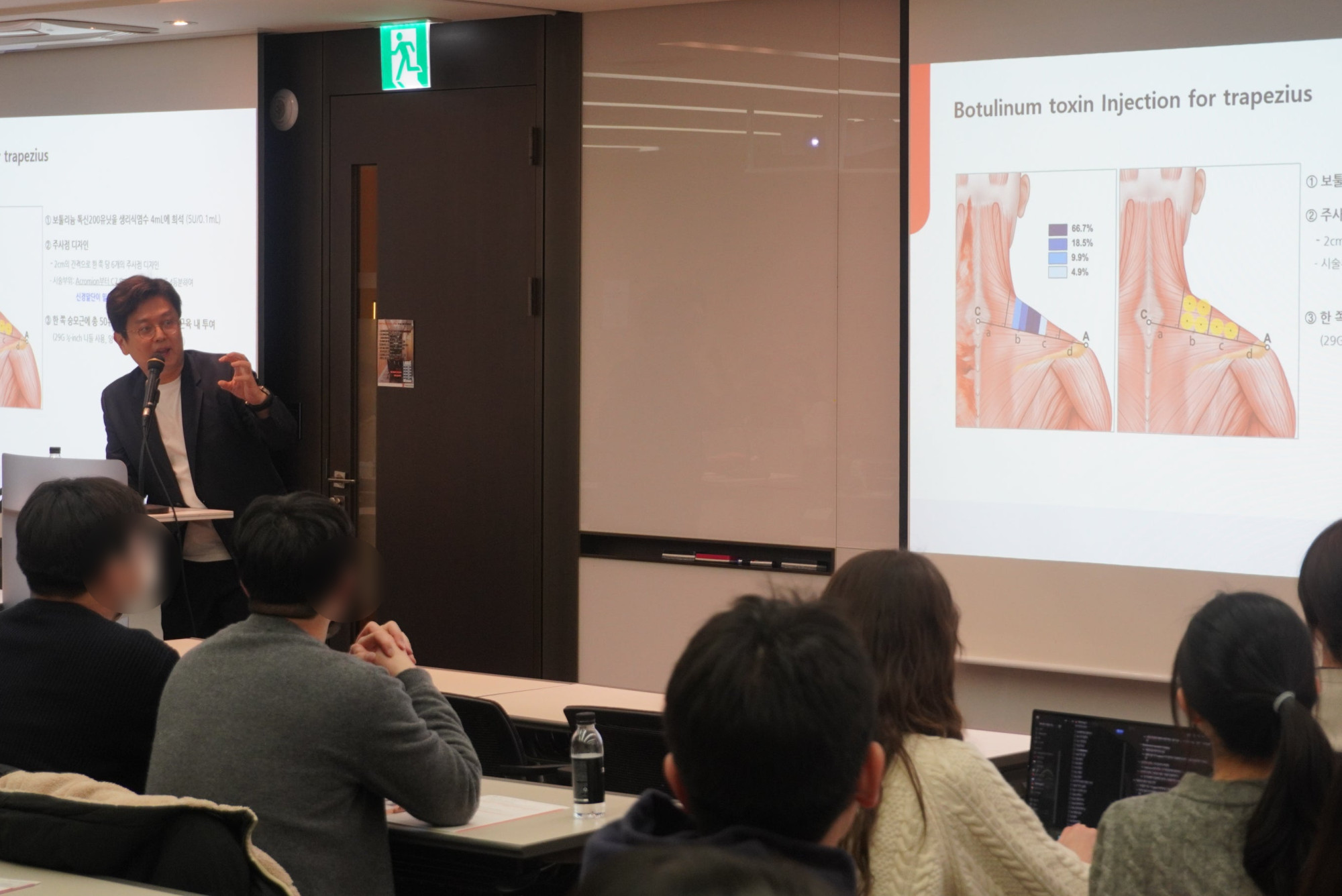
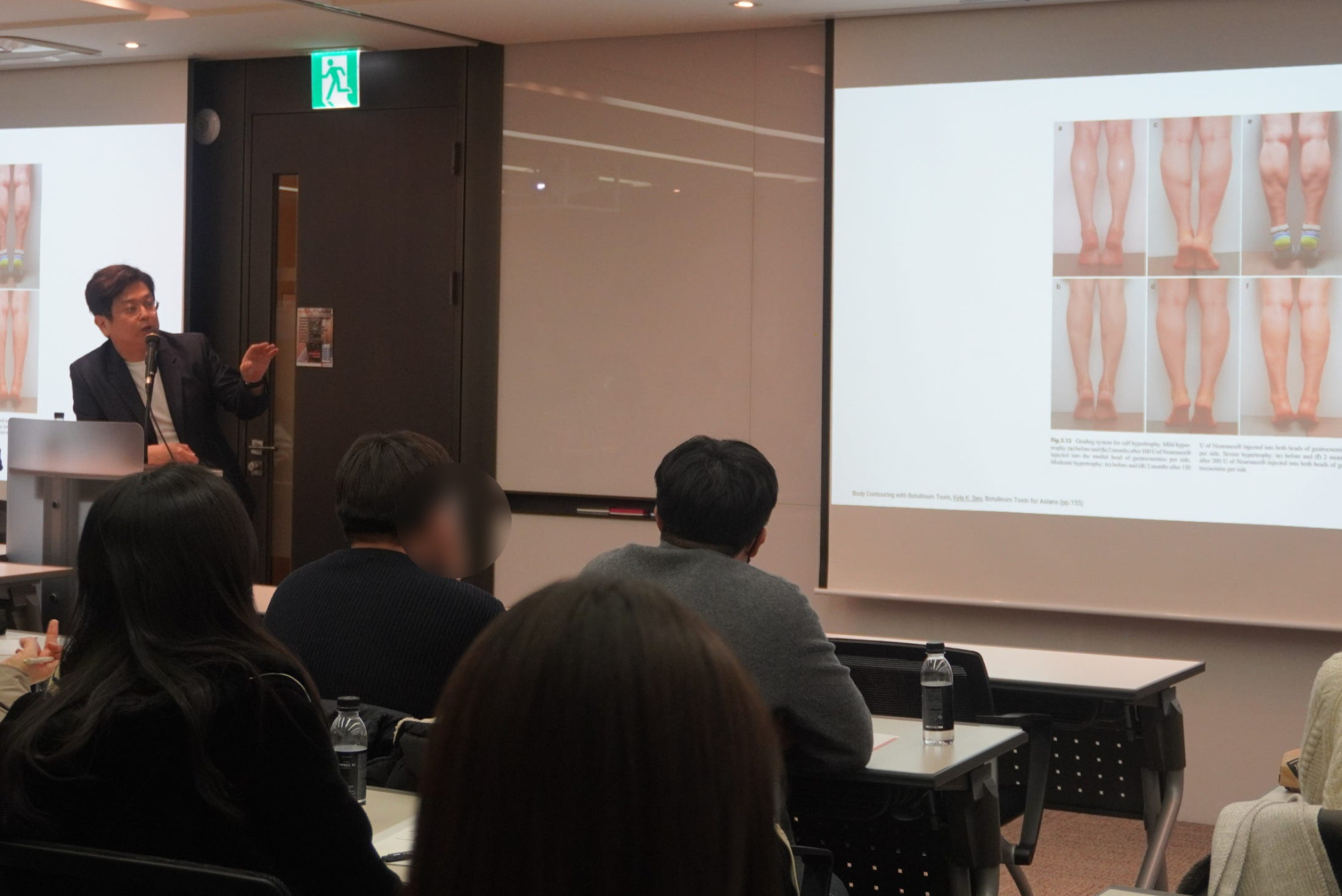
What the lecture covered
Over roughly an hour, covering the trapezius first and then the calves, the lecture went beyond basic technique to the points where real clinical practice diverges: how treatment for aesthetic purposes should differ from treatment aimed at relieving discomfort, what dose is appropriate for each area, how treatment intervals and cycles are set, how the number of injection points changes with the area and dose involved, and which injection sites deserve consideration in unusual cases. The heart of it was the decision criteria that shift with purpose and circumstance.
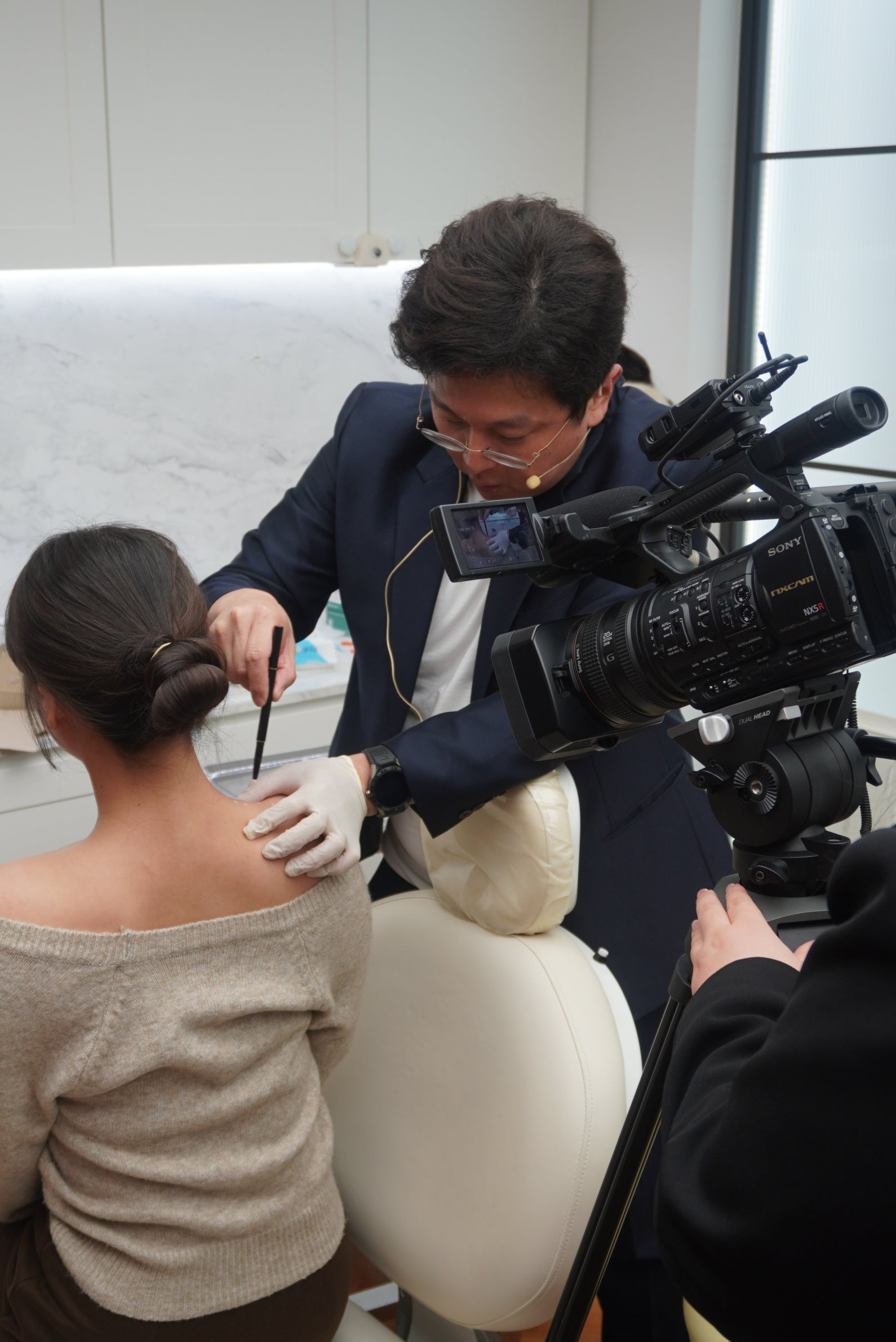
Practical know-how carried into a live demonstration
Once the theory section ended, a live demonstration was broadcast into the lecture room. Practical know-how was shared on how theory translates into an actual treatment, how the differing conditions and variables of each patient are accounted for, what to be careful of in order to avoid adverse effects, and how to respond when resistance to botulinum toxin is suspected.
What to keep in mind as a patient
Injection technique itself is the clinician's domain, but there is a clear standard for those receiving the treatment to hold on to: body Botox is not a fixed, off-the-shelf procedure you simply sign up for. The dose, the sites and the interval need to be designed around your own muscle condition and your goal, whether that is refining a line or easing tightness and discomfort. The more accurate that design, the lower the risk of adverse effects and the greater the likelihood of a result close to what you hoped for. Effect and duration, of course, vary from person to person.
Wrapping Up
Satisfaction with calf and trapezius Botox ultimately comes down to accurate assessment and a treatment plan built around the individual. SKINIQUE Clinic designs each person's treatment using standards built through lecturing to and researching alongside other physicians. If you are wondering what plan would suit your own shoulders and calves, feel free to ask through Chat with us about a Botox plan designed for your body.
This article was written by Dr. Park Tae-hyung, Chief Director of SKINIQUE Clinic and Senior Director of the Korean Academy of Laser, Dermatology and Trichology. First published 10 March 2025 · Last reviewed 23 August 2026
This article provides general medical information. Skin condition and response to treatment vary from person to person. Whether and how to proceed with treatment should be decided through an in-person consultation.