
When people start looking into lifting treatments, they often end up torn between V-RO and Shurink. Both are frequently compared as lifting options with a lighter burden, but from the energy source to the skin layers they address, they are in fact devices of different character. This article walks through how the two treatments differ, and what is worth weighing beyond the name of the device.
Lifting lasers, sorted into three groups
Plenty of treatments are marketed for lifting, but if you sort them by how the energy is delivered, they fall into roughly three groups.
- Radiofrequency (RF) devices — Thermage, Oligio, Density, Volnewmer and others
- Ultrasound (HIFU) devices — Ultherapy, Shurink, Tenserma, Liftera and others
- Devices using wavelengths of light — Titanium, Quattro and others
Shurink belongs to the second group; it uses ultrasound only. V-RO, by contrast, can use ultrasound and radiofrequency together in a single device, and that is the fundamental difference. So rather than lining the two up and picking one, it is more accurate to understand them as devices in different categories.
| Category | Shurink | V-RO |
|---|---|---|
| Energy source | Ultrasound | Ultrasound + radiofrequency |
| Area addressed | Firmness of tissue deep in the skin | Deep firmness + fine surface firmness |
Reading V-RO's structure through its tips
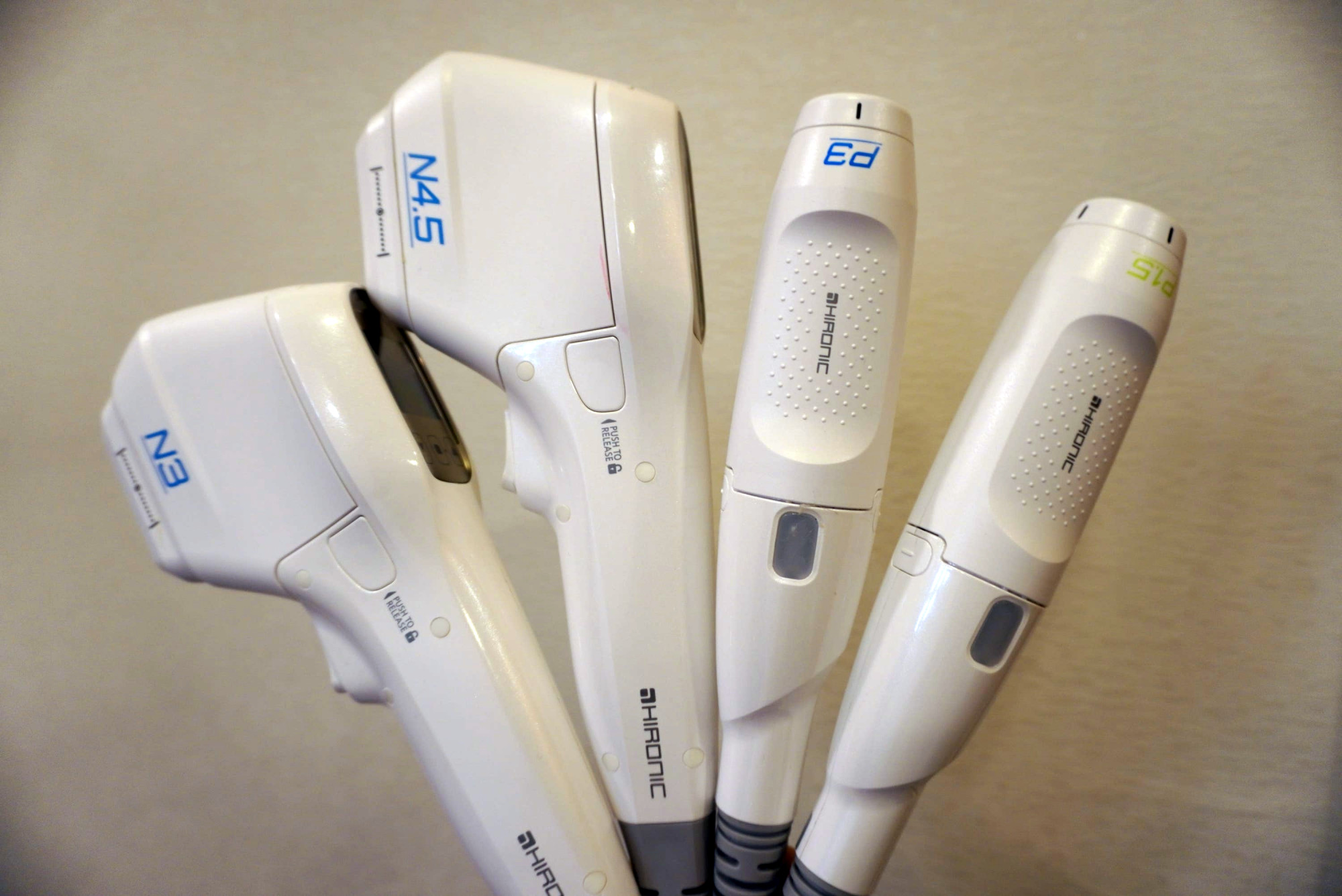
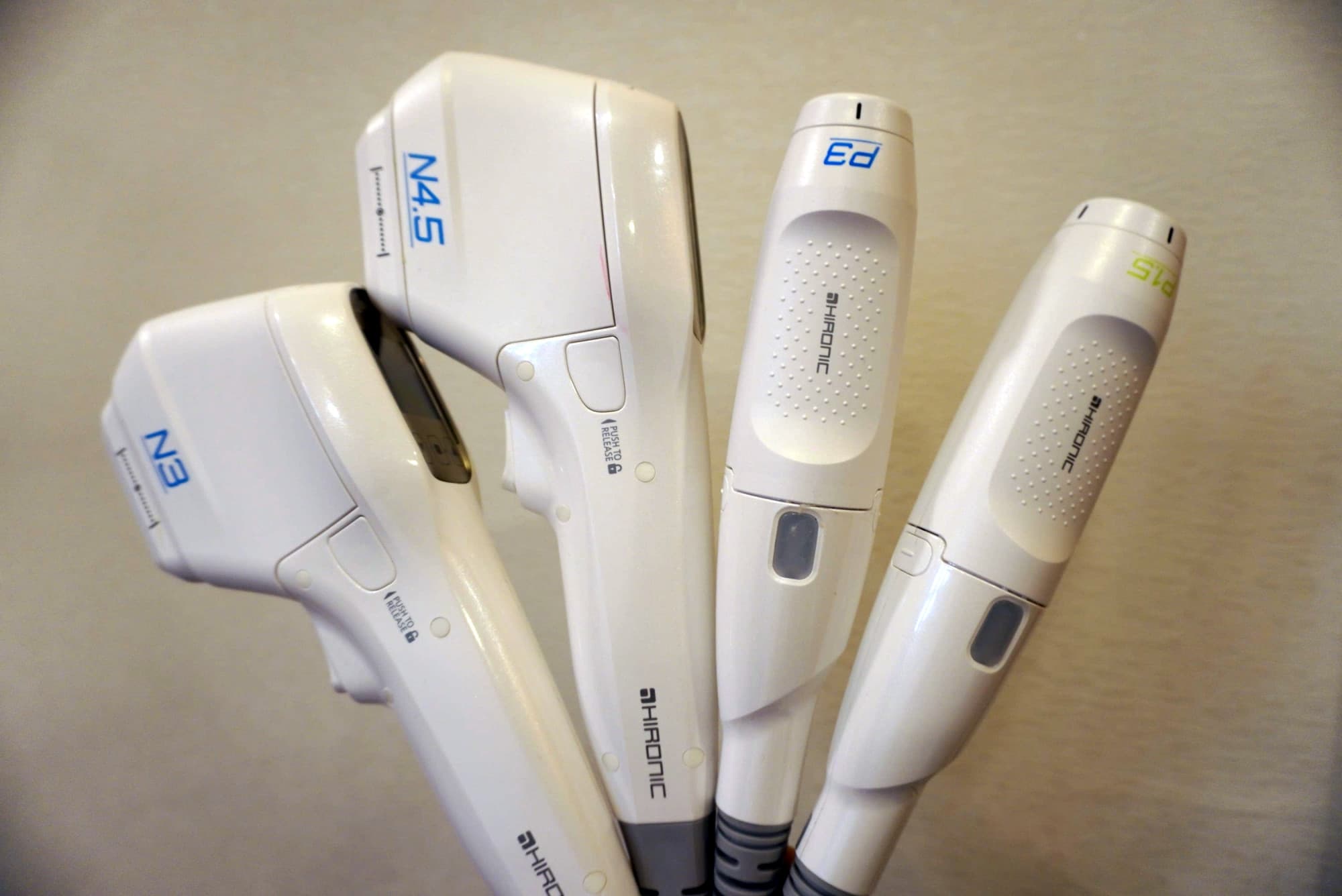
The four handpieces in the photo are the tips mainly used in a V-RO session. The flat N3 and N4.5 tips on the left handle ultrasound lifting, while the rounded P3 and P1.5 tips on the right handle radiofrequency lifting. The rounded tips actually emit ultrasound and radiofrequency together, but in practice they are often used with the radiofrequency effect in mind.
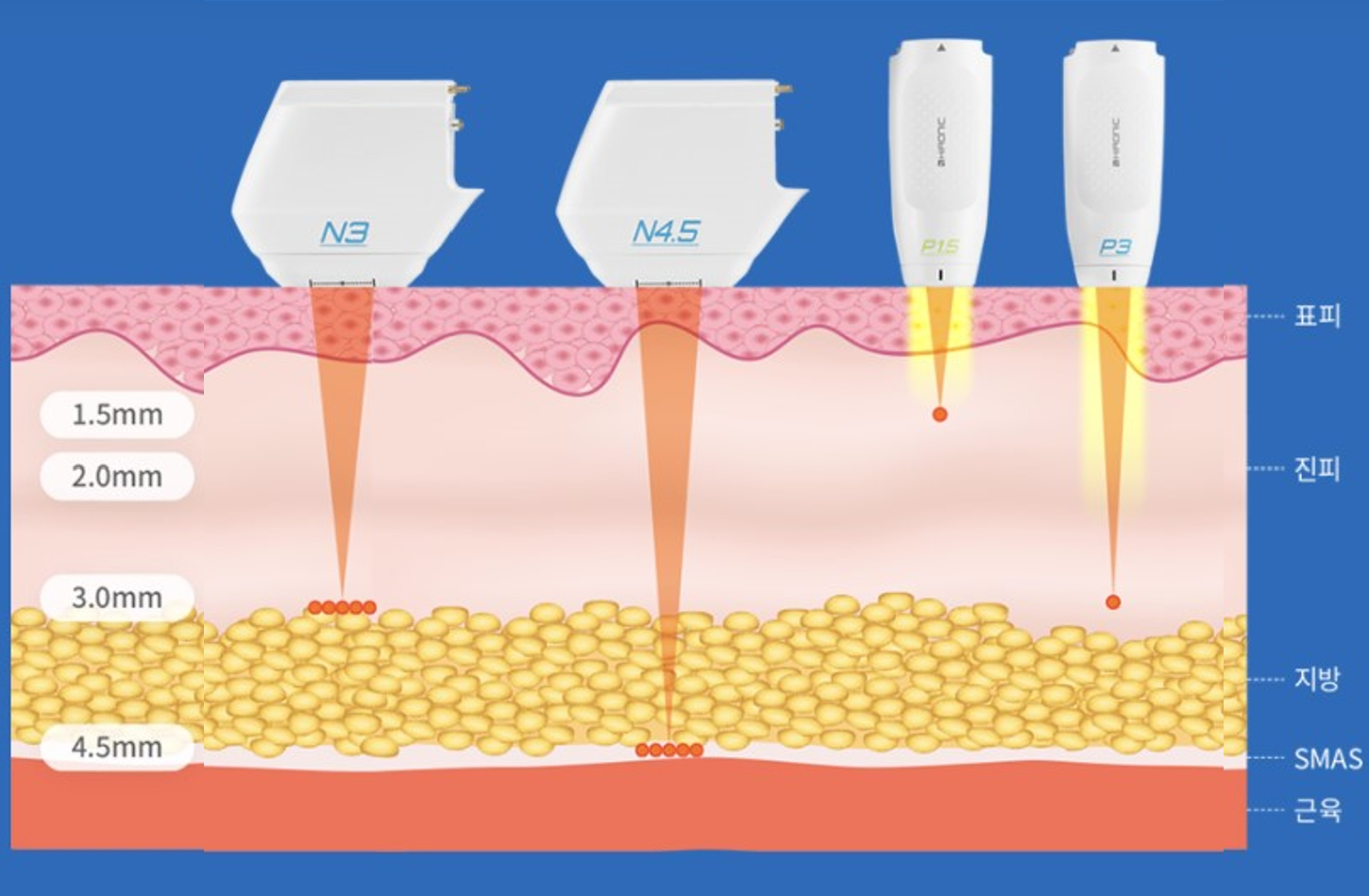
In the diagram, orange marks the depth reached by ultrasound and yellow the depth reached by radiofrequency. Ultrasound contracts the deeper layers of the skin to draw sagging tissue upward, while radiofrequency builds heat in the relatively shallow layers to refine surface firmness and fine lines. Because V-RO uses both energies in one session, it is often described as a scaled-down version of the "Ulthermage" combination that pairs Ultherapy with Thermage. Supplementing the surface firmness that ultrasound alone leaves wanting, while easing the cost of receiving two separate treatments, is why V-RO continues to be chosen. That said, the degree of improvement and how long it lasts vary from person to person.
What matters more than the name of the device
When looking into lifting, many people compare only the type of device and the price. We would suggest checking two more things: that a single device carries several tips, and that each tip has a different purpose, so they need to be chosen to suit the features of your face. Just as the same ingredients taste different depending on who cooks them, the same device leads results in a different direction depending on which tip is used, on which area, and at what intensity.
So "performing the treatment well" comes down to two things. Reading the patient's concerns and facial features accurately during the consultation beforehand, and having the understanding and experience to carry that consultation straight through into the design of the treatment.
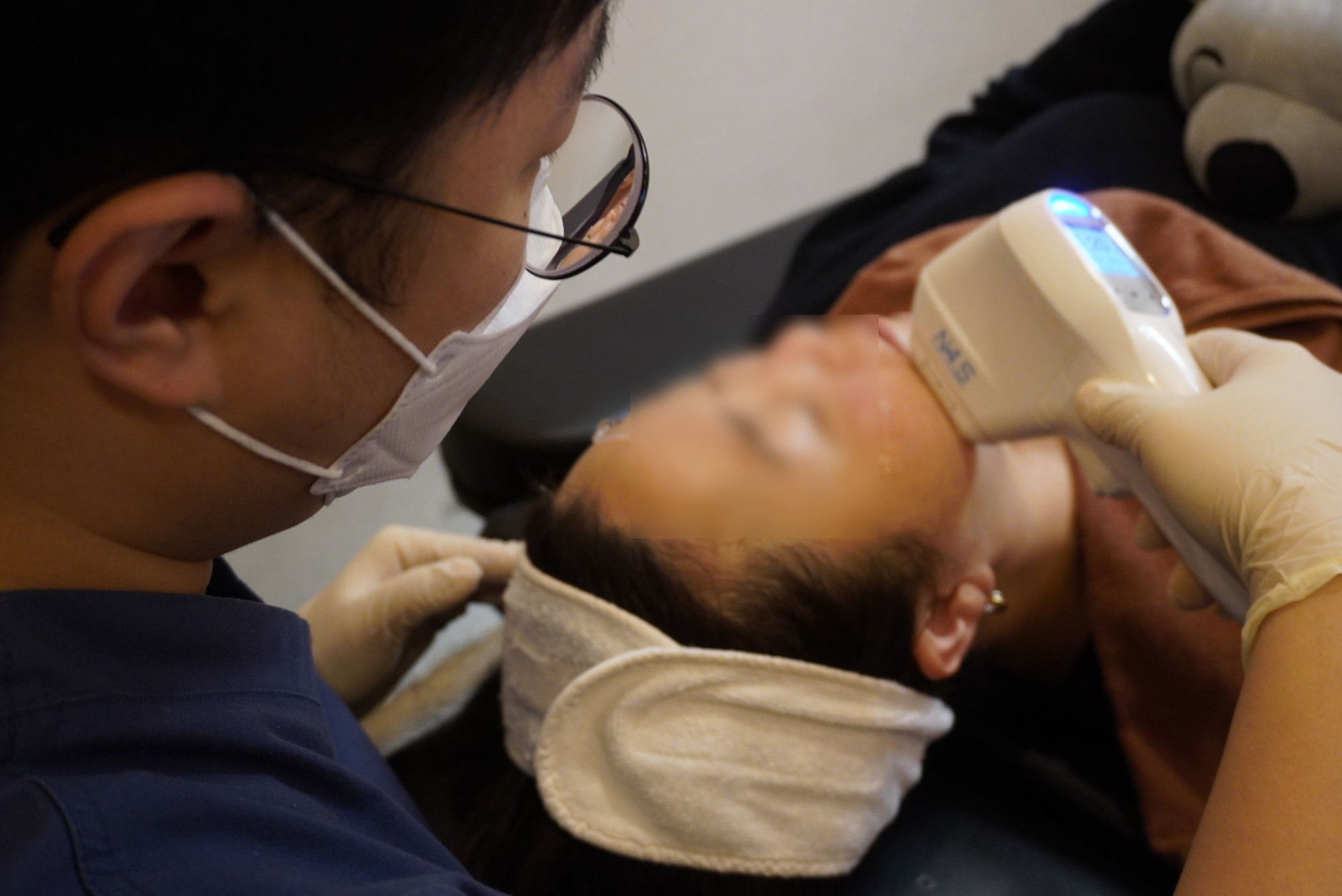
Online communities are full of posts asking whether a shot count or a price is reasonable. Those are of course important, but even at the same 500 or 5,000 shots, a treatment that places every shot the same way for everyone is not the same as one that distributes them according to where your own face sags and what your own concerns are. It is worth also looking at whether the clinic designs around your face, with energy that is neither too strong nor too weak.
Wrapping Up
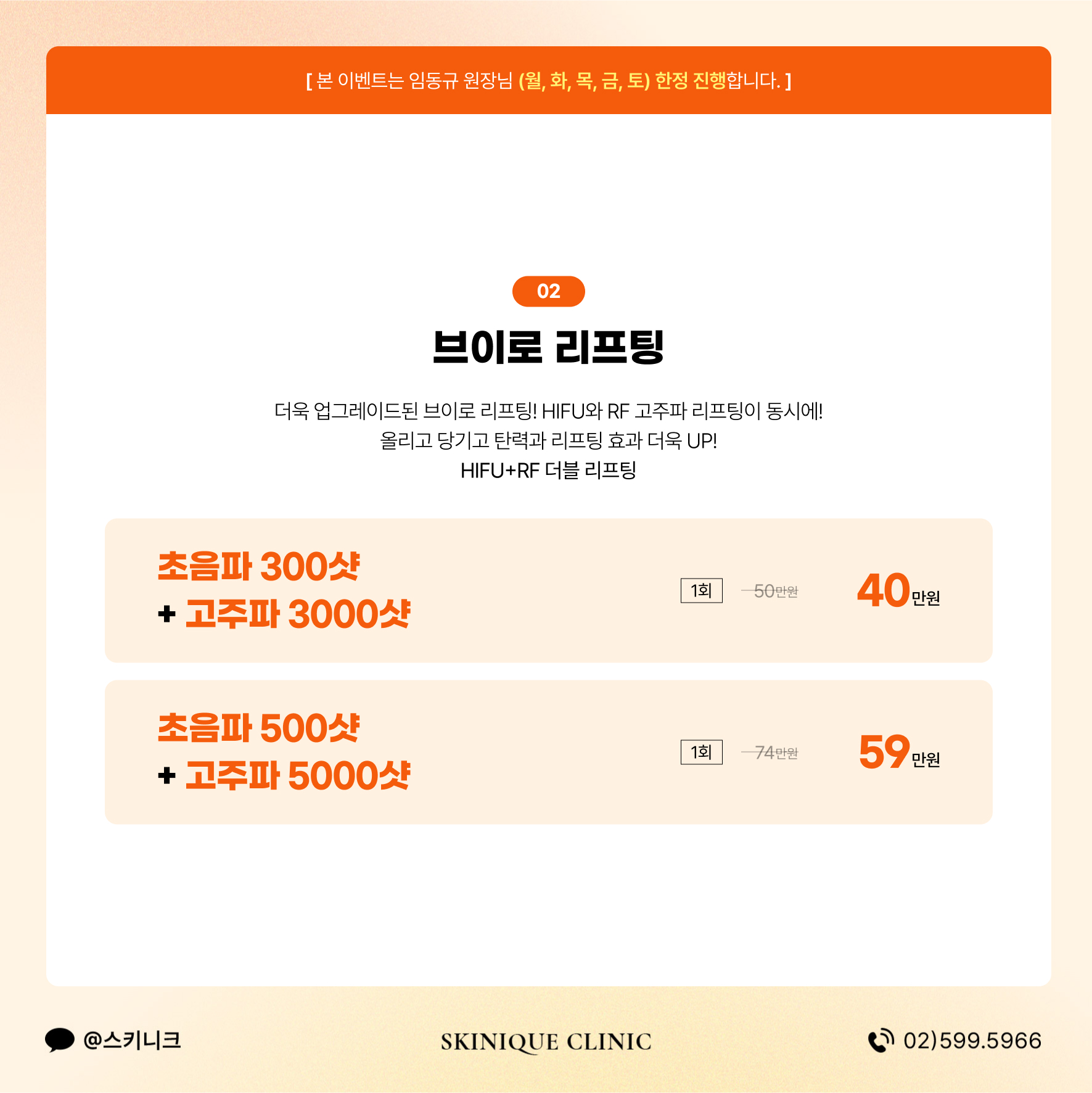
If Shurink addresses sagging in the deeper layers with ultrasound as its single energy source, V-RO adds radiofrequency to ultrasound to look after the deeper layers and surface firmness together. Which one suits you depends on your skin condition and the pattern of sagging, so we recommend confirming the tip selection and energy distribution through a consultation with the doctor before treatment. Detailed pricing is available on the price guide, and you are welcome to ask through chat about the lifting treatment that suits your face.
This article was written by Dr. Park Tae-hyung, Chief Director. He is the chief director of SKINIQUE Clinic and serves as an academic director of the Korean Society for Laser Dermatology and Trichology. First published October 4, 2024 · Last reviewed August 23, 2026
This article is general medical information. Skin conditions and responses to treatment can differ from person to person. Whether to undergo treatment, and by which method, should be decided through a consultation.