

When you start looking into lifting treatments, Ultherapy and Shurink sound familiar while "V-RO" is often a name people hear for the first time. Trace the lineage of the devices, though, and V-RO sits right at the starting point of Korean-made HIFU lifting. This article looks at the history behind V-RO2 and V-RO Advance, what it means to use HIFU and radiofrequency in a single double-lifting protocol, and which factors tend to separate a comfortable, satisfying session from a disappointing one.
Ultherapy, Doublo, Shurink: the HIFU lifting lineage
HIFU (high-intensity focused ultrasound) lifting began with Ultherapy, which received US FDA clearance in 2009. Its results were well recognized, but the price barrier limited how widely it spread. Into that gap came Doublo, a Korean-made device launched in the early 2010s that made HIFU lifting far more accessible with a lower cost and a faster treatment time. A later device from another company, Shurink, then settled into an even lower price bracket and ended up ahead in name recognition. In order of release, the sequence runs Ultherapy, Doublo (V-RO), then Shurink.
Doublo went on through Doublo Gold and V-RO to today's V-RO2 and V-RO Advance, refined over each generation. It may have lost the marketing race, but measured by the years of accumulated engineering, it is one of the oldest Korean HIFU platforms still in active development.
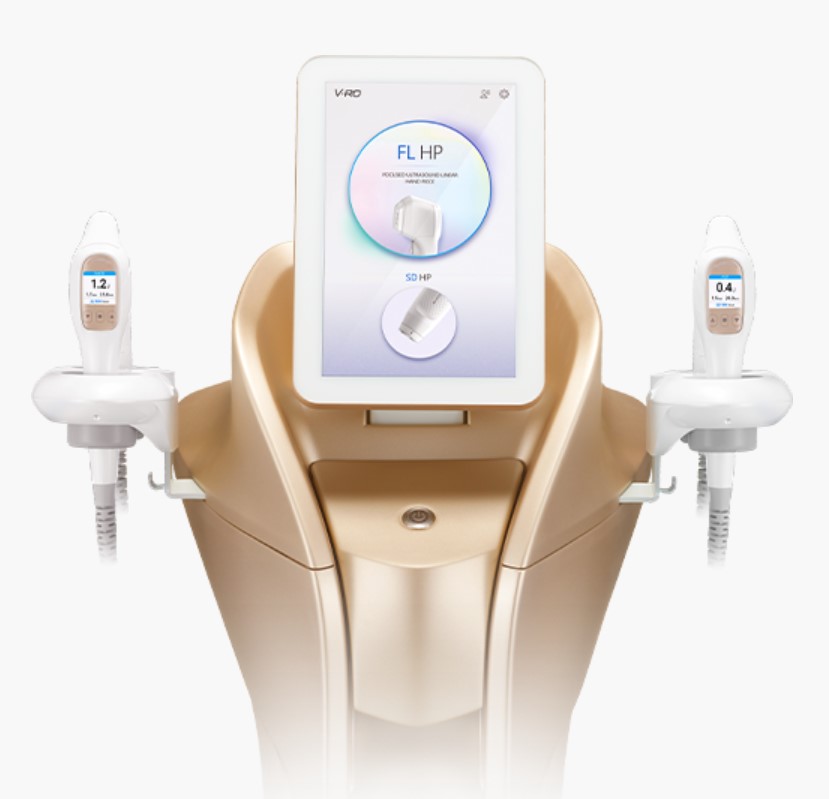
What changed with V-RO Advance
Across its generations, V-RO Advance has been reworked on several fronts: a wider range of cartridges (treatment tips), more precise energy delivery, shorter treatment times, and technology aimed at reducing discomfort. Because the pain burden is lower than in earlier generations, many patients choose to have the treatment without anesthesia, and the session itself does not take long. SKINIQUE Clinic has stayed with the Doublo family over the years for the same reason we weigh anything else: what the treatment actually delivers in the chair matters more than how well known the name is.
HIFU plus RF: how double lifting is structured
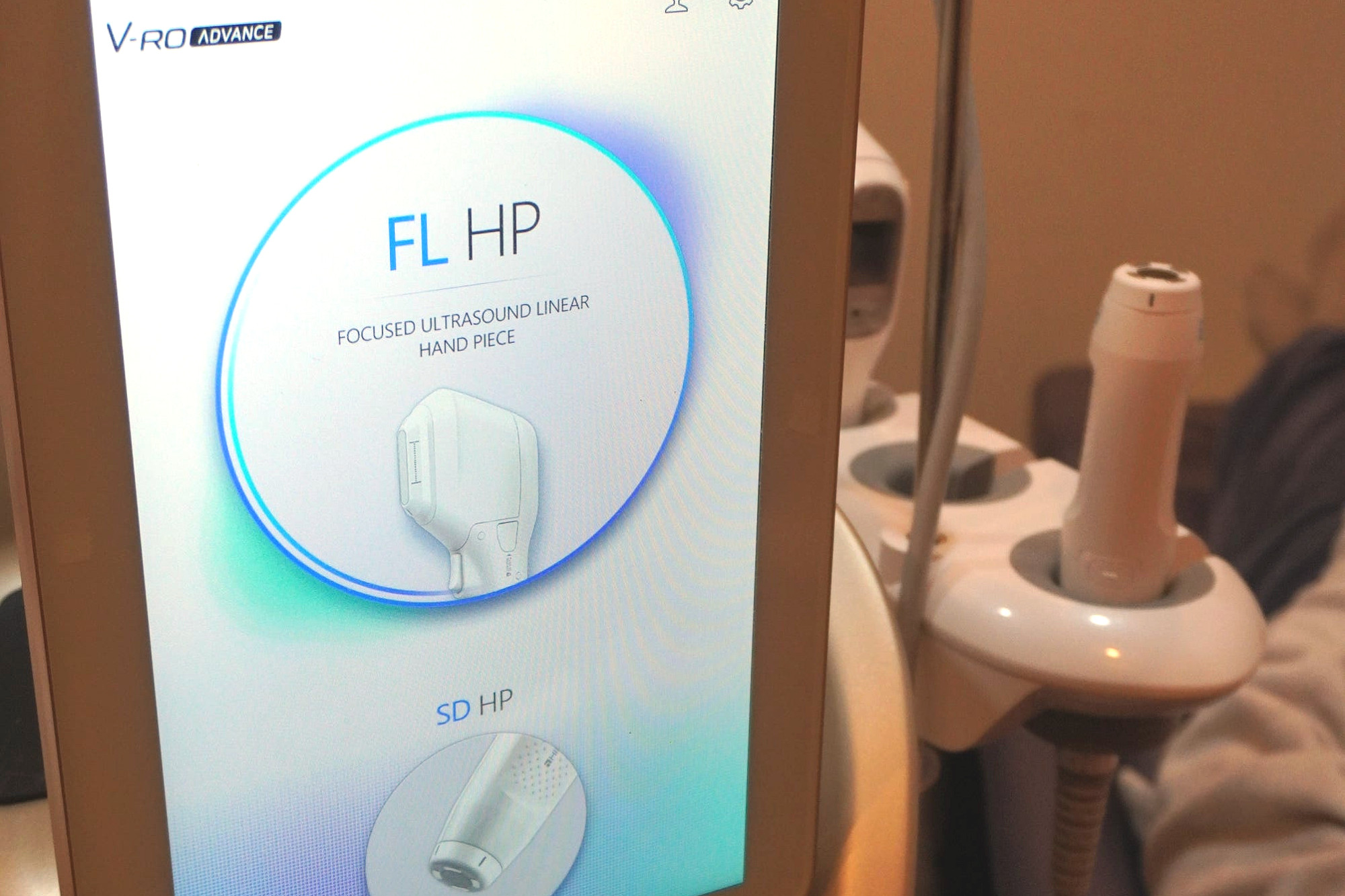
The defining feature of V-RO Advance is that focused ultrasound and RF radiofrequency can be used from the same device. The broad, flat tip is the cartridge that focuses ultrasound; the round tip is the cartridge that adds radiofrequency on top of ultrasound. Using both is what makes a session a true double lifting, covering tightening, firmness, skin texture and fine lines alongside the lifting itself. It is worth remembering that a treatment using only one type of tip covers a different range.
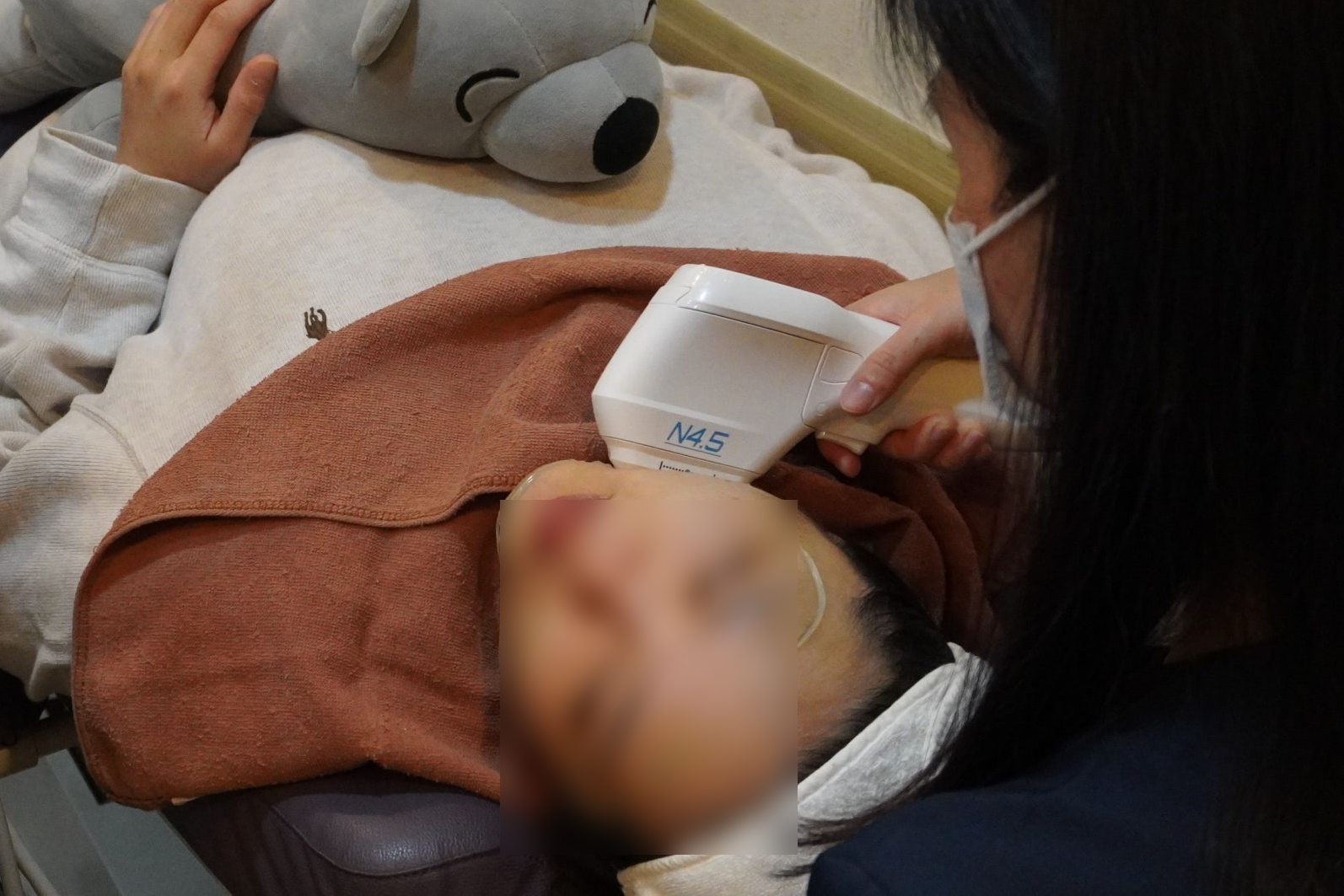
Go one step further and each cartridge is also divided by the depth the energy reaches, such as 1.5 mm, 3.0 mm and 4.5 mm. The same 400 shots delivered entirely at 4.5 mm and entirely at 1.5 mm are two completely different treatments. In other words, which depth goes where on the face, and in what proportion, shapes the outcome; beyond the individual variation that comes from skin condition, there is a clear difference that comes from how the operator plans the session. That is why, when choosing a clinic for lifting, it is worth checking whether the plan is a one-size-fits-all protocol or a design built for you.
How SKINIQUE Clinic plans a session
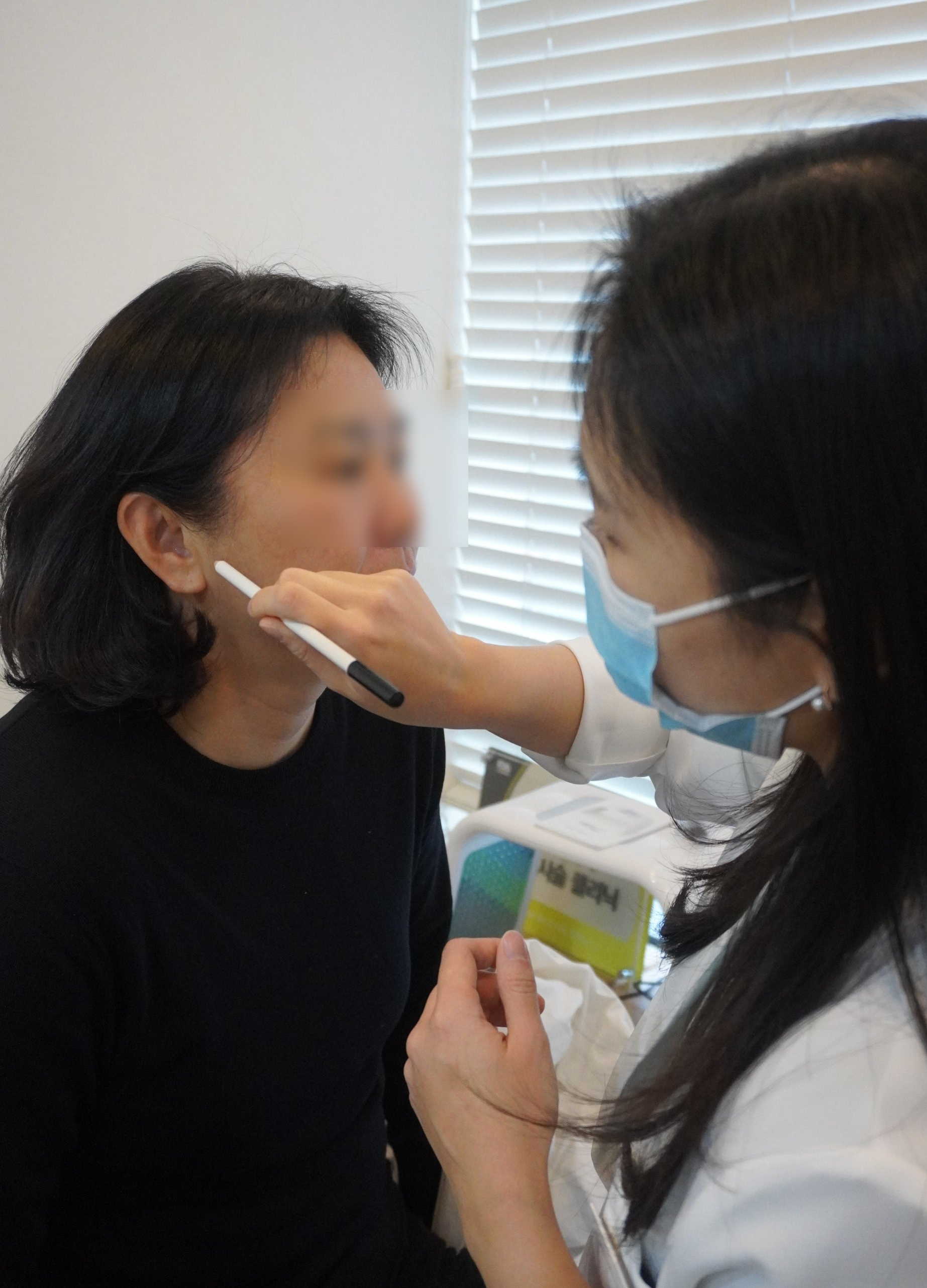
At SKINIQUE Clinic, the consultation comes first: we identify the areas that concern you and the direction you want the lifting to take, then design the tip types, depths and shot distribution around that goal before beginning the treatment.
On cost, V-RO Advance sits below Ultherapy and somewhat above Shurink. Considering that ultrasound and radiofrequency lifting are covered in a single visit, it can be a reasonable option. Detailed pricing is available on the price guide.
Wrapping Up
V-RO Advance grew out of Doublo, the original Korean HIFU device, into a double-lifting platform that uses ultrasound and radiofrequency together. Since the same device produces different outcomes depending on how tip types and depths are distributed for each individual, we would suggest choosing a clinic by whether the treatment is tailored rather than by the name of the device. If you are wondering which lifting design suits your face, try asking about the right lifting for your skin in chat.
This article was written by Dr. Park Tae-hyung, Chief Director of SKINIQUE Clinic and academic director of the Korean Society for Laser Dermatology and Trichology.
First published January 6, 2025 · Last reviewed August 23, 2026
This article is general medical information. Skin condition and response to treatment vary from person to person. Whether and how to proceed with treatment should be decided through an in-person consultation.