

Many people feel that a thick-looking shoulder line or prominent calf muscles keep their clothes from sitting the way they would like. When the cause is well-developed muscle, exercise and dieting alone rarely change the contour, and body Botox for the trapezius and calves becomes one option worth considering. In this article we look at how body Botox works, focusing on Nabota, a Korean-made botulinum toxin, and at what to check before treatment.
How does trapezius and calf Botox work?

Botulinum toxin temporarily reduces the movement signals sent to a muscle, so an over-developed muscle gradually decreases in volume. Applied to the trapezius, the line running from the neck to the shoulder tends to look gentler; applied to the calves, the bulge of the muscle settles and the leg line can look smoother. The key point is that this is not a fat-reducing treatment - it addresses the size of the muscle itself.
The dosing scale differs from facial Botox
Body muscles are far larger than facial muscles, so the amount of toxin required increases substantially. Where masseter Botox typically uses somewhere around 50 units, trapezius or calf treatment generally starts from at least 100 units. Because the volume used is high, insisting on imported products alone can make the cost burden heavy, which is why quality-verified Korean toxins have become a reasonable alternative for body treatments. Detailed costs can be found on the pricing guide.
What kind of product is Nabota?
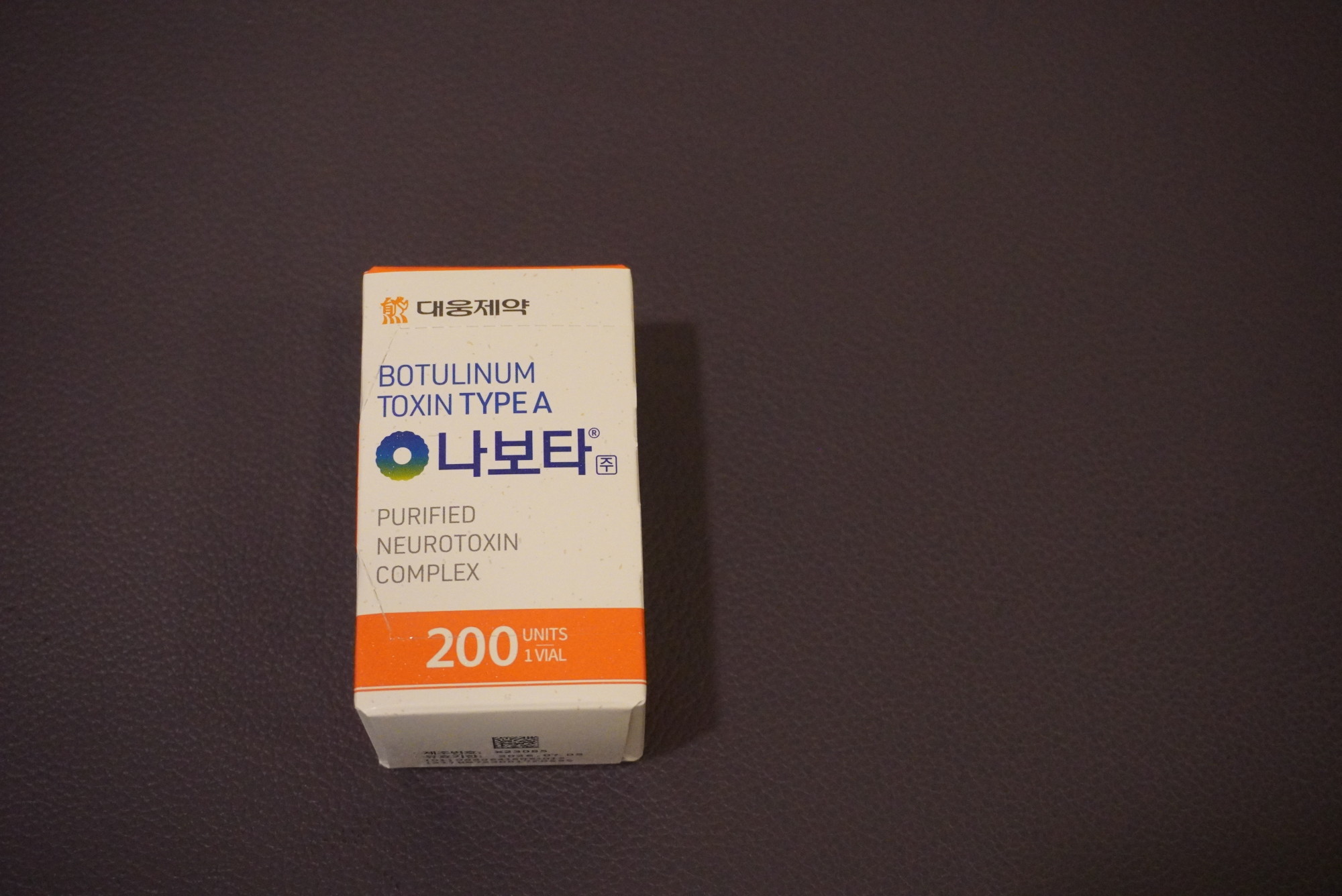
Nabota is a Korean botulinum toxin developed by Daewoong Pharmaceutical, and it has obtained US FDA, Korean MFDS and European CE approvals. It is characterised by a high purity level of roughly 98-99%, and it was the first Korean product to receive product approval from Argentina's national medicines and medical technology authority. Passing review in several countries with demanding approval standards means evidence has been accumulated on both the efficacy and the safety side.
Pre-treatment checks and individual design
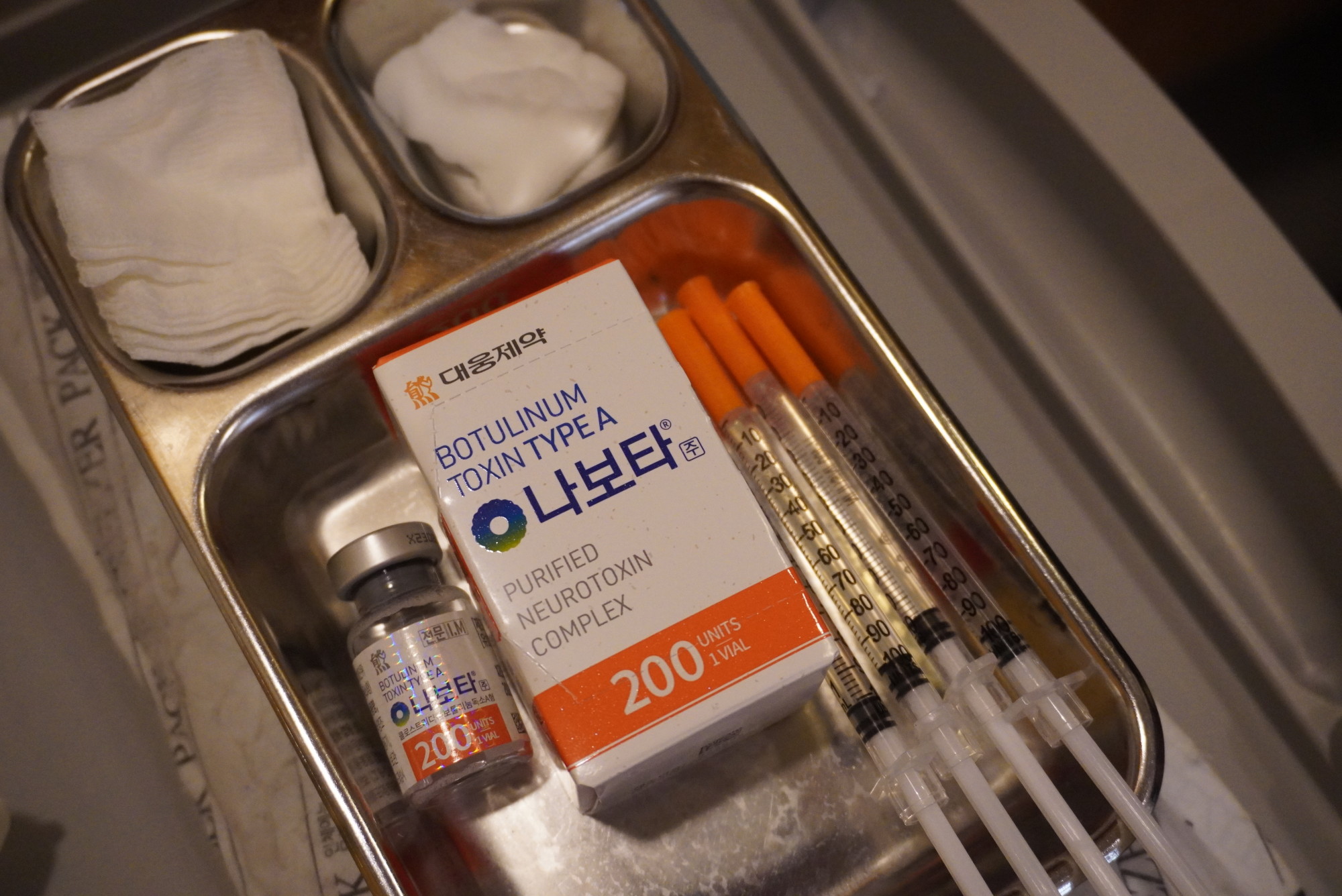
At Skinique Clinic, before treatment begins we show you directly which toxin product is being used and in what quantity, and have you confirm it.
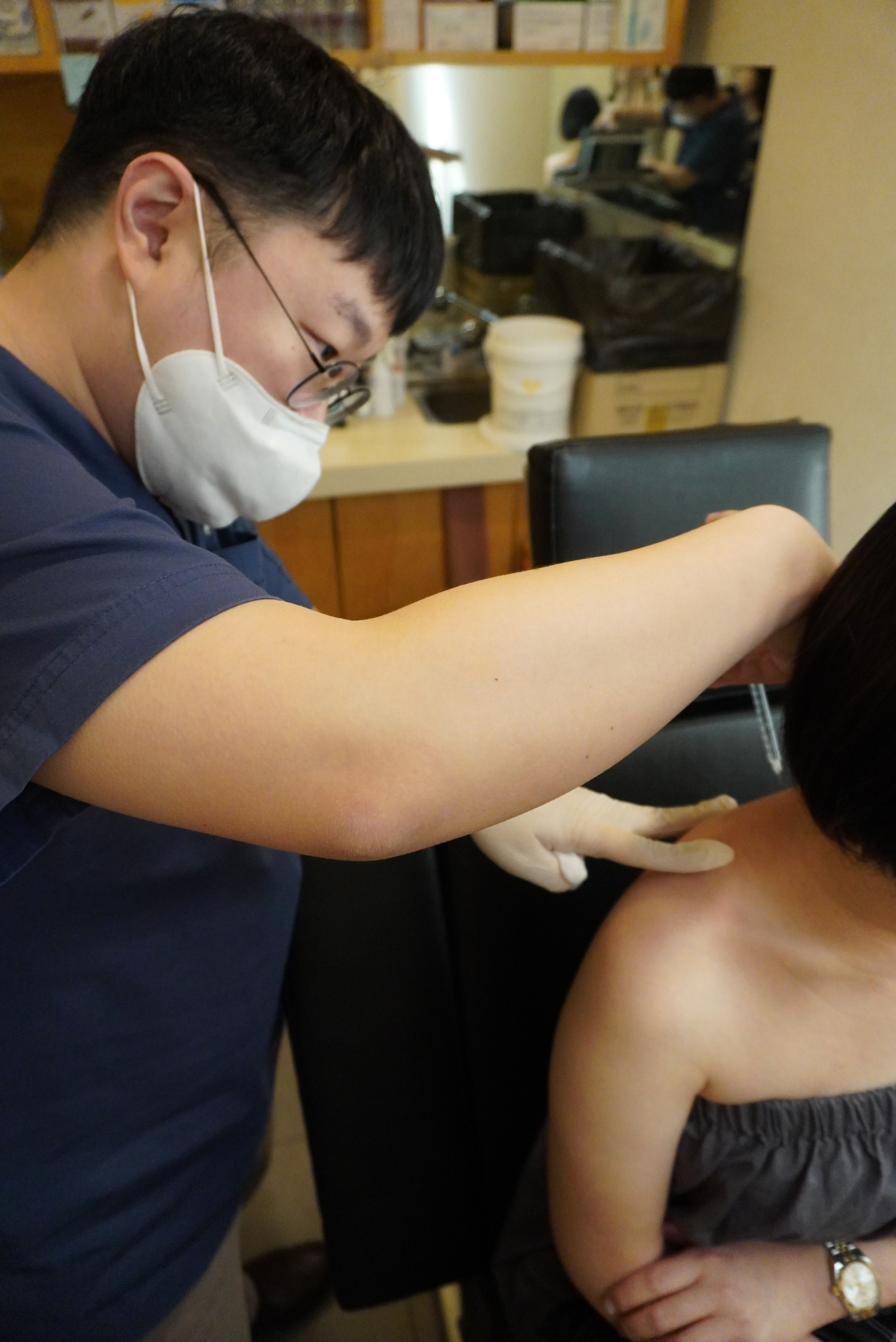
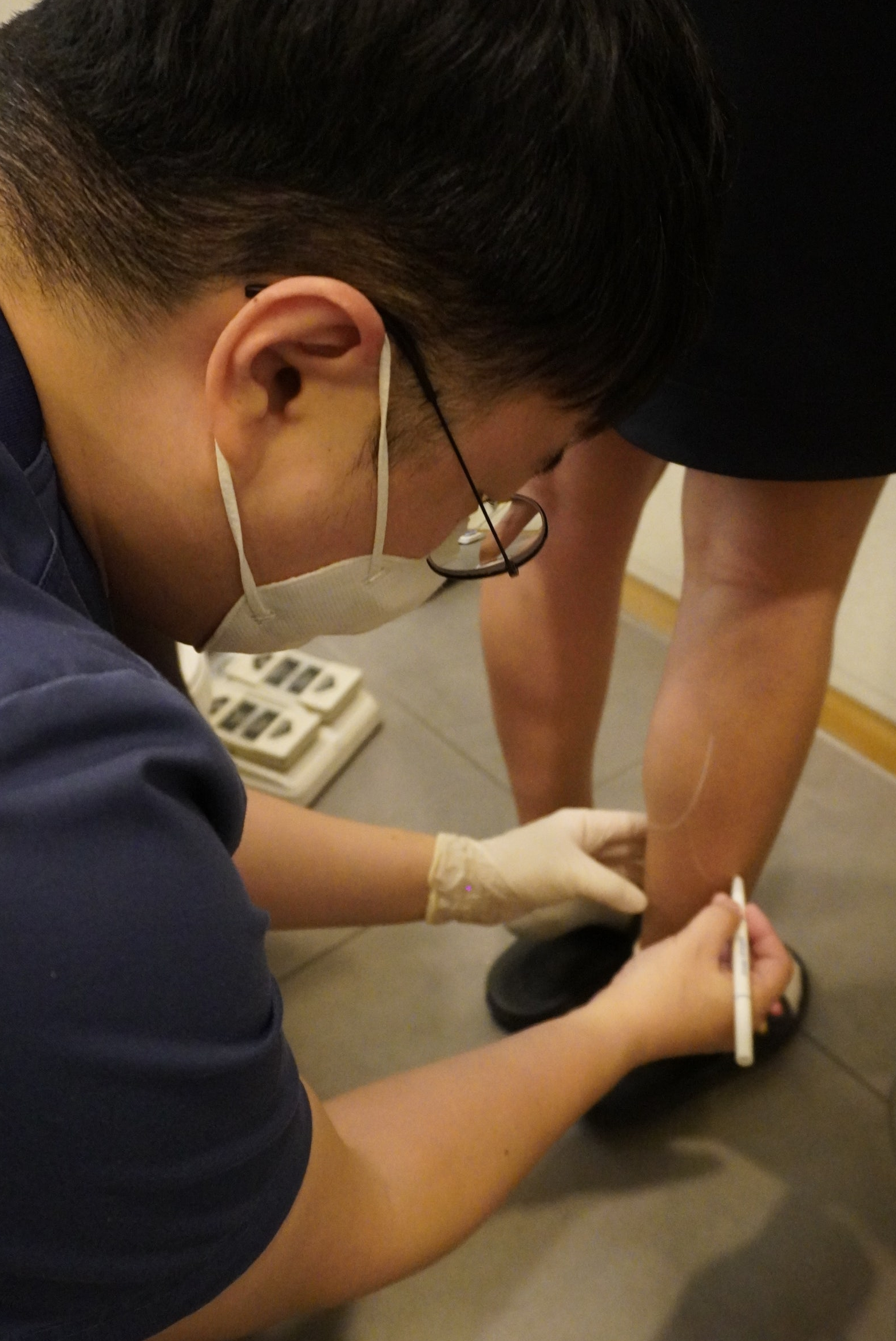
Body Botox is also not a treatment where a fixed dose is injected uniformly. Through a one-to-one consultation we examine how developed the individual muscle is, taking into account cases where the left and right muscle mass differ, and design the injection points and dose in detail. Aiming for the dose that suits each person, rather than an excessive one, is what leads to a natural result.
When does the effect appear, and how long does it last?
Change begins gradually around the two-week mark rather than immediately after treatment, and is usually most evident around four weeks. Duration is generally viewed as about three to six months, but it varies from person to person depending on the original muscle mass, how often that muscle is used, and how much toxin was injected.

Wrapping Up
Trapezius and calf body Botox works on muscle volume to soften the shoulder and leg lines, and because it needs a larger dose than facial treatment, the choice of a verified product and an individually planned dose shape the outcome. If you are wondering what dose would suit your own muscle condition, feel free to ask through a chat consultation on a body Botox plan for your own lines.
This article was written by Director Park Tae-hyung. He is the chief director of Skinique Clinic and serves as an academic director of the Korean Society for Laser Dermatology and Trichology. First published 31 July 2024 - Last reviewed 23 August 2026
This article is general medical information. Skin conditions and responses to treatment can vary from person to person. Whether and how to treat should be decided through consultation with a physician.