
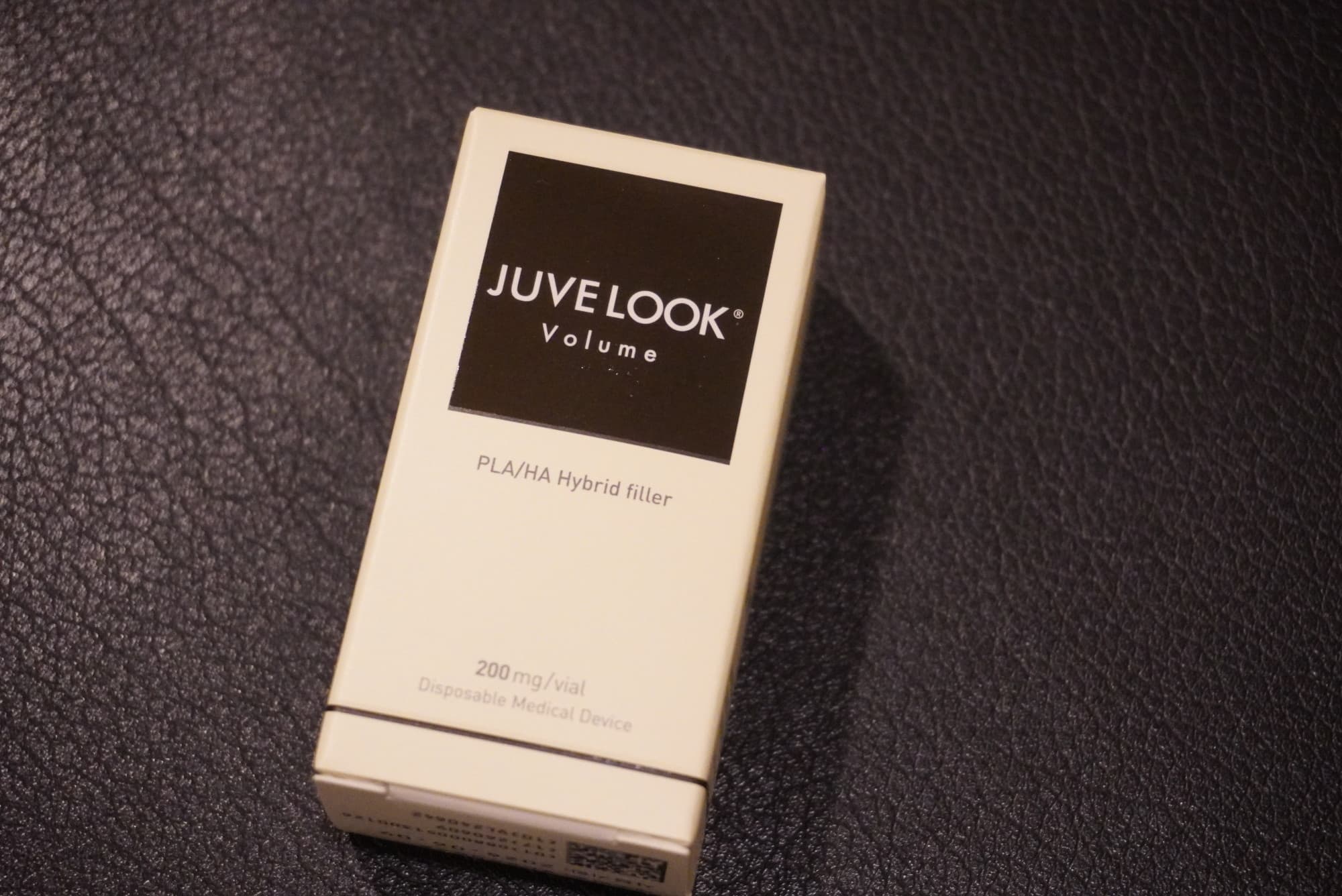
When people start looking into Juvelook Volume, the first confusion is usually how it differs from Juvelook, and how it differs from filler. Even where the names or the results look similar, these are different treatments in concentration, injection depth and the way results appear. This article walks through what Juvelook Volume is, and how the actual process runs from hydration to injection.
Juvelook and Juvelook Volume - similar only in name
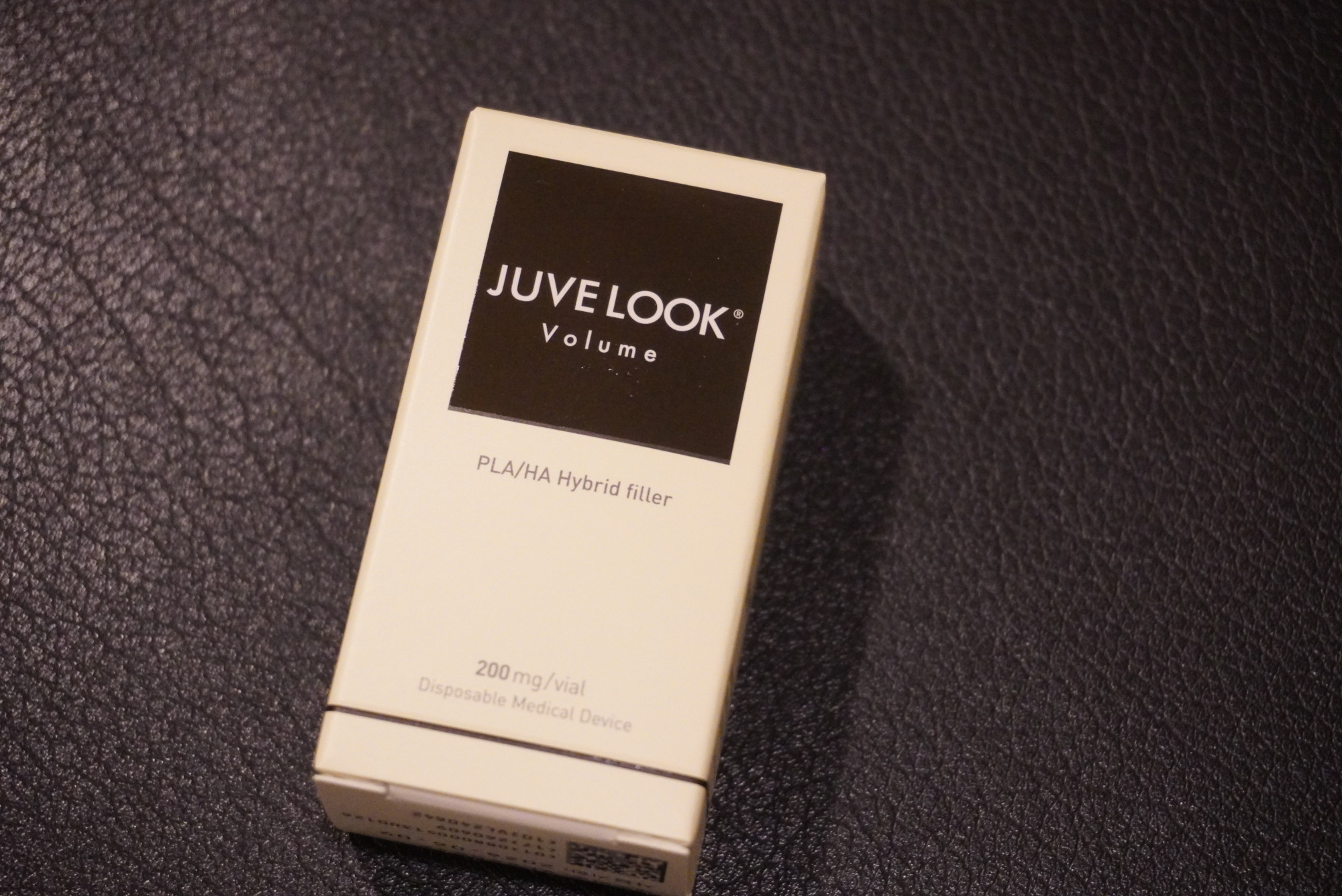
Juvelook is widely known as a skin booster that combines PDLLA with HA to stimulate collagen production. Juvelook Volume uses ingredients from the same family, but it is a product with a different purpose.
| Category | Juvelook | Juvelook Volume |
|---|---|---|
| Ingredients | PDLLA 42.5mg + HA 7.5mg | PDLLA 170mg + HA 30mg |
| Particle size | approx. 30μm on average | approx. 80μm on average |
| Injection layer | dermis | subcutaneous fat, deeper than the dermis |
| Purpose | regeneration and elasticity: skin texture (fine lines, pores, scars, dryness) | gradual volume replacement for sagging and contour |
In short, Juvelook Volume has a much higher concentration and larger particles, so it is placed in a deeper layer to stimulate active collagen production and gradually fill in hollowed areas and sagging contours.
How is it different from HA filler?
Because it restores volume, many people mistake Juvelook Volume for a type of filler, but the two work in fundamentally different ways.
| Category | HA filler | Juvelook Volume |
|---|---|---|
| Ingredient | hyaluronic acid | PDLLA |
| Number of sessions | usually one (touch-ups possible) | several sessions about four weeks apart |
| Onset | immediate | gradual |
| Shaping | easy to sculpt a desired shape | difficult to sculpt a specific shape |
Filler places viscous, jelly-like hyaluronic acid where it is needed and creates volume on the spot. Juvelook Volume, on the other hand, spreads a water-like liquid PDLLA over a wide area, and volume forms as your own collagen grows over time. The dividing lines are immediate versus gradual, and whether a desired shape can be sculpted. If you want quick change, filler is the closer fit; if you would rather wait for volume that does not look artificial, Juvelook Volume is relatively more suitable. Either way, satisfaction depends on discussing the result you want thoroughly with your medical team beforehand.

Where treatment begins: the hydration step
The first thing done on the day of treatment is "hydration". Saline is added to the vial of powdered Juvelook Volume and mixed vigorously with a vortex device until it becomes a milky liquid, which is then divided into syringes to prepare for injection.
Hydration matters because it is directly tied to preventing nodules. Injecting while the powder is not fully dissolved can cause clumping, so thorough hydration is essential, and the amount of saline per vial also affects the result. Skinique Clinic hydrates one vial with 8cc of saline, uses one full vial for a single session, and as a matter of policy never divides leftover product for reuse on another person.
How the injection is carried out
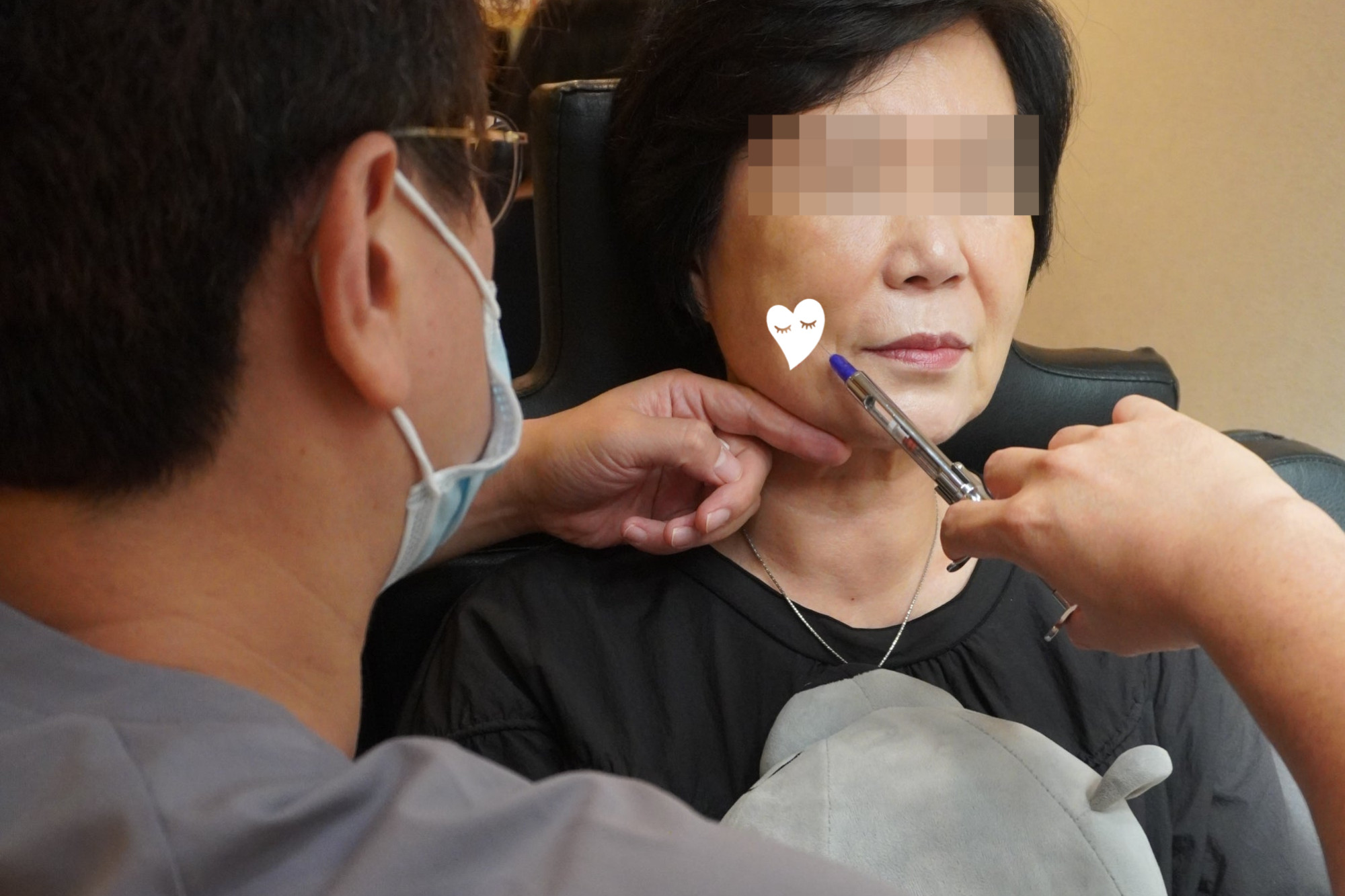
Juvelook Volume is performed under local anaesthetic by injection rather than numbing cream. There is a slight sting and a heavy sensation at first, but most people find the rest comfortable; the degree of discomfort varies with individual tissue condition.
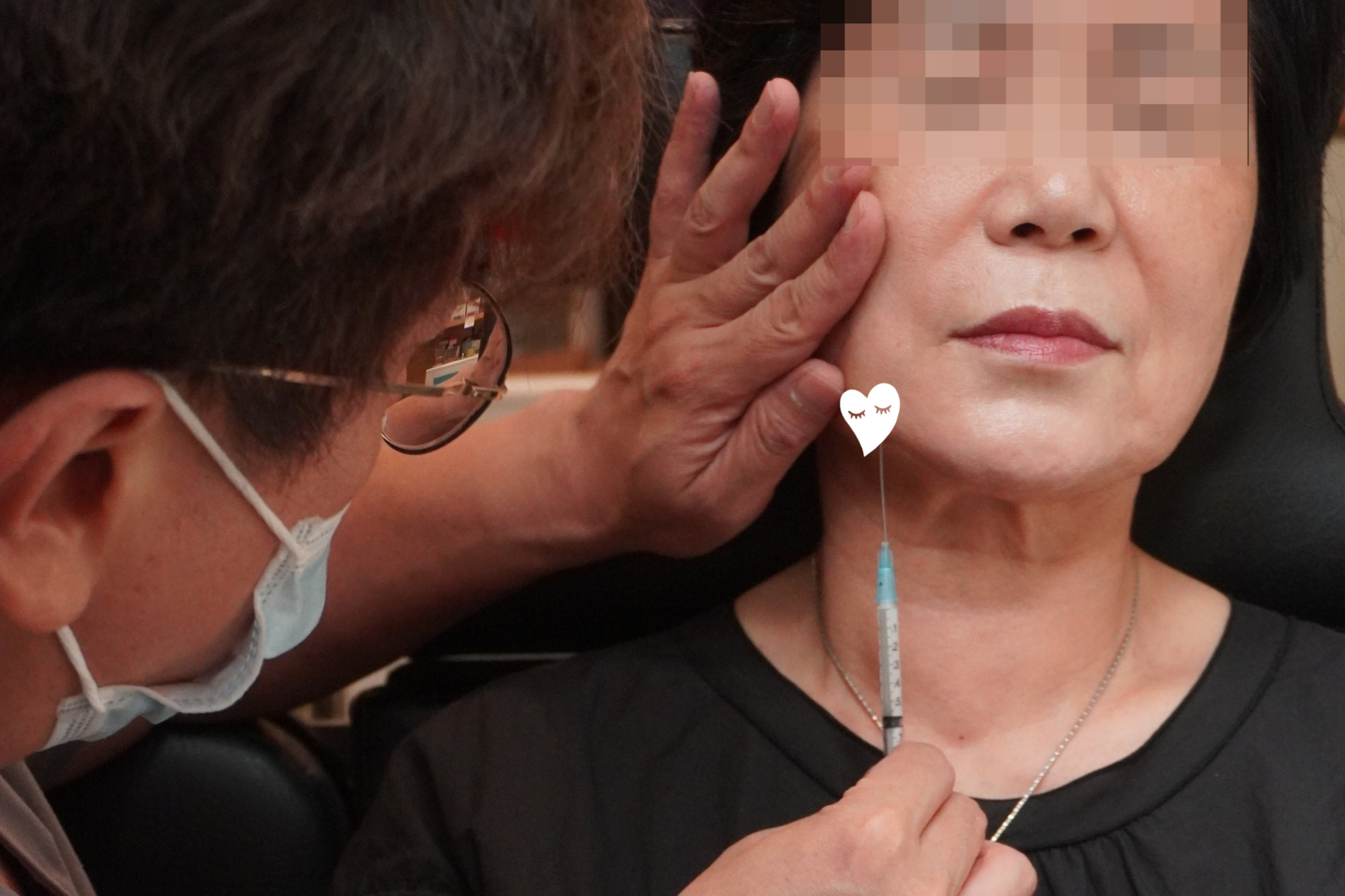
A blunt-tipped cannula is used for injection. Rather than raising a single point into a mound as filler does, the product is characteristically scattered evenly across the skin layer of the target area. Here the outcome depends less on fitting the face to a formula - so many cc for the nasolabial folds, so many for the cheeks - than on the judgement of distributing it while checking left-right symmetry and overall facial balance in real time.
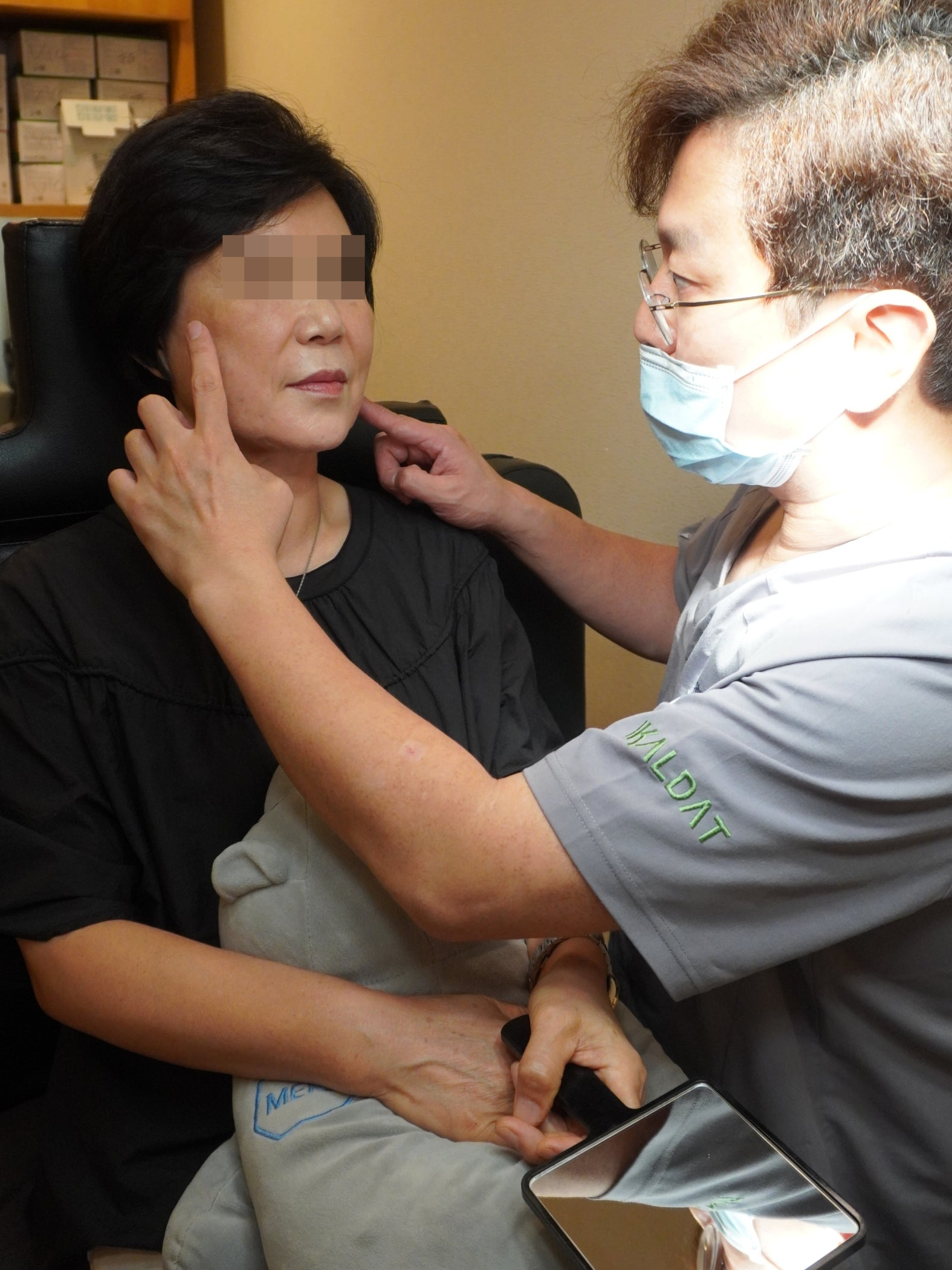
At Skinique Clinic, Director Park Tae-hyung communicates with the patient during treatment and adjusts the amount placed in each area, aiming for natural volume rather than an excessive result.
When can results be felt?
Immediately after treatment the deep cheek area may look somewhat lifted, but this is a temporary change caused by the saline and swelling. Within about three days the saline is absorbed and the swelling subsides, and this sense of volume disappears - which some people misread as "the effect vanished in three days". The real result normally appears gradually from about a month onward, as your own collagen grows using the injected material as a seed. Typically people observe the change for around a month after one session and, if needed, repeat the same process several times to approach the volume they want. The speed and degree of collagen production does vary from person to person.
Wrapping Up

Neither filler nor Juvelook Volume can be called the better treatment. The right answer simply changes depending on whether you need immediate sculpting or gradual, natural fullness. Choose a clinic where you can discuss thoroughly how much volume you want and where, and detailed costs can be found on the pricing guide. Feel free to ask through a chat consultation on the volume treatment suited to your face.
This article was written by Director Park Tae-hyung. He is the chief director of Skinique Clinic and serves as an academic director of the Korean Society for Laser Dermatology and Trichology. First published 20 September 2024 - Last reviewed 23 August 2026
This article is general medical information. Skin conditions and responses to treatment can vary from person to person. Whether and how to treat should be decided through consultation with a physician.