
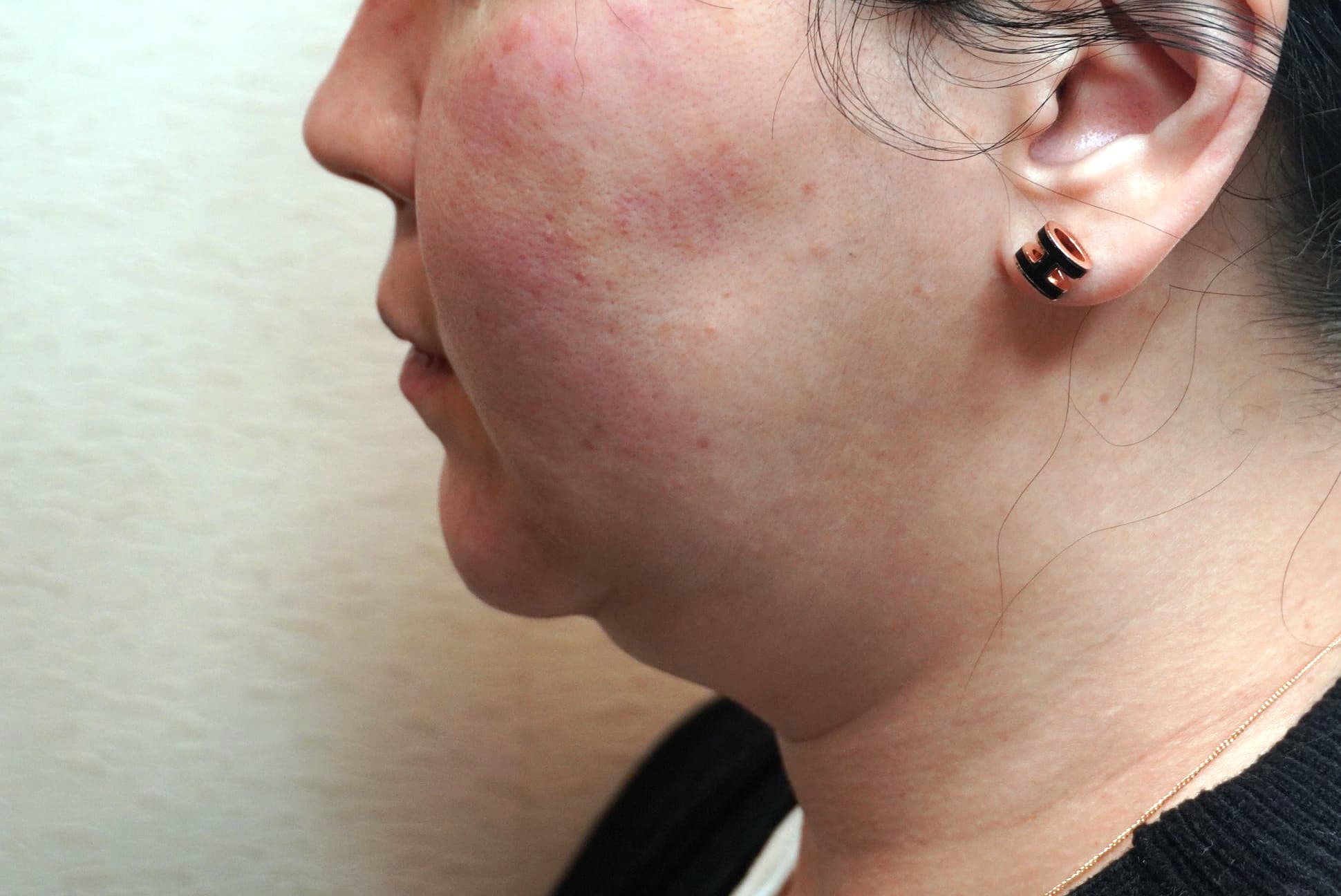
Quite a few people feel that their double chin is unchanged even after several rounds of fat-dissolving injections. When the area seems better for a while and then quickly returns to how it was, it is only natural to start doubting the treatment itself. This article explains why ordinary lipolysis injections often leave something to be desired, and how V-OLET, which works through a different mechanism, differs from them.
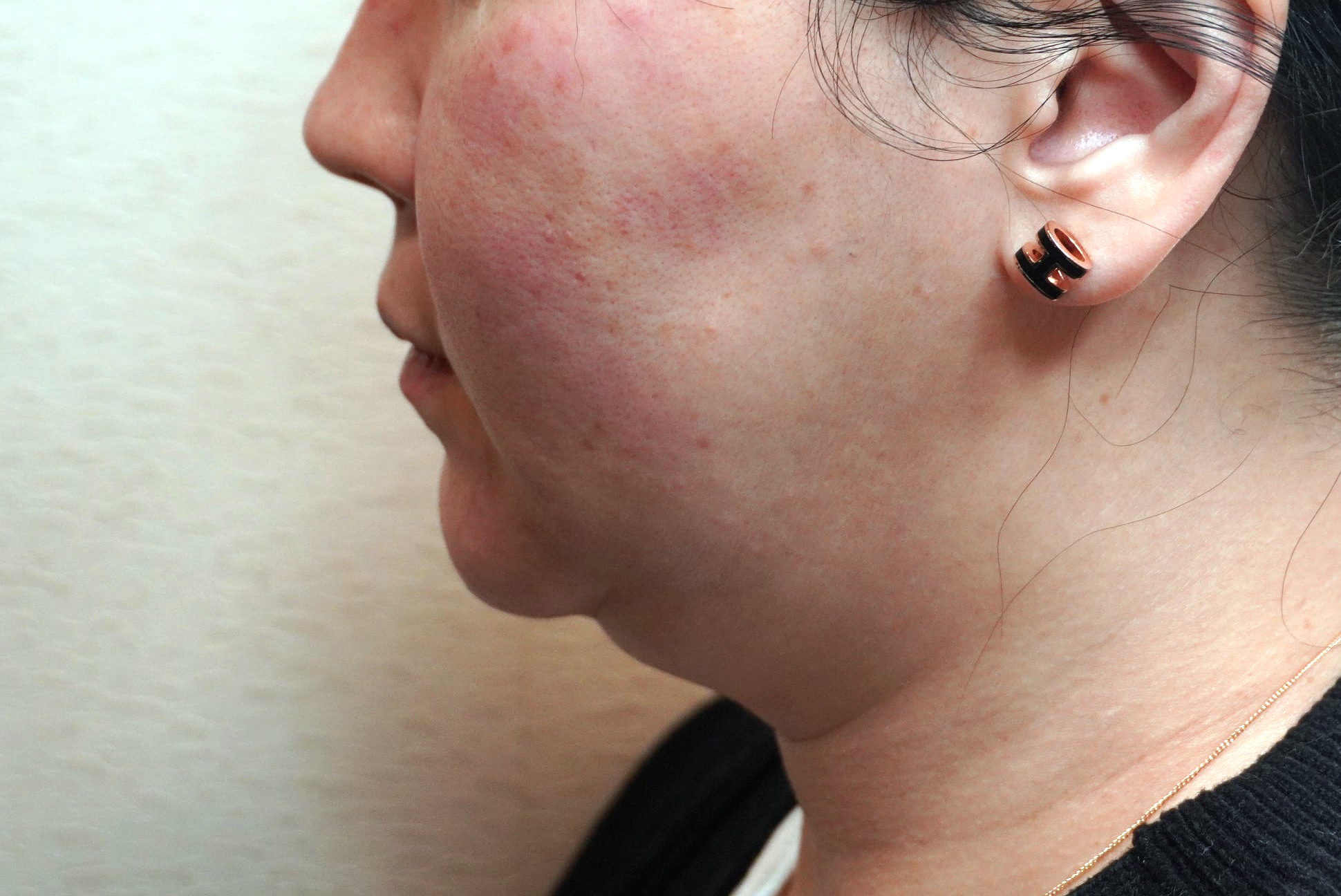
Why ordinary fat-dissolving injections felt disappointing
Ordinary lipolysis injections, compounded in-house by each clinic to its own formula, generally work at the level of reducing swelling or temporarily shrinking the size of fat cells. The number of fat cells stays the same, so over time the cells grow again and the volume under the chin tends to return - which is why the treatment has to be repeated at regular intervals. If you noticed a change right after the injection but felt back to square one not long afterwards, this mechanism is very likely the reason.
What kind of injection is V-OLET
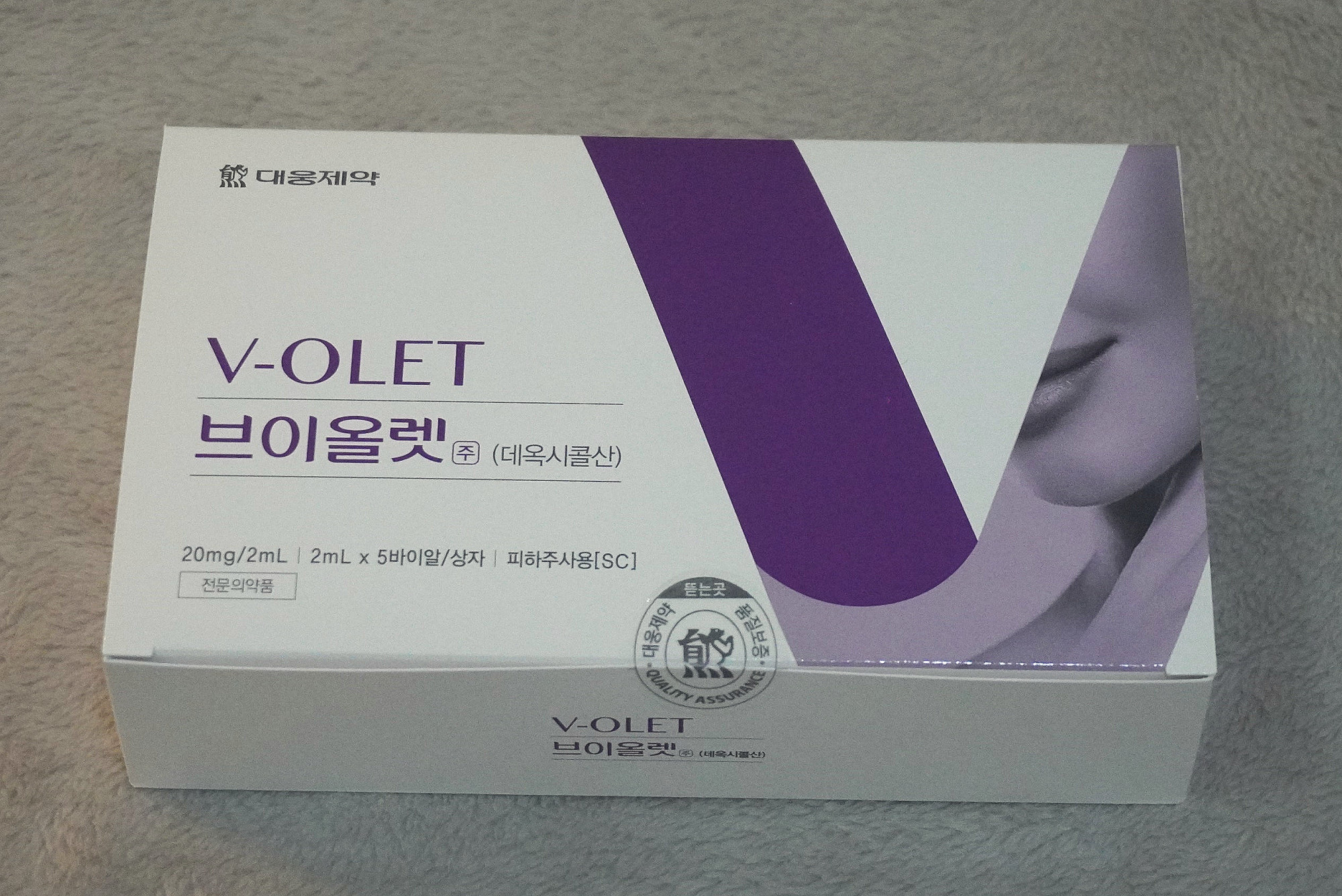
V-OLET is a fat-dissolving injectable based on DCA (deoxycholic acid). DCA is the same ingredient used in Kybella, the FDA-approved double-chin injectable in the United States, but Kybella is an expensive imported product and was not easy to access. V-OLET is the DCA formulation later developed in Korea by Daewoong Pharmaceutical; the fact that it is an approved pharmaceutical with clinical data in Korean patients is what sets it apart from injections compounded in-house at a clinic.
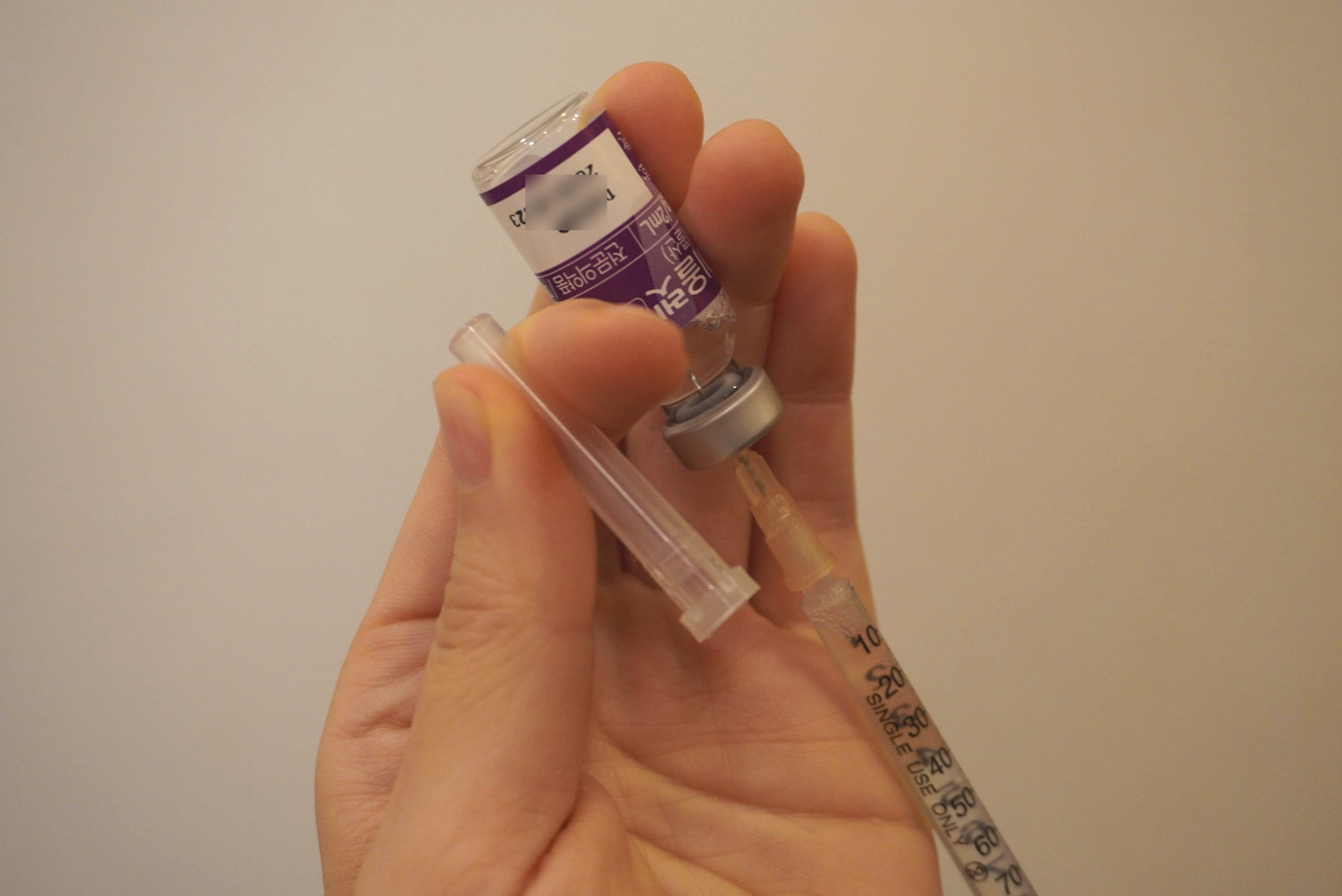
Acting on the fat cells themselves, not just their size
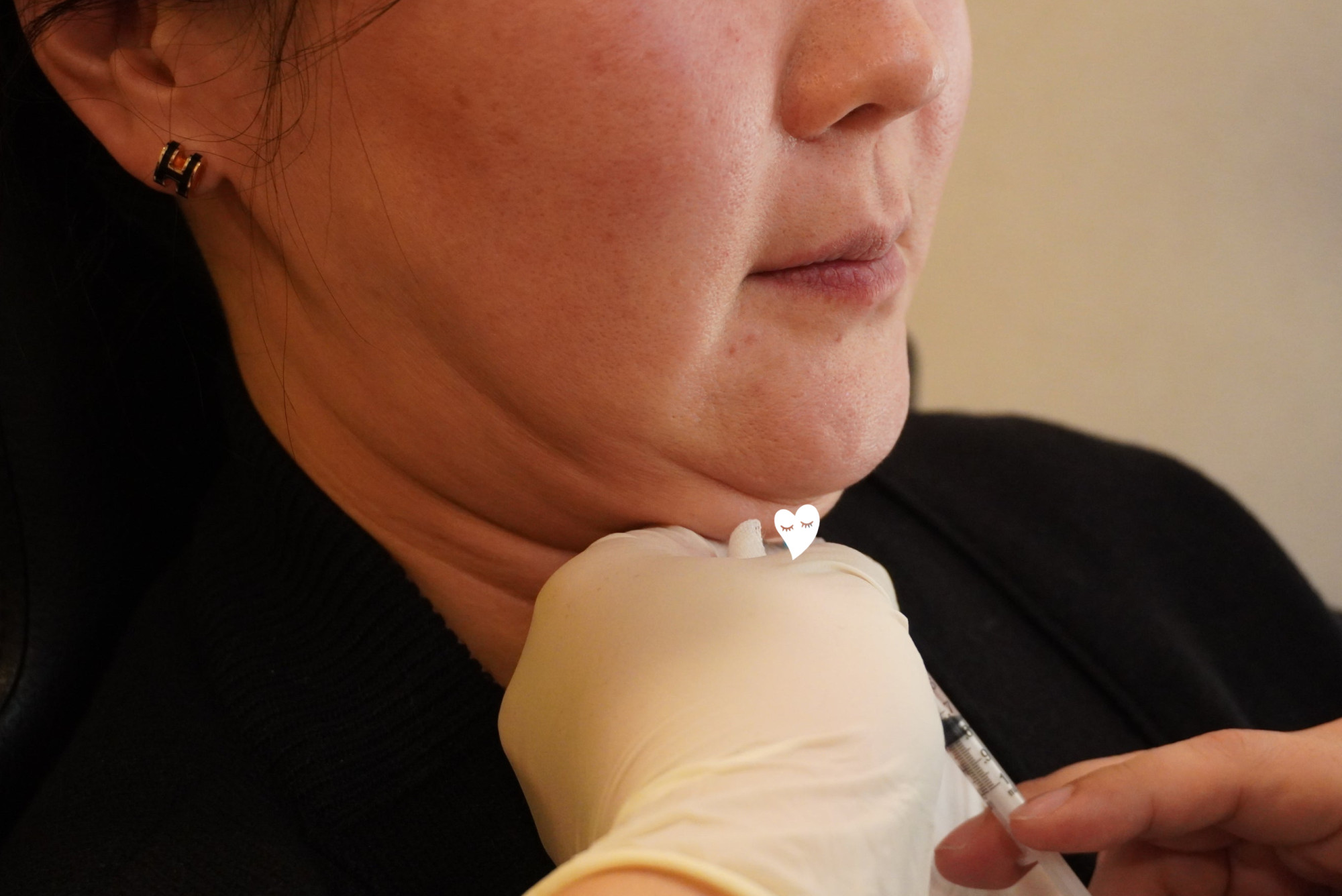
The difference in mechanism is the key point. DCA breaks down the membrane of the fat cell directly, and the contents released from the cell are gradually cleared from the body through lymphatic circulation. Because it works towards reducing the number of fat cells rather than temporarily shrinking them, the change tends to hold longer than with ordinary lipolysis injections, and the burden of repeat sessions is relatively lighter. That said, the rate of clearance and the degree of reduction vary from person to person, and the number of sessions needed depends on how much fat is present.
The regenerative response that eases concerns about sagging
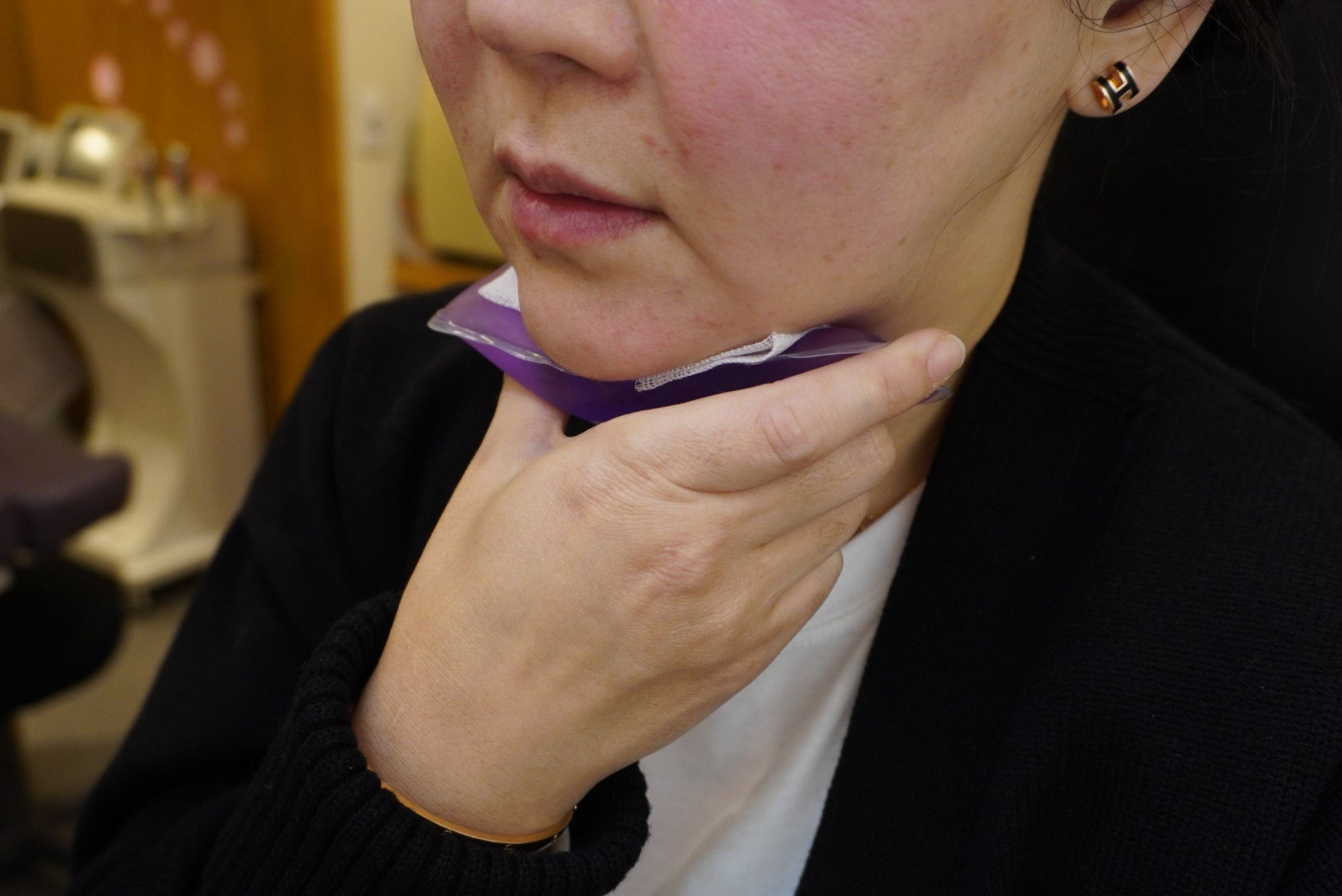
Many people worry that the skin will sag once the fat underneath is reduced. As DCA does its work, fibrosis and a regenerative response occur together in the surrounding tissue, and the collagen production stimulated in the process leads the skin towards a more refined texture. Being able to consider fat reduction and firmness care side by side is one of the characteristics of V-OLET.
Planning it alongside lifting devices
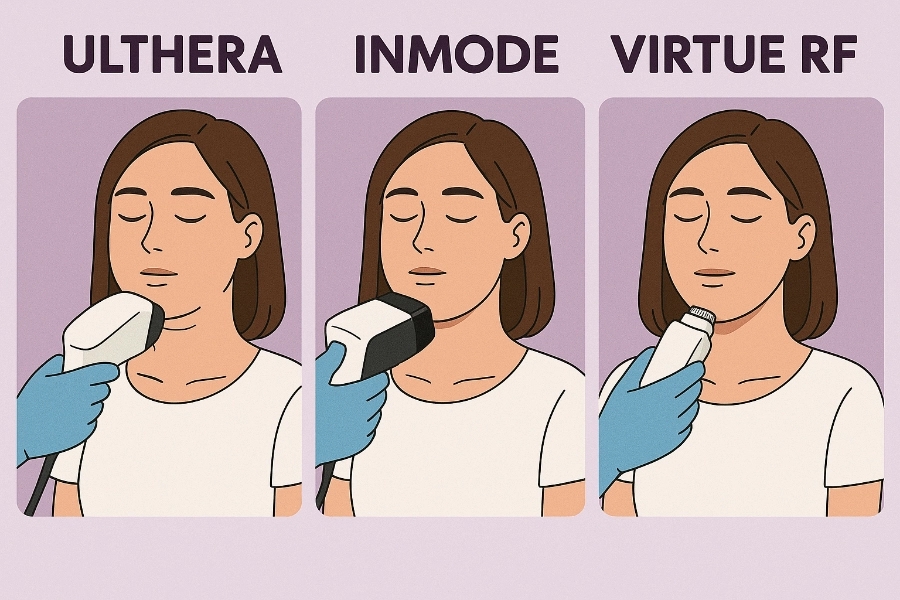
V-OLET can be used on its own, but for a double chin where fat and loss of firmness occur together, combining it with a lifting device may be worth considering. Each device covers a different area: Ultherapy for laxity in the deeper layers, InMode MiniFX when fat and tightening need to be handled together, Virtue RF for delicate parts of the jawline. How the three tasks of fat removal, lifting and firmness are combined is therefore planned according to the findings of your assessment.
Who might want to consider it
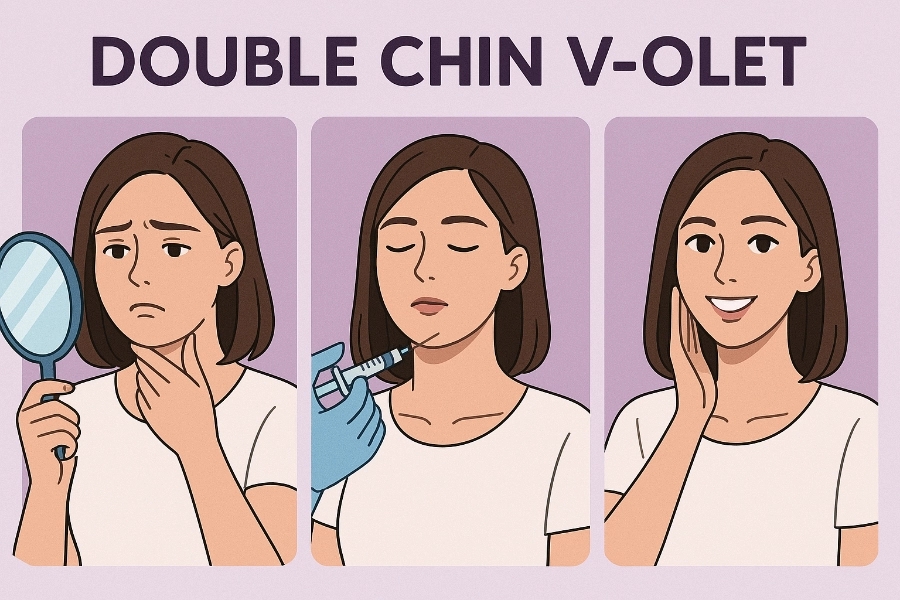
If you have not felt a change despite repeated fat-dissolving injections, if you want to reduce fat but are concerned about sagging skin, if fat and firmness issues overlap for you, or if you would like to define your jawline without surgery, V-OLET is worth discussing as an option at a consultation. The appropriate dose and whether to combine it with other treatments depend on your face shape, age, skin thickness and firmness, so the assessment before treatment accounts for half the outcome. Detailed costs can be found on the price guide.
Wrapping Up
The difference between an ordinary lipolysis injection and V-OLET lies in whether fat cells are temporarily shrunk or the number of cells themselves is addressed. Whether treatment on its own or in combination with lifting suits you depends on whether your double chin is fat-dominant or a mixed type, so start by checking with us through chat about the right direction for your chin area.
This article was written by Dr. Park Tae-hyung, Chief Director. He is the Chief Director of SKINIQUE Clinic and serves as Senior Director of the Korean Society for Laser Dermatology and Trichology. First published March 24, 2025 · Last reviewed August 23, 2026
This article is general medical information. Skin condition and response to treatment may vary from person to person. Please decide whether and how to be treated through a medical consultation.