

Looking into Ultherapy tends to begin with price comparison and end with price comparison. Yet even with the same device, how the treatment is prepared and at what intensity the energy is delivered makes a considerable difference to swelling and to satisfaction. This article walks through, step by step, the way SKINIQUE Clinic carries out Ultherapy lifting.
What to look at before the price list

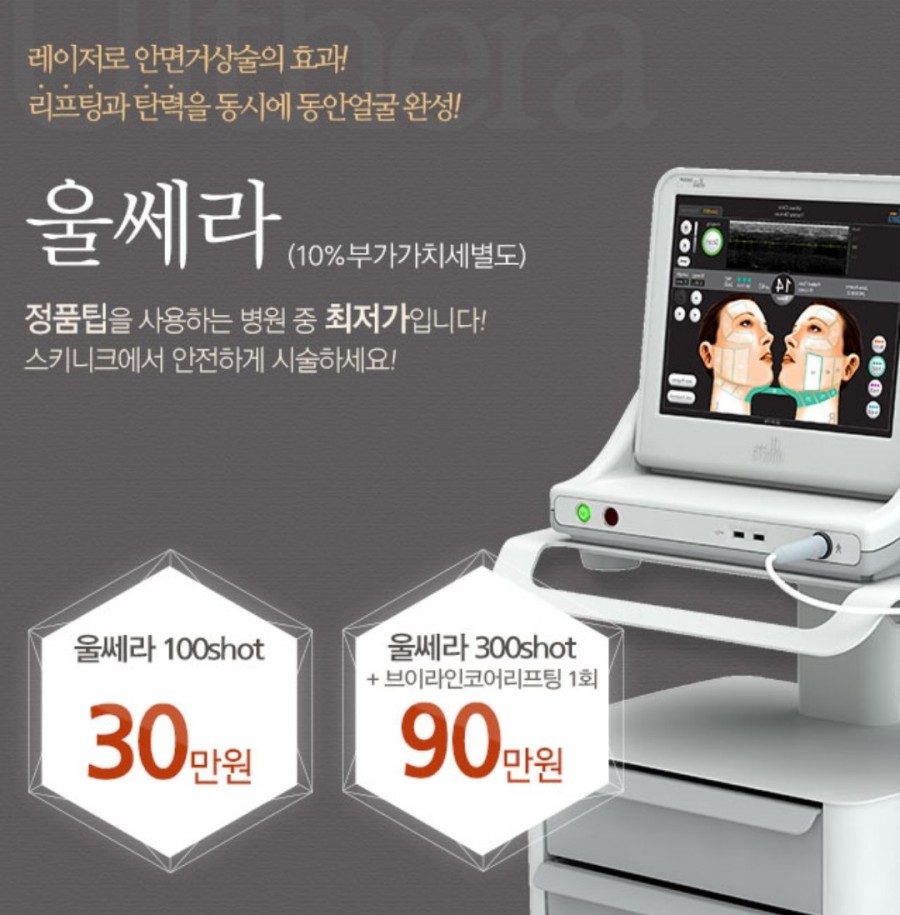
There are a great many clinics offering Ultherapy around Gangnam, and price competition is fierce to match. But Ultherapy is a treatment that can leave the expected change unrealised, or bring on side effects, when it is carried out the wrong way. Far more important than a low price tag is whether genuine transducers are used, whether the particular features of your face are assessed, and whether the practitioner has sufficient experience. Details on cost are available on the price guide.
Treatment planning that starts with assessment
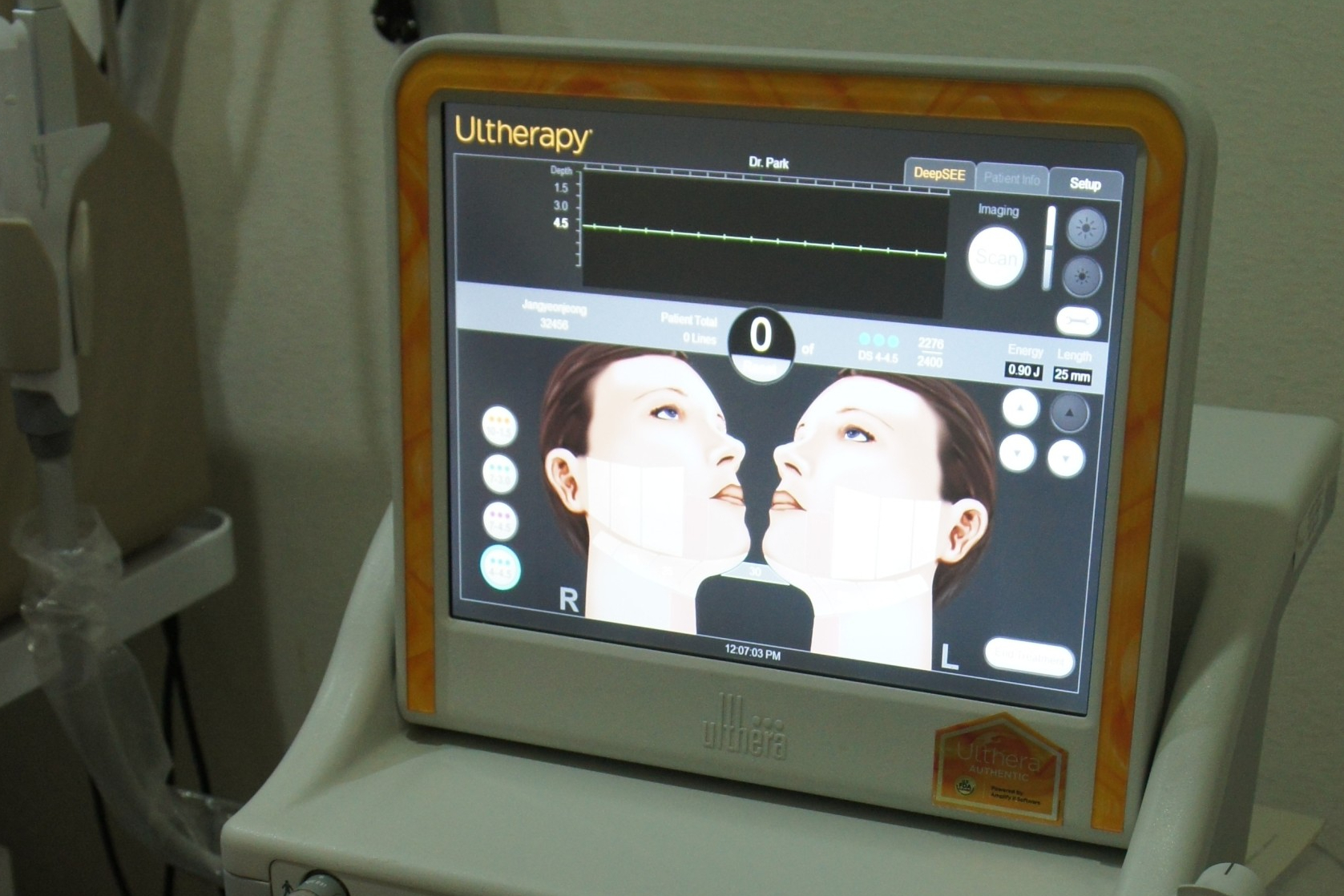
Ultherapy at SKINIQUE Clinic starts with a consultation with a clinician who has delivered clinical lectures for Merz, the manufacturer of the device, on several occasions. Ample time goes into examining the face closely and distinguishing the areas where fat should be reduced from those that should be lifted. That is why even someone who has experienced cheek hollowing elsewhere can be approached with energy applied selectively, only where it is needed.
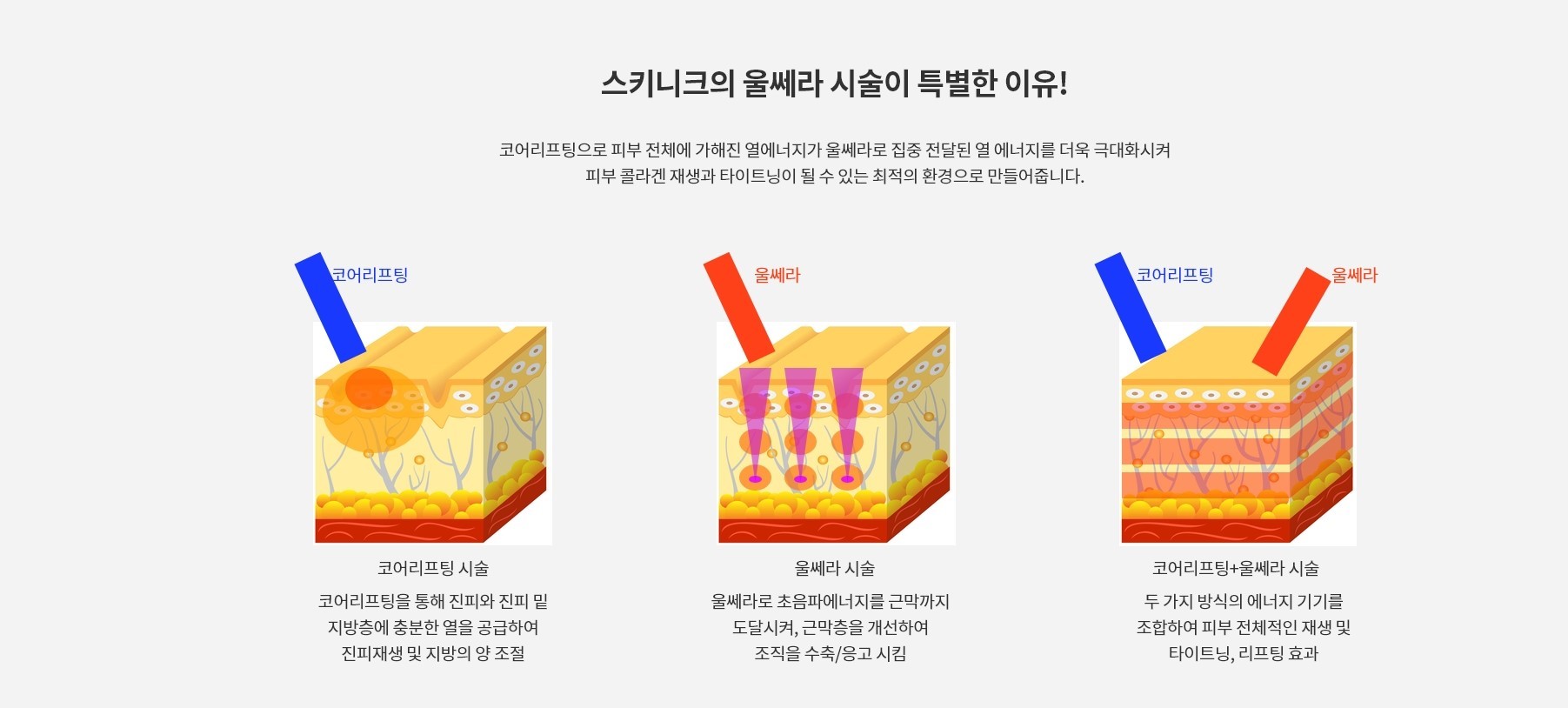
Before the main treatment: Core Lifting with Laser Genesis
Once the consultation is done, Core Lifting is performed with the Laser Genesis device ahead of the main treatment. Core Lifting delivers heat deep into the dermis to support dermal remodelling and the skin's own regeneration; combined with Ultherapy, it helps compensate for the limits of a single treatment while easing the burden of discomfort. It is the step that makes it possible to proceed without IV sedation or unnecessarily strong stimulation.
Genuine transducers and a certificate
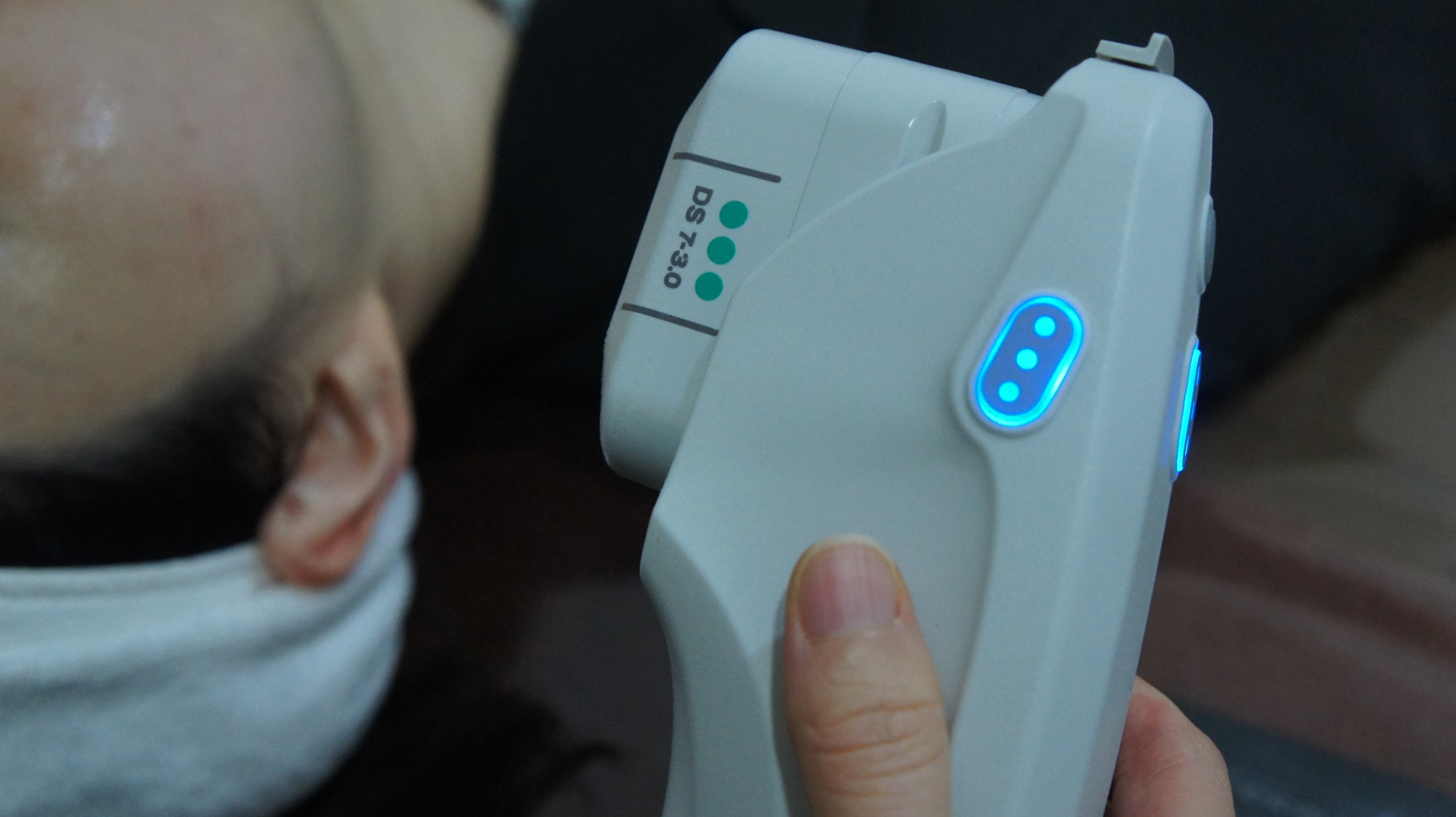
The main treatment is carried out on the latest version of the device, fitted only with genuine transducers, and a genuine-transducer certificate is issued for exactly the number of shots delivered. When a genuine transducer is loaded, the screen displays both the remaining and the delivered shot count, so it can be verified by eye. Treatments priced unusually low may involve refurbished transducers, so it is worth checking. Dividing the work between the 3mm and 4.5mm transducers according to the characteristics of each facial area is the heart of this treatment.
Precision, not intensity, shapes the result
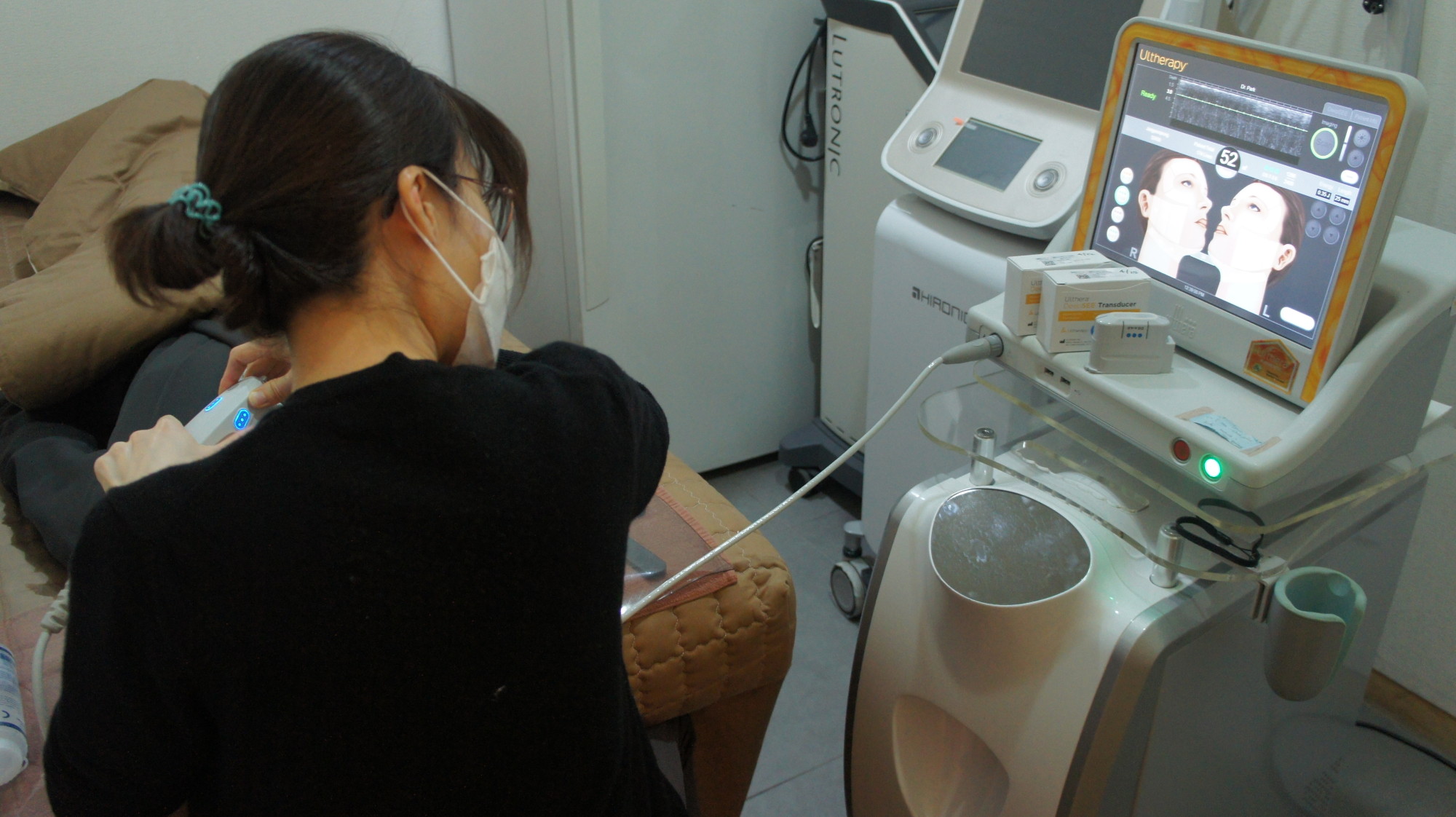
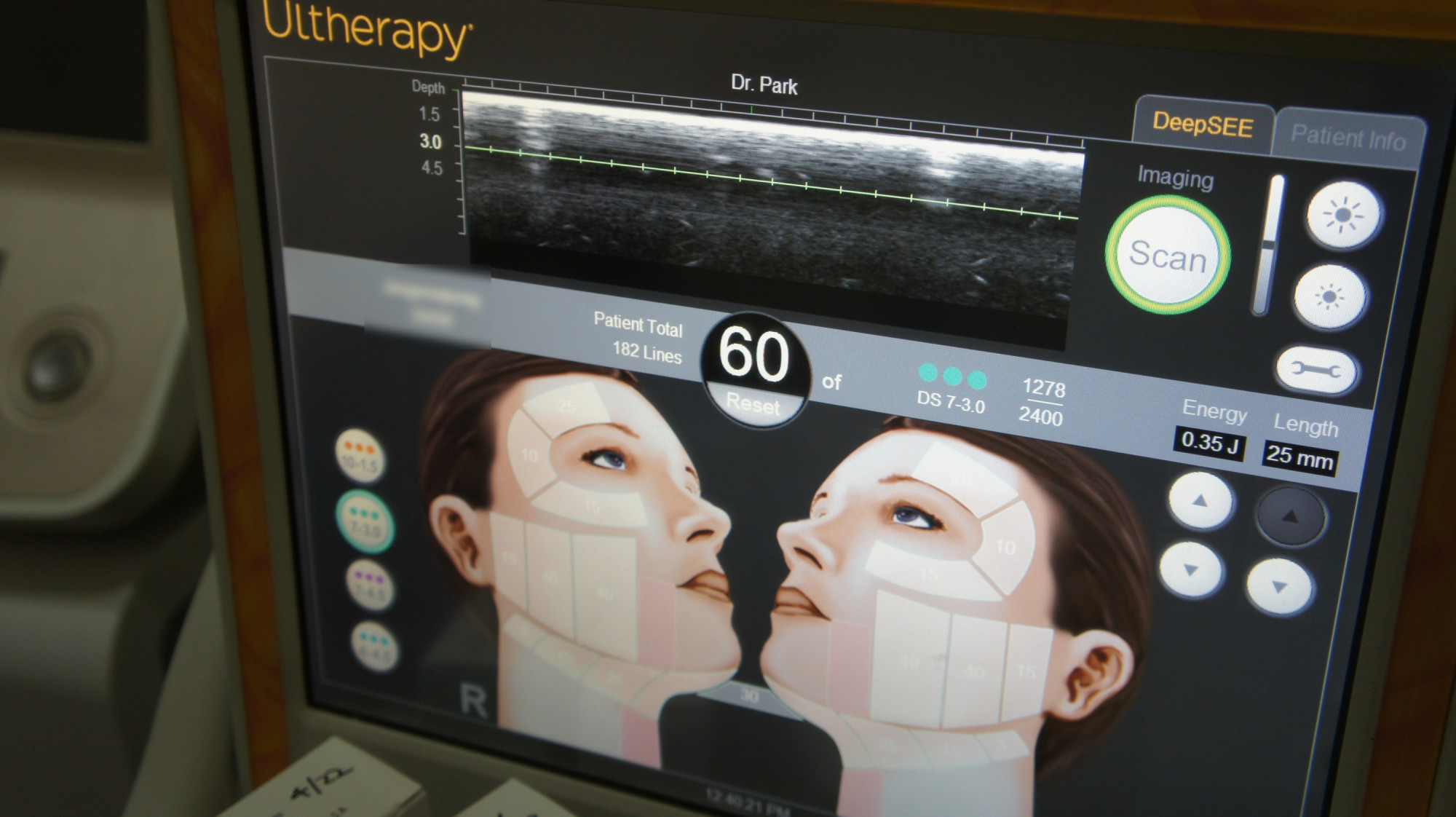
During the treatment, the transducer is held flush against the skin while the depth the ultrasound reaches is checked on screen, with intensity and depth varied from area to area. It may look like the same motion repeated, but this fine adjustment is what separates one outcome from another. Contrary to the common belief that a stronger treatment brings a better result, related research has reported that differences in outcome by energy level are not large. In other words, there is no reason to endure stimulation strong enough to raise concerns about swelling. Responses to treatment vary from person to person.
Care that continues after the treatment
Ultherapy is a treatment people decide on after long consideration, so SKINIQUE Clinic works on the principle of attending closely to each individual, from consultation and assessment through to follow-up review after the procedure.
Wrapping Up
Satisfaction with Ultherapy comes not from the strength of the energy but from precision in assessment, planning, and transducer handling. Combining Core Lifting to ease discomfort and swelling, then treating each area to its own plan, is the approach taken at SKINIQUE Clinic. If you are wondering what plan would suit your face, feel free to ask through a chat consultation about the right treatment for your face.
This article was written by Dr. Park Tae-hyung, head doctor of SKINIQUE Clinic and academic director of the Korean Society for Laser Dermatology and Trichology. First published 25 May 2021 · Last reviewed 24 August 2026
This article is general medical information. Skin condition and response to treatment vary from person to person. Whether and how to be treated should be decided through an in-person consultation.