

When your skin feels less firm and pores look enlarged, you sometimes need a more fundamental approach than skincare products. Juvelook is a skin booster that prompts the skin to produce its own collagen. This article walks through how Juvelook works, and how Skinique Clinic performs the treatment using the Potenza pumping tip.

What Is Juvelook?
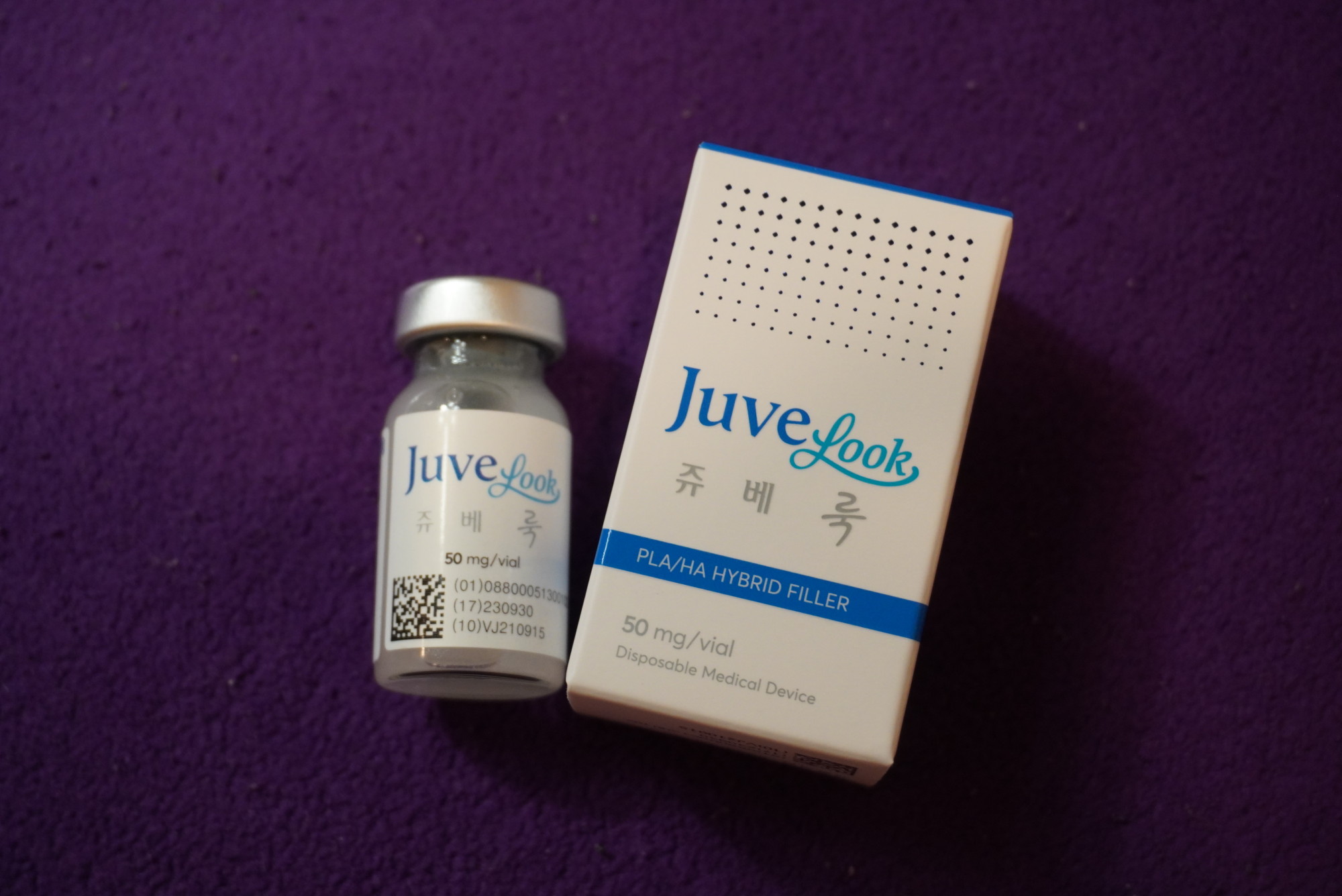
Juvelook is a self-collagen-regenerating skin booster that combines a high-molecular-weight PLA component, which induces collagen synthesis, with hyaluronic acid to support hydration. Because it works by stimulating collagen production within the skin, it can broadly address concerns such as pores, scars, fine lines, loss of elasticity, skin texture and tone, dehydration, and subtle volume loss — and the improvement tends to last relatively long. That said, the speed and degree of response vary from person to person.
Skinique Clinic has steadily built up experience with Juvelook since its launch and has been selected as an Expert Member by the manufacturer.
How Is It Different from Collagen Supplements?

Many people take collagen supplements, but collagen taken orally is broken down into amino acids during digestion and can hardly reach the skin intact. Juvelook, by contrast, is injected directly into the skin, where it stimulates fibroblasts and helps the skin build new collagen of its own — a fundamentally different approach.
The delivery method is chosen between the Dermashine Pro and the Potenza laser pumping tip depending on the area of concern and skin condition; for localized scars, manual injection may also be used. Which method suits you is decided at a pre-treatment consultation with the doctor, after reviewing your skin type and improvement goals.
The Treatment, Step by Step
Juvelook treatment at Skinique Clinic proceeds in five stages: consultation, numbing, preparation, treatment, and soothing care.
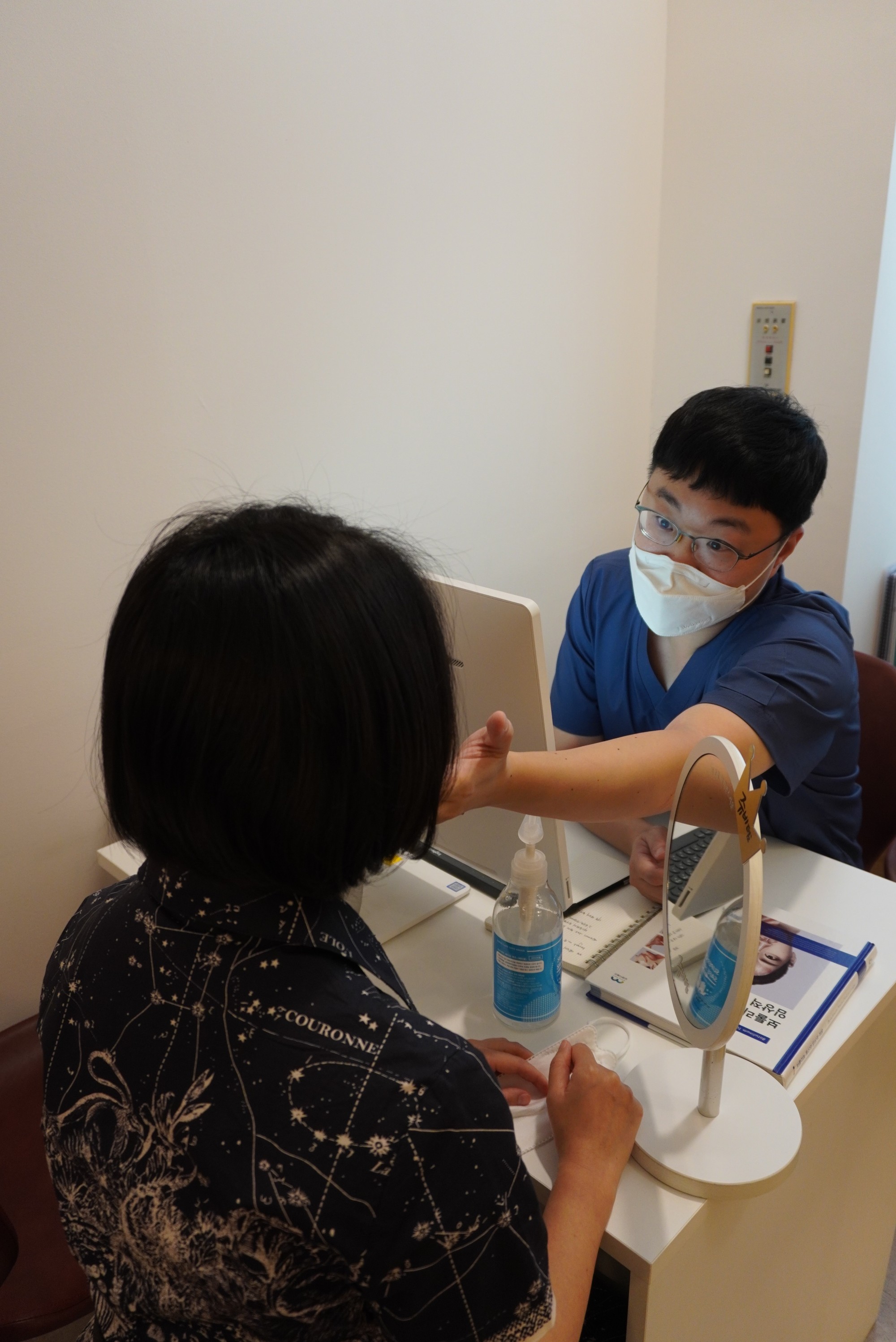
The first step is a consultation directly with the doctor. Rather than simply following whatever is trending, this is the time to discuss what your face actually needs with the doctor who will perform the treatment, and to share any areas of concern in advance.
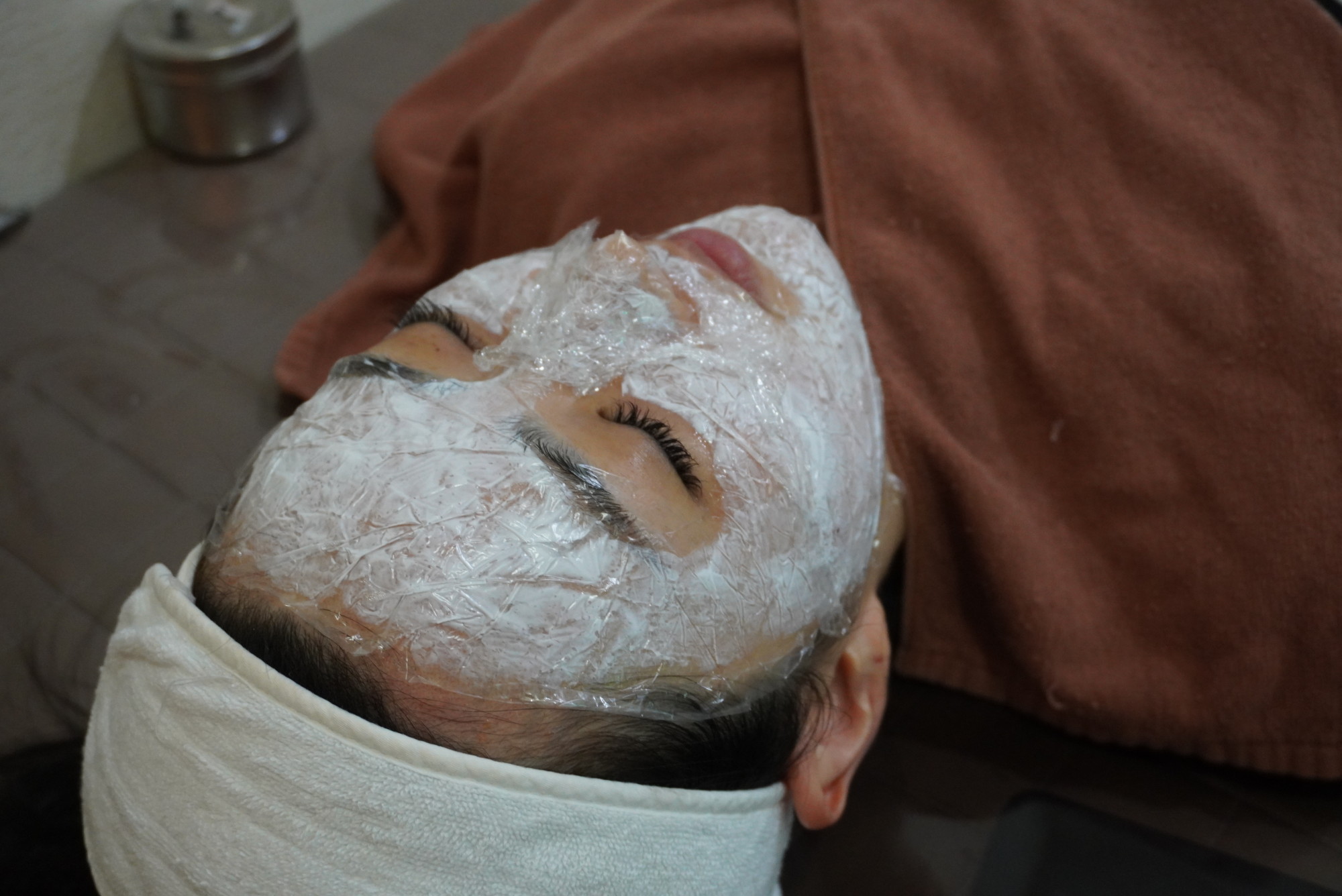
Once the treatment is decided, the skin is cleansed and numbing cream is applied — covering the glabella and nose connecting to the forehead without missing a spot, because the numbed area is the actual treatment area.
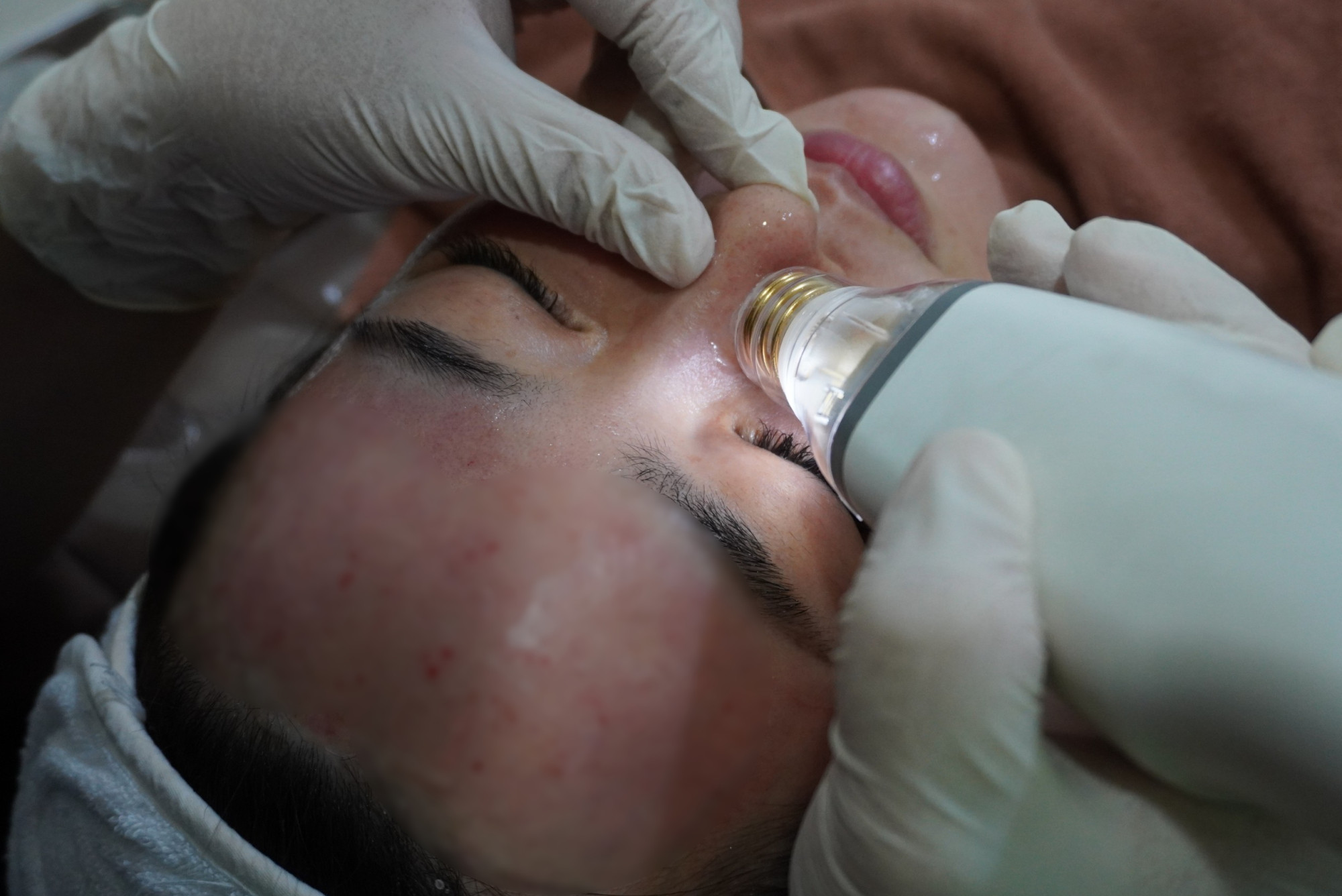
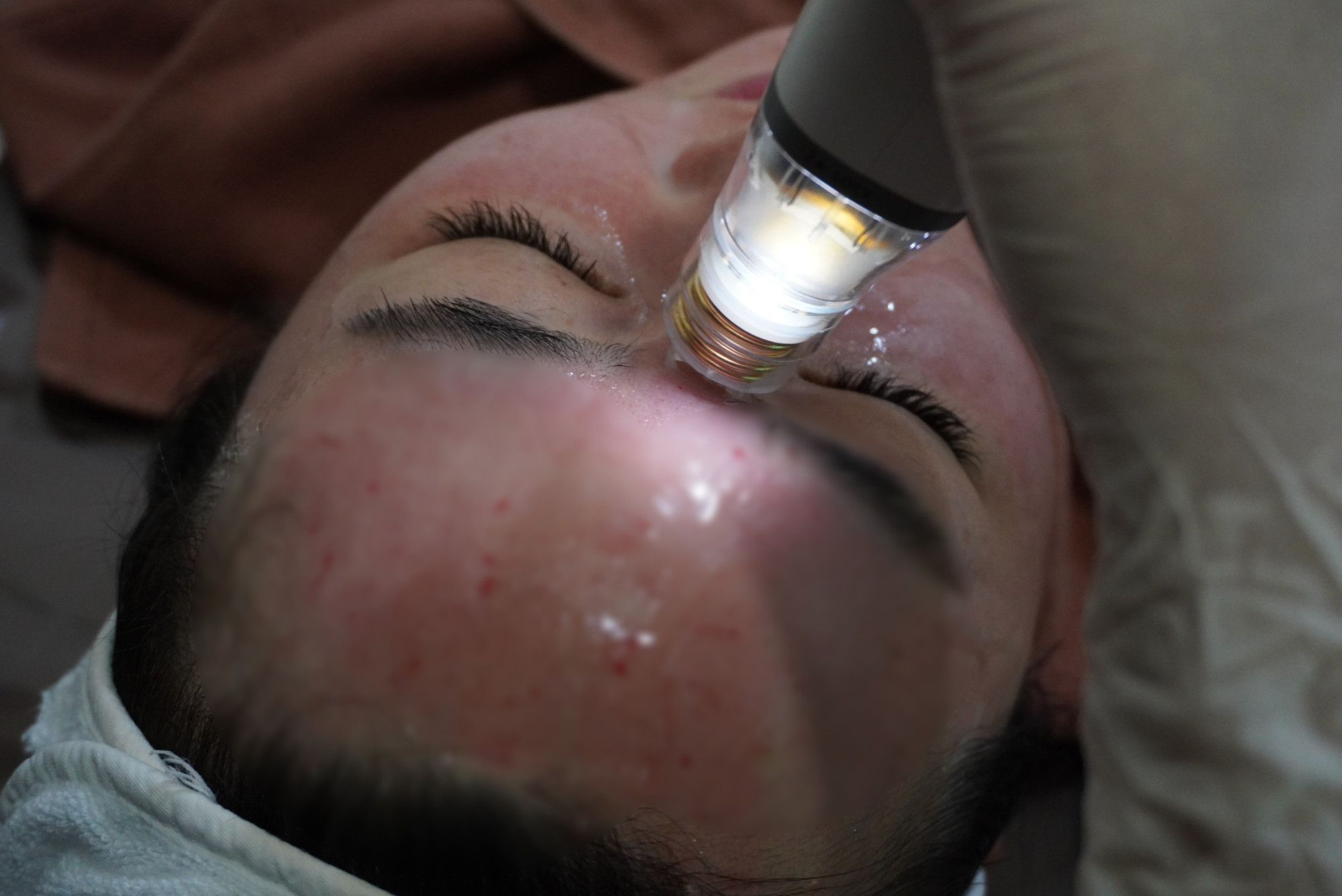
Next, in the preparation stage, Juvelook that has been sufficiently hydrated in advance is transferred into syringes right before treatment. Juvelook comes as a powder, so proper hydration is essential for it to work as intended, and the single-use Potenza pumping tip (CP-25) is opened in front of you so you can confirm it is brand new.
Why We Don't Skimp on Shots
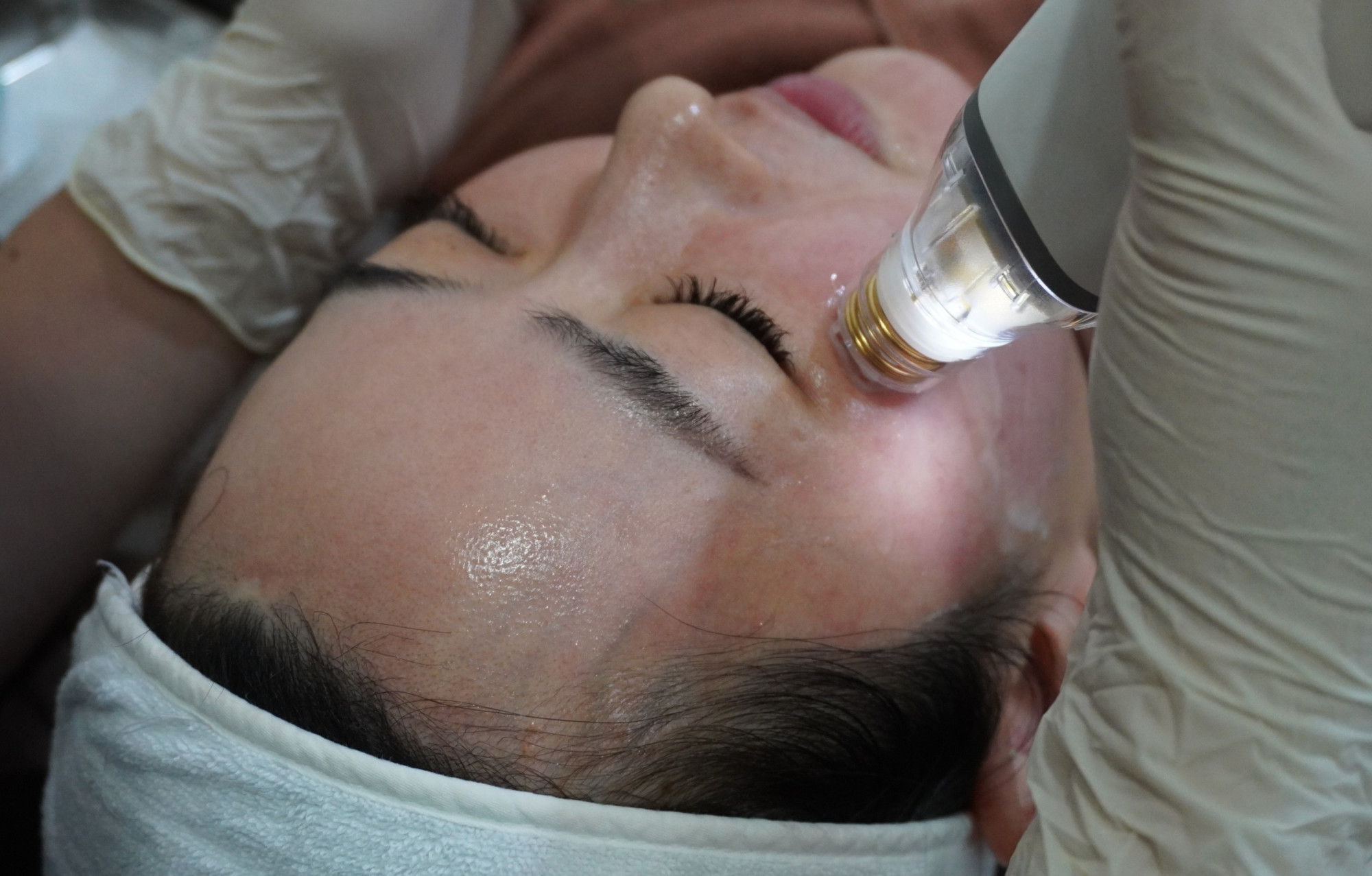
In the main treatment, a generous shot count — around 800 shots — is used, tailored to face size and condition. The goal is to cover not only areas where concerns concentrate, such as the mid-cheek "butterfly zone", but also easily missed spots like the eye area, nose, and glabella, so that Potenza's radiofrequency energy and Juvelook are delivered evenly across the entire face. Since every face is a different size, we take as much time as each individual's skin needs rather than applying a fixed shot count to everyone.
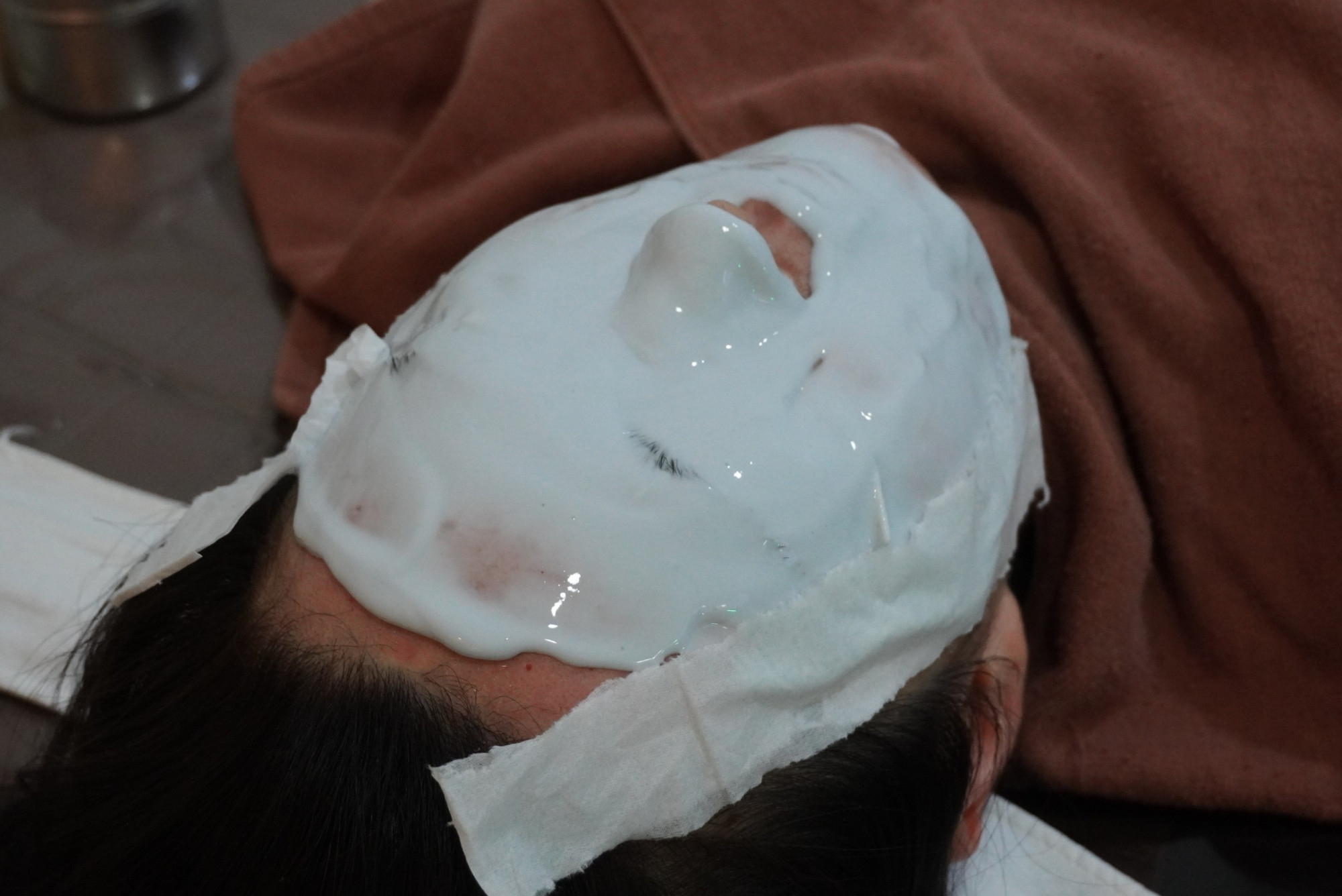
After the treatment, a modeling mask soothes the skin and basic care is completed before you head home. Cleansing, the tip, and the soothing mask incur no extra charge; detailed pricing is available on the price guide.

Wrapping Up
Juvelook is a skin booster that induces collagen production directly in the skin, broadly addressing pores, elasticity, fine lines, and skin texture — and how it feels can differ depending on hydration, delivery method, and shot count. If you are wondering whether Juvelook is the right choice for your skin concerns, feel free to ask via chat with us about the right direction for your skin.
This article was written by Dr. Tae-hyung Park, Chief Director of Skinique Clinic and Senior Director of the Korean Society for Laser, Dermatology and Trichology. First published November 1, 2022 · Last reviewed August 24, 2026
This article is general medical information. Skin condition and response to treatment vary from person to person. Please decide whether and how to proceed with treatment through an in-person medical consultation.