
Do you wake up with a stiff, aching jaw, or has someone at home mentioned the sound of you grinding your teeth? Bruxism happens unconsciously during sleep, which makes it difficult to correct on your own. This article looks at the problems that can arise when teeth grinding is left unaddressed, and at how masseter Botox may help.
Why teeth grinding should not simply be left alone
Left in place over a long period, bruxism not only wears down the teeth but can also over-develop the jaw muscles and lead to headaches or facial asymmetry. If symptoms are severe, dental treatment such as an occlusal splint is needed; short of that, Botox can be an alternative. In consultation, quite a few people say something like "I'm not sure whether I grind my teeth, but I do get headaches" — and masseter Botox may also help in these cases of unknowingly clenching or grinding lightly.
How Botox works on bruxism

When Botox is injected into the masseter (the muscle used for chewing), the force going into an over-developed muscle is reduced, and over time the volume of the muscle gradually decreases as well. Alongside the cosmetic change of a slimmer-looking face, you can expect some functional help in easing the habit of clenching or grinding, though the degree of response varies from person to person. Many people believe Botox for bruxism is something only a dentist provides, but the procedure itself is not very different from masseter Botox.
Four things we check before the procedure
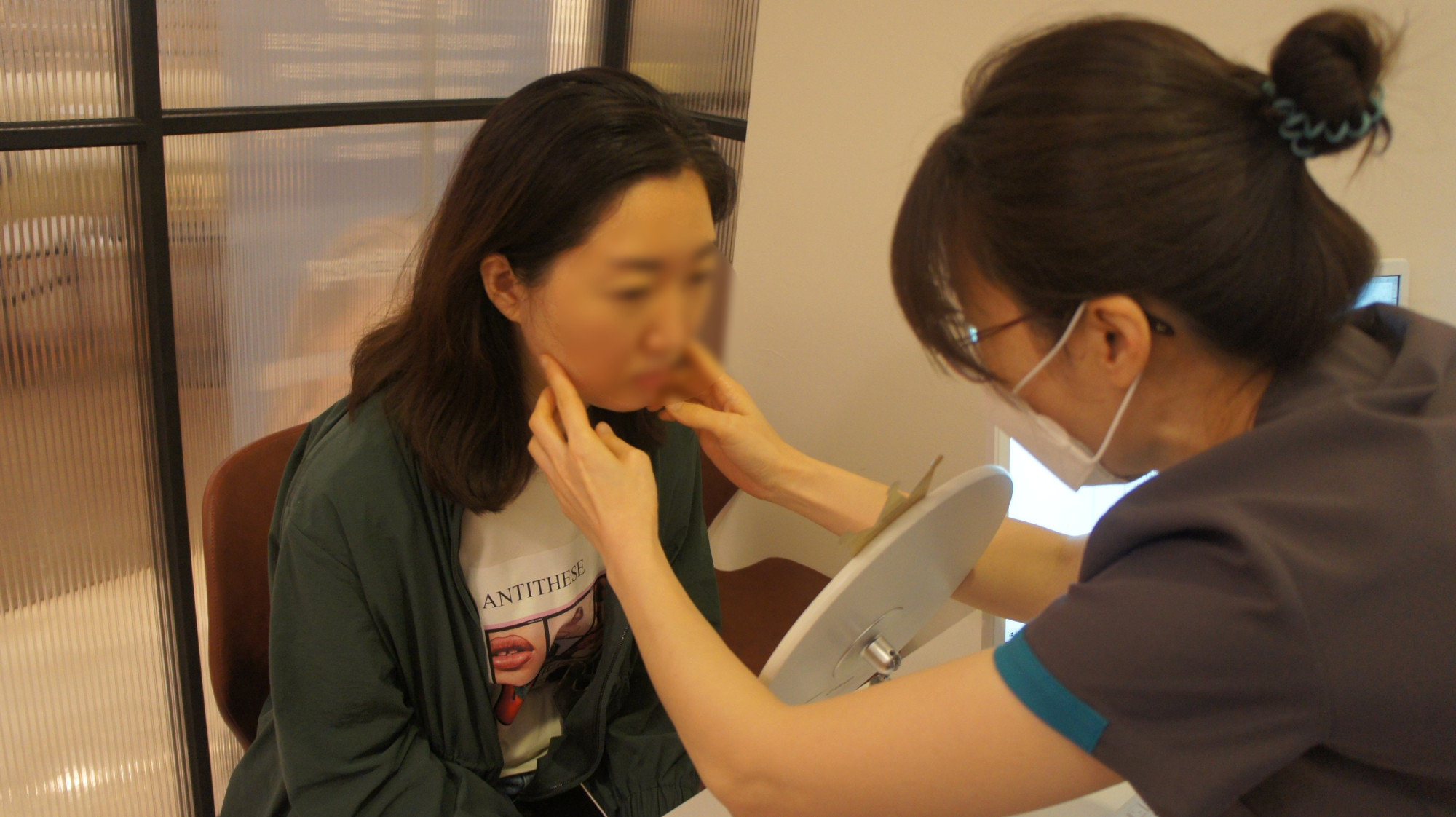
At Skinique Clinic, we check the following before injecting:
- The size of the jaw muscle and how strongly it contracts
- The contours of the face as a whole
- Whether teeth grinding and headaches are present
- Whether the temporalis muscle is well developed
Looking at the muscle that creates a square jaw and everything connected to it, and understanding the features of the face, is what allows the same procedure to deliver as much benefit as possible.
How the procedure is carried out
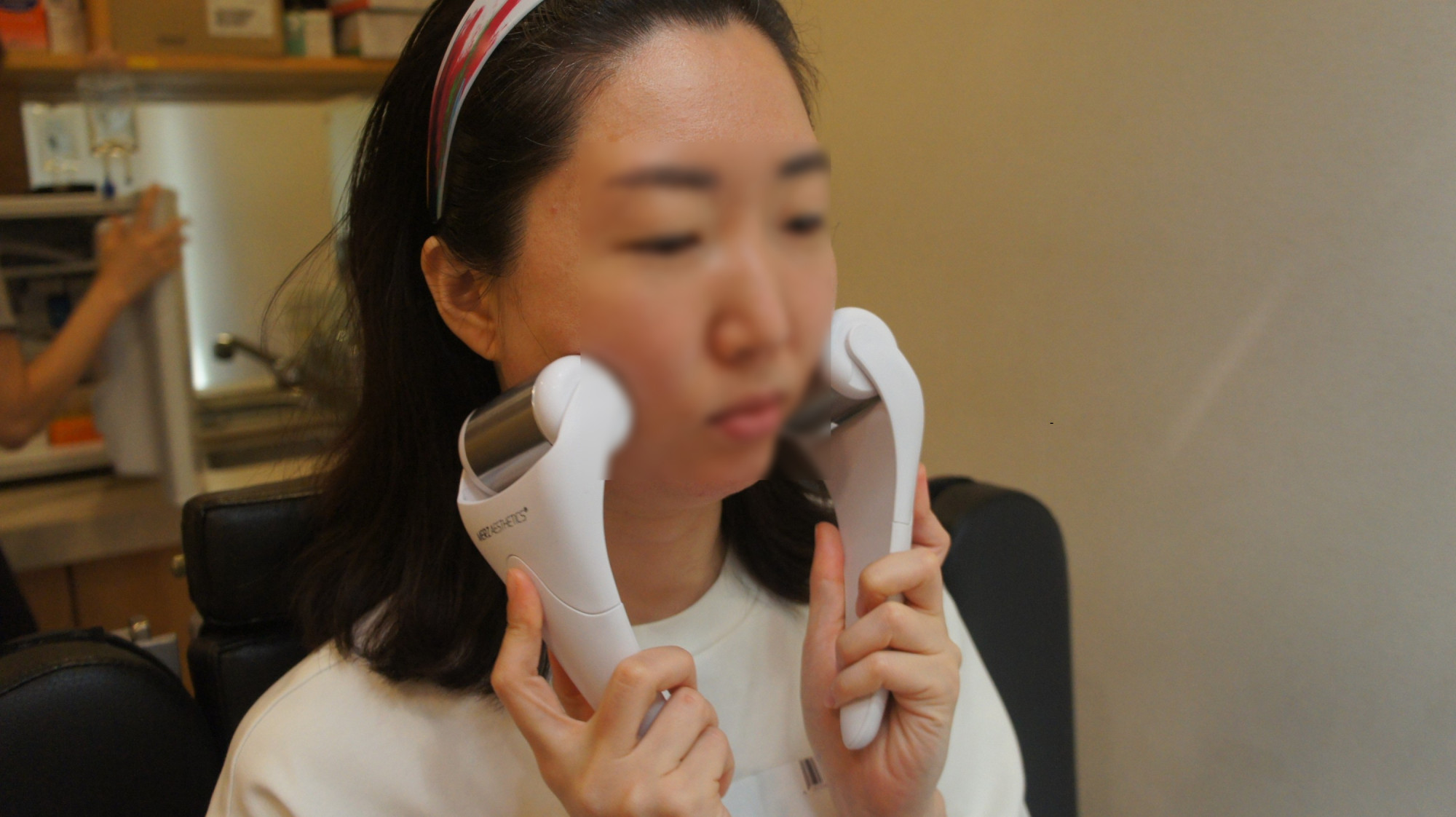
Masseter Botox does not place a great burden of pain, so we begin without separate anaesthesia, simply calming the treatment area with an ice roller. Around 50 units are typically used for the jaw, and those who are concerned about resistance from repeated treatment tend to prefer Xeomin, from which the complexing proteins have been removed. Xeomin comes in two presentations — 50 units (red box) and 100 units (blue box) — so you can choose before the procedure, and we show you the dose and expiry date directly. Opening and reconstitution of the product both take place transparently at your side, so there is no need to worry about excessive dilution.
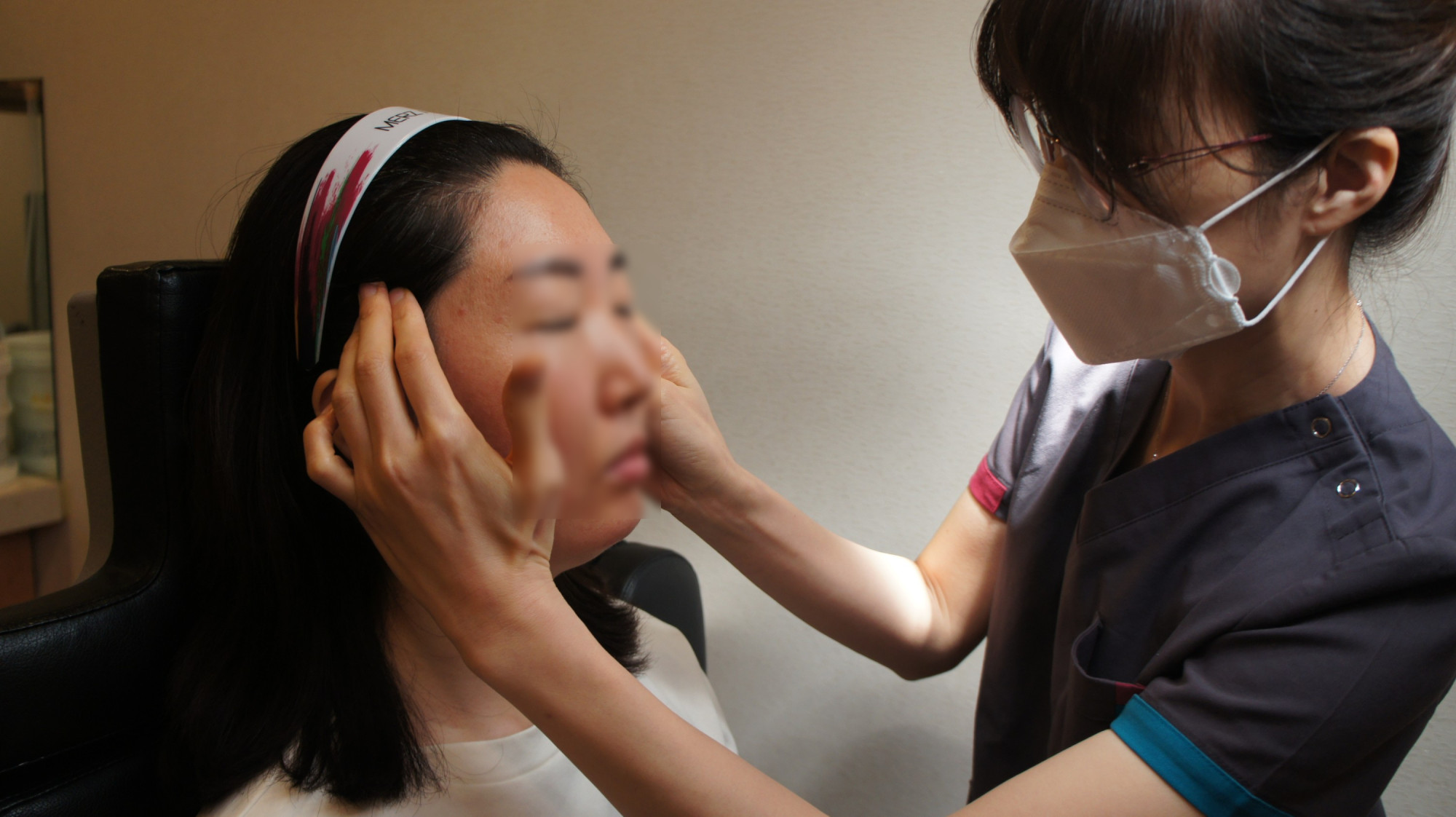
Once preparation is complete, the doctor checks the condition once more and then divides the injection, placing 25 units on each side. If the temporalis muscle is notably developed, we treat that muscle as well where needed.
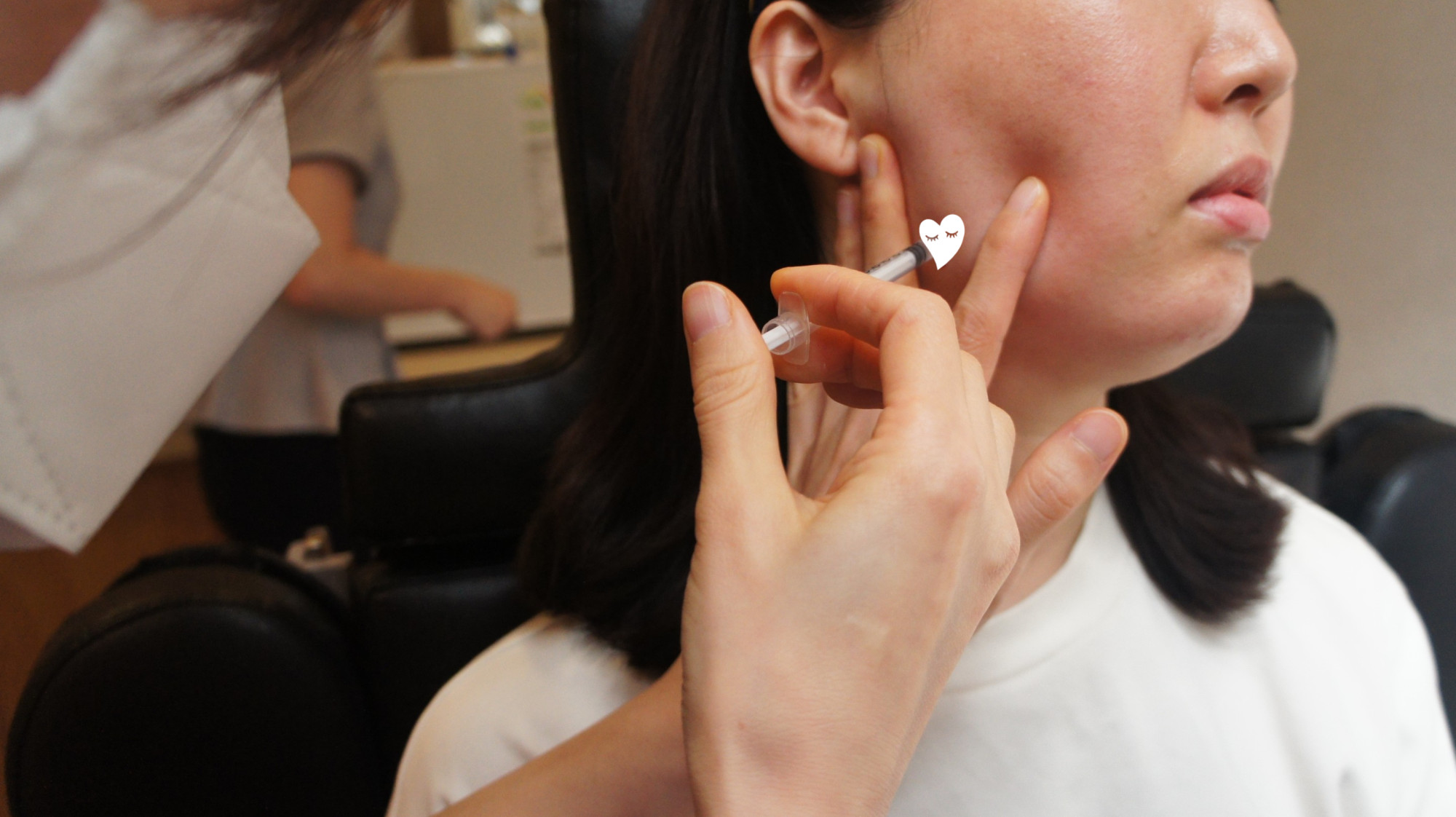
Because the procedure targets muscle, the angle and depth of the needle matter. Rather than injecting everyone uniformly in the same spot, we adjust the site and depth to each person's muscle condition so that side effects such as cheek sagging or hollowing do not occur.
Where should you have it done?

Botox for bruxism does not have to be a dental procedure. Where there is a consultation that examines the muscle condition closely, verification of the genuine product and dose, and treatment tailored to the individual, a dermatology clinic can carry it out perfectly well.

Detailed pricing for masseter Botox is available on our price guide.
Wrapping Up
Grinding your teeth in your sleep is a habit that affects the teeth and jaw muscles, and in time the shape of the face. Where it is not severe, easing the tension in the muscle with masseter Botox is one option to consider, and the effect and how long it lasts vary from person to person. If you would like to know whether Botox suits your symptoms, ask us through a chat consultation about teeth grinding.
This article was written by Dr. Park Tae-hyung. He is the Chief Director of Skinique Clinic and serves as Senior Director of the Korean Society of Laser Dermatology and Hair. First published May 23, 2021 · Last reviewed August 24, 2026
This article provides general medical information. Skin condition and response to treatment vary from person to person. Whether and how to treat should be decided through an in-person consultation.